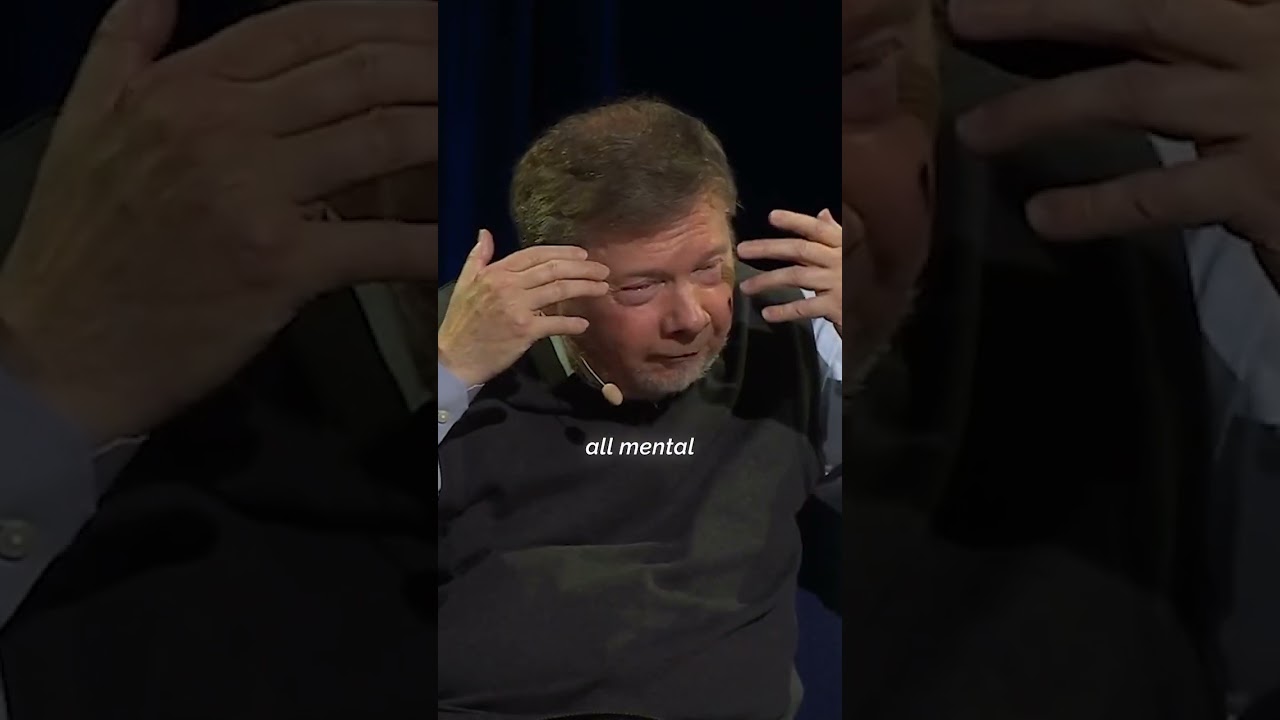
Eckhart Tolle addresses a widespread modern condition—the inability to be alone with oneself without mental and sensory distraction. The mind, he suggests, compulsively seeks to occupy every empty moment through thought, worry, or external stimuli. True presence and inner peace arise only when you create space for stillness and allow moments to remain empty rather than filling them automatically. This shift from constant mental activity to simple being represents a fundamental reordering of consciousness.
The Mind's Compulsion to Fill Every Moment
One of the defining features of contemporary life is the near-total inability of people to sit with themselves in silence. Whether waiting at a bus stop, eating alone, or finding themselves with unscheduled time, most people immediately reach for a phone, turn on music, or initiate a chain of thinking. This is not accidental or arbitrary—it reflects a deep structure in how the human mind operates.
The mind, as Tolle describes it, is not content with emptiness. A vacant moment is experienced as uncomfortable, even threatening. Rather than allowing space to simply exist, the mind compulsively fills it with content: worry about the future, replaying events from the past, planning, judging, or generating endless internal narrative. This mechanism is so automatic that most people never notice it happening. The moment anything feels empty, the mind springs into action, like a reflex triggered by the discomfort of non-doing.
This tendency has been amplified by modern technology. Smartphones, infinite content streams, and notifications create an external landscape that perfectly mirrors the mind's internal need to always be occupied. But the problem runs deeper than technology—the compulsion itself predates our devices. What technology does is make it easier than ever to feed an appetite that was already there.
What Happens When You Try to Just Be?
For many people, the prospect of sitting alone in silence for even a few minutes triggers anxiety. This is instructive. The emptiness itself—not anything harmful, not a real threat—creates a sense of unease. This discomfort often leads people to describe "doing nothing" as boring, pointless, or wasteful. The mind labels stillness as a waste of time because it measures value through productivity and mental content. An empty moment, from this perspective, has produced nothing and therefore has no worth.
But this measurement itself is the problem. When you evaluate your existence through the lens of what you produce or think, you become a prisoner of constant mental activity. Rest is rebranded as laziness. Silence becomes something to escape rather than experience. Solitude—which humans once sought as a path to wisdom and renewal—becomes an ordeal to endure as briefly as possible.
The inability to be alone also reflects a deeper spiritual disconnection. In many contemplative traditions, the capacity to sit with oneself in silence is foundational. Meditation, prayer, and inner work all require periods where the mind is not continuously occupied with external stimuli or internal chatter. When this capacity atrophies, you lose access to dimensions of consciousness that only become available in stillness.
What Is Presence?
According to Tolle, presence is not something you acquire or achieve through effort. Rather, it is what remains when you stop filling the moment with mental content. Presence is the experience of simply being aware of what is, without the layer of constant thinking about it, judging it, or trying to manipulate it.
Think of it this way: when you are fully absorbed in watching a sunset, you are often not thinking about the sunset—you are simply experiencing it. Thought drops away. The mind becomes quiet not because you forced it to be quiet, but because it became less relevant than the immediate sensory and emotional reality of the moment. That quiet awareness is presence.
Presence, Tolle suggests, begins when you allow a moment to remain empty. Instead of automatically filling silence with music, thought, or digital content, you simply permit the silence to be. This is not meditation in the formal sense necessarily—it is simply the act of not resisting the moment as it is. It is the willingness to be present without trying to make the moment into something other than what it already is.
When you first practice this, you encounter the mind's resistance directly. The discomfort that emerges is your first real encounter with what you have been running from. But beneath that discomfort, if you remain steady, something shifts. The constant low-level anxiety of never being enough, never doing enough, begins to quiet. A different quality of awareness emerges—one that is not based on thinking or producing, but on simple existence.
The Cost of Never Being Alone
Living in constant avoidance of solitude has measurable consequences. Anxiety, depression, and a sense of disconnection from yourself proliferate when the mind is never given permission to stop. The constant activity creates a kind of exhaustion that sleep alone cannot cure—because the root problem is not physical but psychological and spiritual.
When you never allow yourself to simply be, you lose touch with what is sometimes called your "true self" or essential nature. Who are you when you are not thinking, producing, or performing? Most people have no idea. This is not a minor inconvenience. It represents a fundamental alienation from your own existence.
Moreover, the constant mental occupation prevents the kind of natural insights and creativity that emerge in quieter states. Many of humanity's greatest ideas, artistic breakthroughs, and personal realizations have come not during periods of intense mental strain but during moments of stillness—in nature, during meditation, in the shower, or in the transitional states between sleep and waking. When you never create space for emptiness, you foreclose these possibilities.
How to Begin Creating Empty Moments
The shift from constant mental occupation to presence does not require a dramatic overhaul. It begins with small, intentional choices to allow moments to remain unoccupied.
This might look like sitting in your car for five minutes after arriving at work without immediately checking your phone. It might be eating one meal without any media or internal narrative—simply tasting the food, noticing the sensations. It might be taking a walk where you do not listen to a podcast or music, and instead allow your awareness to rest on your surroundings, your breath, the physical experience of moving.
These moments will feel uncomfortable at first. The mind will generate reasons why you should be doing something else. Boredom, restlessness, or vague anxiety may surface. The instruction is simple: stay. Allow the discomfort to exist without running from it. Do not try to "fix" the emptiness by filling it.
As you practice this repeatedly, something gradually changes. The discomfort becomes less intense. Moments of genuine peace and clarity begin to emerge. You may notice that your mind, when given space, naturally becomes quieter—not because you forced it, but because the constant demand for stimulation is no longer feeding it. The anxiety that seemed constant begins to reveal itself as optional, arising only when you resume the habit of mental occupation.
The Difference Between Loneliness and Solitude
An important distinction emerges here: loneliness and solitude are not the same. Loneliness is an emotional state involving disconnection and pain, often felt even in the presence of others. Solitude is simply being alone, and it can be either pleasant or unpleasant depending on your inner state.
When you are unable to be alone, you are often lonely even when surrounded by people, because you are disconnected from yourself. Conversely, when you cultivate the capacity to be alone—to be present with yourself without the mind's constant distraction—you can be genuinely at peace whether alone or with others. The quality of your attention and presence improves across all contexts.
This is why the spiritual traditions placed such emphasis on periods of retreat, solitude, and silence. Not as escape from life, but as a way of deepening your relationship with yourself and consciousness itself. In those moments of emptiness, something essential can be contacted and renewed.
Where to Go From Here
The invitation implicit in Tolle's teaching is not to become a hermit or to reject modern life. Rather, it is to reclaim your capacity to tolerate and eventually enjoy stillness. To begin noticing when you are automatically reaching for stimulation to avoid an empty moment, and to ask yourself: What am I running from? What would happen if I simply allowed this moment to be quiet?
Start small. Choose one activity per day where you deliberately allow emptiness—no phone, no music, no distraction. Notice what arises. Over time, this practice deepens the quality of your presence, both in moments alone and in your interactions with others. The mind gradually becomes less tyrannical. Consciousness itself becomes more accessible. You begin to understand, from direct experience, what it means to simply be.