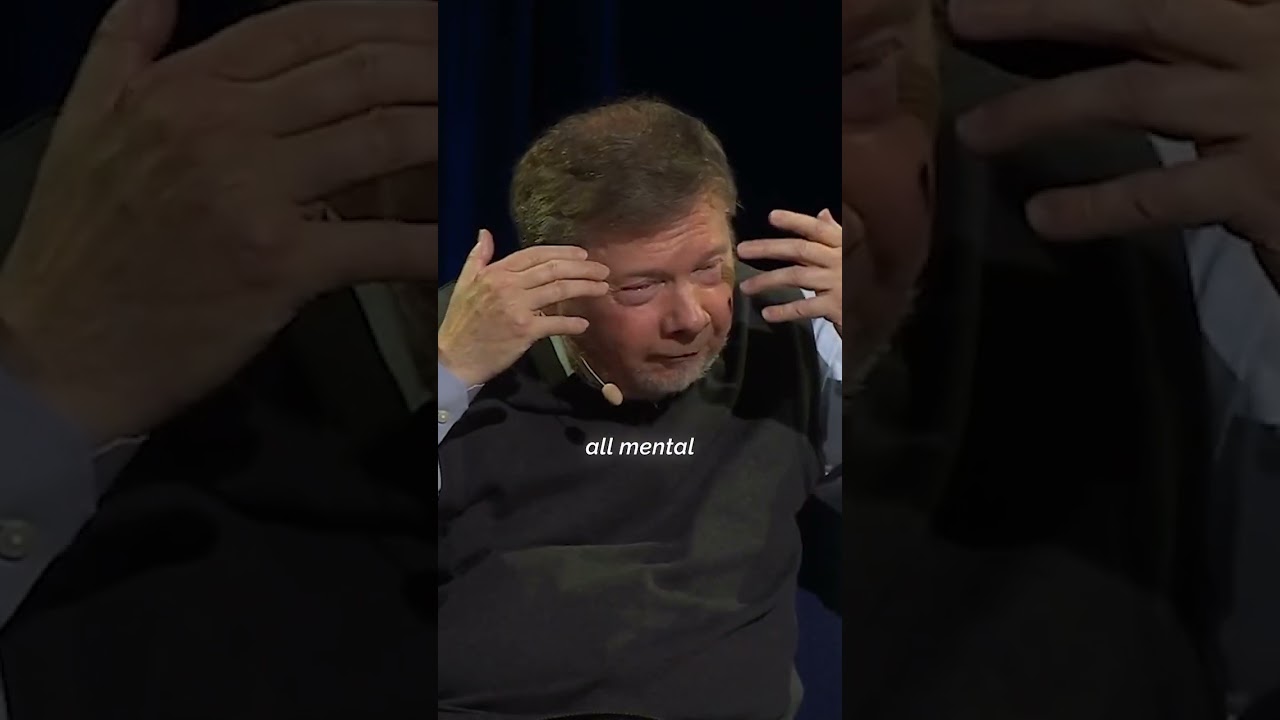
The compulsion to be right is not a virtue but a primary mechanism of the ego that fragments awareness and deepens unconsciousness. When you need others to validate your position or agree with you, you are no longer present; you are identified with a mental position. The louder and more insistent the need to be right becomes, the more unconscious the person has become. Dissolving this pattern requires recognizing it in the moment and returning to presence.
What Does It Mean to Need to Be Right?
The need to be right is not simply about having correct information or holding accurate beliefs. It is something far more subtle and pervasive. It is the unconscious impulse to defend a position, to make others agree with you, to prove yourself correct at the expense of the present moment. This need arises from the ego—the constructed identity that depends on being seen as competent, superior, justified, or special.
When you are caught in the need to be right, you are not actually interested in truth or understanding. You are interested in defending yourself. The distinction is crucial. Truth is discovered through openness and inquiry; the need to be right closes you down. It creates a mental position that you must protect against any challenge or alternative view. This protective stance is fundamentally unconscious because it prevents you from being fully present with what is actually happening in this moment.
The person who needs to be right is often very articulate, logical, and persuasive. They can marshal arguments efficiently. But beneath this competence lies a fragility—a vulnerability that cannot tolerate being wrong because being wrong feels like an annihilation of self. This is why the need to be right is so tied to ego: the ego's survival depends on maintaining a consistent, superior image.
How Does the Need to Be Right Destroy Awareness?
Awareness, in the sense that Eckhart Tolle teaches it, means presence—the capacity to be here now, without the filter of thought, judgment, or identity. Awareness is what you are before the mind creates a separate sense of self. When you are caught in the need to be right, you have abandoned presence. Your attention is locked into defending a mental position.
This creates a fragmentation of consciousness. Part of your awareness is devoted to maintaining the position, part to monitoring the other person's reaction, part to preparing your next argument. You are split. The unified intelligence of the present moment is broken into competing fragments, each defending its turf. In this state, you cannot see clearly. Your perception is filtered through the defensive stance. You selectively hear only what supports your position. You dismiss or reinterpret what contradicts it.
Furthermore, when you are identified with being right, you are identified with the past—with concepts, memories, beliefs you have collected over time. You are no longer in contact with the living present, which is where awareness actually functions. The need to be right anchors you in the past. It says: "I have been this way, therefore I must remain this way." It closes off the possibility of fresh seeing.
Over time, this pattern hardens into a character structure. The person becomes calcified in their rightness. Their awareness becomes increasingly narrow and defensive. They may win many arguments but lose touch with genuine understanding. They may accumulate social status through their competence but lose the capacity for real connection, because connection requires letting go of the need to be right and being present with another person as they actually are.
Why Does the Ego Need to Be Right?
The ego cannot tolerate uncertainty about itself. The ego is a mental construct that depends on a stable sense of "me"—a collection of beliefs, judgments, accomplishments, and attributes that define who you are. When that image is challenged, the ego experiences it as a threat to existence. Being proven wrong feels like being unmade.
Because the ego's existence depends on this stability, it must defend itself. It must win arguments, prove itself, demonstrate superiority. This is not a choice—it is automatic. Someone with a strong ego orientation will compulsively argue, even when it serves no purpose. They may argue with a loved one at the dinner table, with a stranger on the internet, even with themselves in their own mind. The content of the argument matters less than the compulsive need to be right.
This is why the need to be right is such an effective disguise for the ego. Most people do not see it as an ego pattern; they see it as intelligence, integrity, or standing up for the truth. But if you observe closely, you will notice that the person who needs to be right is not open to new information or genuine dialogue. They are performing. They are defending. They are not learning.
What Is the Relationship Between Being Right and Unconsciousness?
Here lies a key insight: the stronger the need to be right, the less conscious the person is. This seems paradoxical because people who need to be right often appear mentally sharp and articulate. But there is a difference between mental cleverness and consciousness. Consciousness is presence, openness, the ability to see what is. Mental cleverness can be used in service of unconsciousness.
The very intensity of the need to be right reveals how unconscious the person has become. If you were truly aware, truly present, you would not need to be right. Rightness and wrongness would be transparent concepts; they would not carry the emotional charge that triggers defensiveness. You could hear a disagreement and respond flexibly, open to truth from any direction.
But when you observe someone arguing vehemently, insisting, raising their voice, unable to let go of their position, you are witnessing unconsciousness in action. The louder they get, the more desperate the ego's grip. The intensity of the need to be right is proportional to the depth of unconsciousness. It is a kind of noise that drowns out the quiet voice of awareness.
This means that one of the most direct paths to increasing consciousness is to recognize and release the need to be right. When you catch yourself defending a position, when you notice the emotional charge around being right or wrong, you have an opportunity. In that moment of recognition, you can choose to return to presence. You can let go of the argument and come back to what is actually here.
How Does This Pattern Play Out in Relationships?
The need to be right is particularly destructive in intimate relationships because it prevents genuine meeting between two people. When both partners are locked in the need to be right, conversation becomes a battle. Each person is defending their position, trying to convince the other, looking for validation. Neither person is truly listening; both are waiting for their turn to speak or preparing their rebuttal.
This is why couples who are caught in this pattern often report that they argue about the same things repeatedly. The content changes but the dynamic remains the same: two egos fighting for dominance, neither willing to surrender or be vulnerable. The relationship becomes a chronic low-level conflict, draining the life force from the connection.
What partners actually want beneath the surface is to be seen, accepted, and understood. But the need to be right prevents this from happening. It says: "I can only be worthy if I am right, and if you don't agree, you are wrong and bad." It creates a win-lose dynamic where love cannot flourish. Love requires mutual surrender of the need to be right.
What Is the Way Out?
The first step is recognition. You must see the pattern in yourself. This requires honest self-observation without judgment. When do you feel the compulsion to be right? What triggers it? Is it when someone disagrees with you? When you are challenged? When someone you care about criticizes you? Simply noticing the pattern begins to loosen its hold.
The second step is presence. In the moment when you notice the need to be right arising, you can choose to drop into the body, to feel your breath, to reconnect with the present moment. This breaks the automaticity of the ego pattern. You are no longer unconsciously driven; you are witnessing the pattern from a place of awareness.
The third step is surrender. This does not mean conceding the argument or admitting you were wrong if you were right. It means releasing the emotional need to prove yourself. It means being willing to let go of the position so that genuine contact becomes possible. Paradoxically, when you stop needing to be right, you become more effective in communication because you are no longer filtered through defensiveness.
As this pattern loosens, awareness naturally expands. You become more curious, more open to other perspectives. You discover that being wrong is not the catastrophe the ego imagined. You can learn from disagreement. You can change your mind without losing yourself, because you increasingly realize that your true self is not the collection of positions and beliefs you have accumulated. Your true self is the awareness that observes all of that.
Where to Go from Here
Begin today by noticing when the need to be right arises in your own experience. Don't try to stop it; just observe it with curiosity. Notice the physical sensations, the emotions, the thoughts that accompany the impulse to be right. Notice how it feels in your body. Does your chest tighten? Does your jaw clench? Do you feel a surge of adrenaline?
In those moments, practice returning to presence. Feel your feet on the ground. Notice your breath. Look at the other person as though seeing them for the first time, without the filter of your positions. This simple practice, repeated over time, will gradually shift your relationship to the need to be right. You will find that presence is more valuable than rightness, and that as consciousness expands, so does your capacity for genuine connection and understanding.