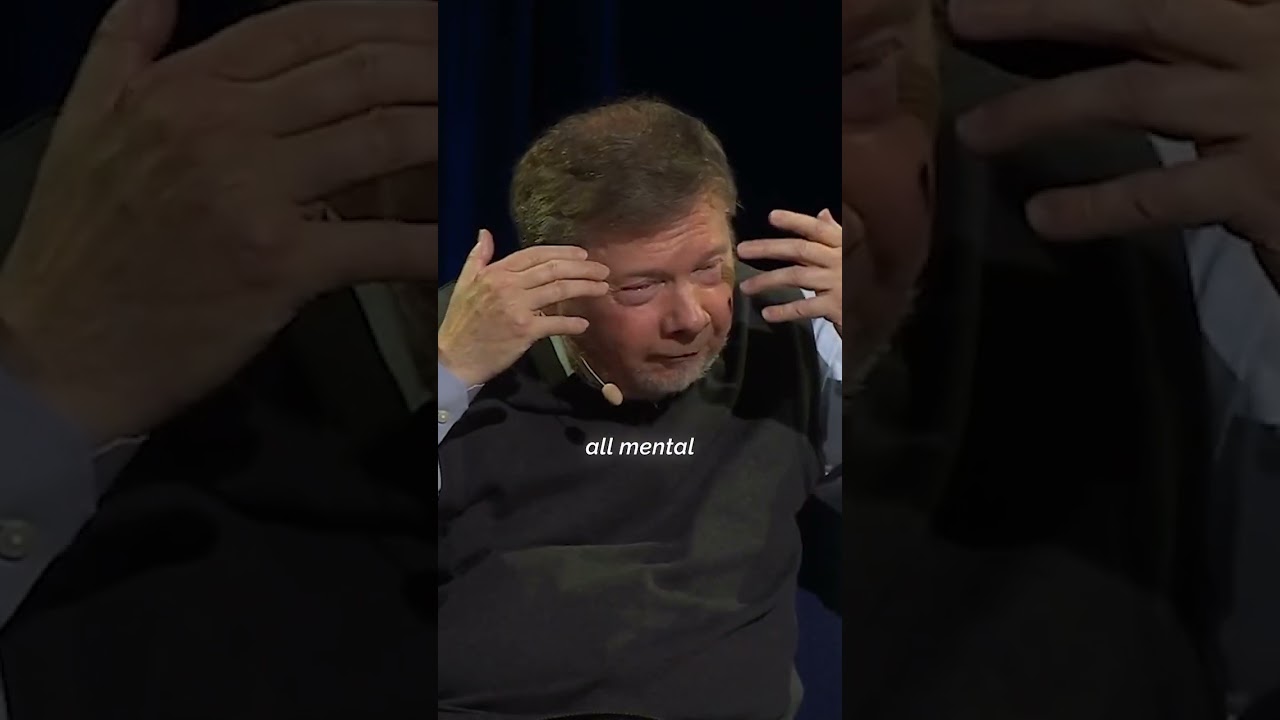
Eckhart Tolle teaches that the primary source of human suffering is not external circumstances but the unconscious thoughts and interpretations the mind automatically attaches to those circumstances. While others may appear happy in similar situations, your emotional experience depends largely on the mental narratives you construct around events—most of which operate below conscious awareness. By recognizing this pattern, you can begin to separate the actual situation from the story your mind tells about it, creating space for a different response.
Where Does Your Unhappiness Actually Come From?
A fundamental misunderstanding shapes much of human suffering: the belief that external conditions directly cause our unhappiness. According to Tolle, this is backwards. Yes, circumstances matter, but not in the way most people assume. Two people can face nearly identical situations—job loss, relationship difficulty, health challenges—and experience vastly different emotional outcomes. The person sitting next to you might appear content in the same environment where you feel miserable.
The difference isn't luck or resilience. It's the mental layer between what happens and how you respond to it. Your mind continuously generates interpretations, judgments, and stories about events. These interpretations are often unconscious—you don't deliberately decide to feel bad; the feeling seems to arise automatically from the situation itself. But Tolle points out that the situation alone doesn't contain the unhappiness. The unhappiness lives in the thought overlay your mind adds to the situation.
This is crucial because it means you have far more agency than you might believe. You cannot always control external events, but you can learn to recognize and eventually work with the mental layer that creates suffering.
How Does the Unconscious Mind Create Suffering?
Most people operate with what Tolle calls an "unconscious mind"—a mind that runs automatic patterns without your deliberate consent. These patterns include habitual worry, comparison, blame, regret, and catastrophizing. When something happens, your conditioned mind instantly begins interpreting it through filters shaped by past experience, beliefs, and fears.
For example, a colleague doesn't respond to your email. The actual event is neutral: no response has occurred. But your mind might immediately generate a story: "They're angry with me." "I did something wrong." "I'm going to get fired." "My career is over." None of these interpretations are present in the actual situation. They emerge from the mind's habitual pattern of negative interpretation.
The problem deepens because these unconscious thoughts feel true. They arrive so quickly and feel so familiar that you assume they reflect reality rather than recognizing them as thoughts. You experience the emotion (anxiety, shame, despair) and believe it proves the story is real. This reinforces the cycle: unconscious thought generates emotion, emotion validates the thought, and you remain trapped in a mental loop disconnected from what's actually happening.
Tolle emphasizes that most people spend their lives in this state—reacting to their own mental interpretations rather than to actual circumstances. The mind becomes a lens that distorts experience, and you mistake the distortion for objective reality.
Why Do Others Appear Happy When You Feel Miserable?
The video's title points to a common observation: other people often seem happy in situations that would make you unhappy. This isn't because their circumstances are inherently different. It's because their mental relationship to circumstances differs. Some people have fewer unconscious negative patterns running in the background. Others have developed enough awareness to notice their thoughts and recognize them as thoughts rather than facts.
A person who has learned (whether through practice, temperament, or life experience) to meet situations without immediately overlaying them with worry and judgment will naturally experience less suffering. They might face the same challenge you face, but their mind doesn't automatically spin it into a catastrophe. They respond to what's actually there rather than to the story their mind adds.
This doesn't mean such people are delusional or denying reality. Rather, they've created some space between the event and their interpretation. They can acknowledge difficulty without immediately collapsing into the belief that it means something terrible about them or their future. This space—this gap between stimulus and response—is where freedom lives.
Can You Separate the Situation From Your Thoughts About It?
The practical implication of Tolle's teaching is that you can learn to distinguish between what is actually happening and what your mind is saying about what is happening. This sounds simple but requires genuine attention to notice.
Consider a concrete situation: you made a mistake at work. The fact is neutral: a mistake occurred, and certain consequences may follow. But notice what your mind does: it immediately begins evaluating you. "I'm incompetent." "Everyone will find out." "I'll never be trusted again." These are thoughts, not facts. The mistake is a fact. Your judgment about what the mistake means is a mental overlay.
When you can observe your thought—recognize it as a thought rather than truth—something shifts. The thought loses some of its power. You can then address the actual situation (correcting the error, learning from it, taking responsibility) without being hijacked by a mental narrative that exhausts and paralyzes you.
Most people skip this step. They experience the thought and immediately believe it, then act from that believed thought. But if you pause and notice—"I'm having the thought that I'm incompetent"—you've created the possibility of responding differently. You might still feel uncomfortable, but you're no longer fused with a story that amplifies the discomfort unnecessarily.
What Role Does Presence Play in Breaking This Pattern?
Tolle's broader teaching revolves around the concept of presence—being aware of what is happening right now, as it is, without the mind's interpretive overlay. When you're fully present, the mind quiets. You're not lost in thought about what happened (past) or fear about what might happen (future). You're here, aware, responsive.
In presence, the automatic negative narratives don't fire up as intensely. Not because you're suppressing them, but because your attention is on direct experience rather than on the mind's story about experience. A situation that would normally trigger anxiety is simply met with awareness. You can feel emotions, acknowledge them, and respond appropriately without being swept away by endless mental commentary.
This is why people who practice presence or meditation often appear calmer and more content than those caught in constant mental reactivity. They're not denying difficulty; they're simply not amplifying it with layers of unconscious thought.
How Can You Begin to Change Your Relationship With Unhappiness?
If your unhappiness stems largely from the mind's interpretations rather than from circumstances themselves, then changing your relationship with those interpretations is where freedom begins. This doesn't require positive thinking or forced optimism. It requires honesty about what you're actually experiencing versus what you're thinking about your experience.
The first step is noticing. Without judgment, begin to observe your thoughts when you feel unhappy. What is the situation? What is the story your mind is telling about the situation? These are often different things. A gray day is a weather condition. "A gray day means I should feel depressed" is a thought your mind adds.
The second step is recognizing that thoughts are mental events, not commands or prophecies. You can have the thought without believing it fully or acting on it immediately. This creates space—the gap between impulse and action where conscious choice becomes possible.
The third step is returning to what's actually true right now. In this moment, what is actually happening? Not what might happen, not what happened yesterday, not what your mind fears—what is here now? Often, this moment is not actually as bad as the thought suggests. You're safe. You're breathing. The situation, while perhaps challenging, is workable.
This simple shift—from being lost in the mind's interpretation to being aware of the present situation—often spontaneously reduces suffering. Not because you're pretending things are fine, but because you've stopped amplifying difficulty with unnecessary mental drama.
Where to Go From Here
Tolle's teaching in this video points toward a practical inquiry you can undertake in your own life. The next time you feel unhappy, pause and ask: What is actually happening right now? What is my mind saying about what is happening? Are these the same thing? Can I feel the situation without fully believing the story? This investigation itself is the beginning of freedom. You don't need to change your circumstances first. You can change your relationship with them, starting now, by bringing awareness to the gap between what is and what your mind insists it means.