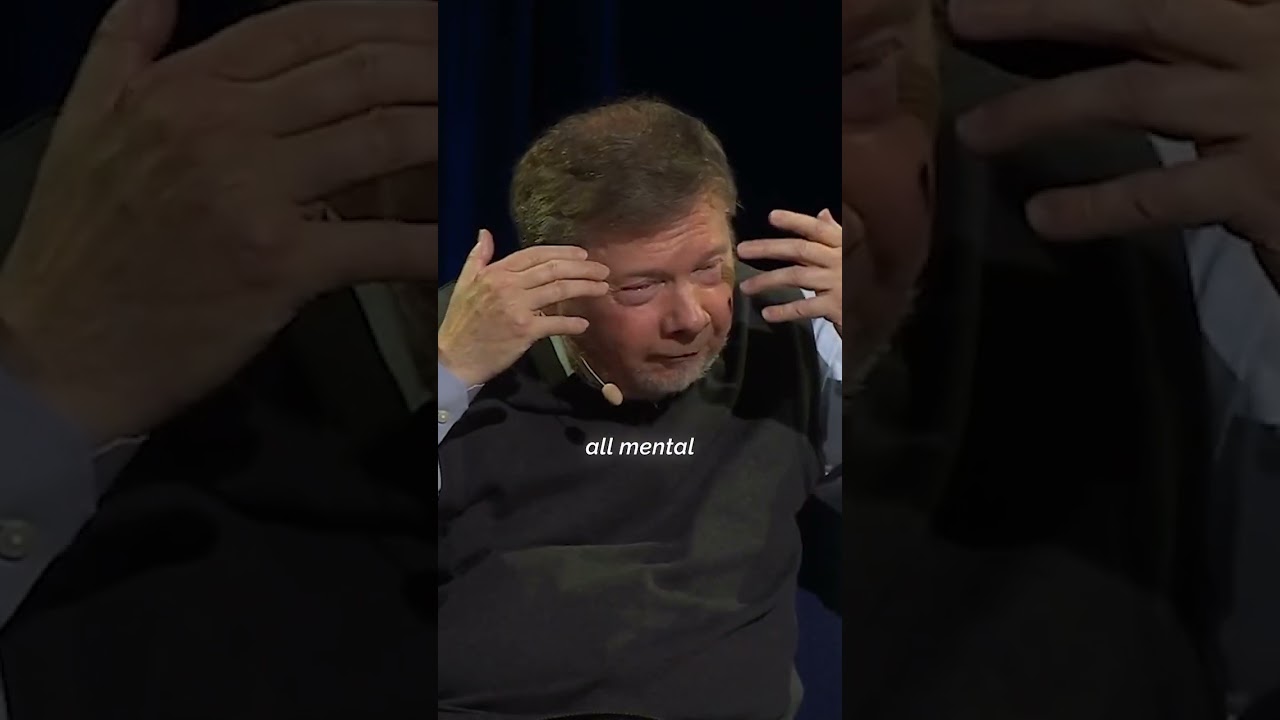
Eckhart Tolle uses the behavior of ducks—which fight, resolve, and immediately move on without carrying resentment—as a teaching on complete presence. Unlike humans, who carry grudges forward and allow past conflicts to shape future moments, ducks embody the principle that consciousness remains free when the mind doesn't drag yesterday's narratives into today. This short teaching illuminates why holding grudges is fundamentally incompatible with presence and why releasing past grievances is a marker of conscious living.
What Ducks Reveal About Presence
Tolle's observation of ducks captures something essential about what presence truly means. When two ducks fight on a pond, the conflict is real and often intense. They may peck, chase, and display aggression toward one another with full force. Yet the moment the fight ends, something remarkable happens: the ducks separate, shake themselves, and return to their natural state as though nothing occurred. They do not swim in circles rehearsing the conflict. They do not avoid each other with lingering tension. They do not carry a sense of injury or injustice into the next moment.
This behavior points to a fundamental difference in consciousness between animals living in complete presence and humans who layer thought upon experience. The duck's mind does not generate a conceptual identity around the fight—no story of victimhood, no narrative of being wronged, no future-oriented plan for revenge or reconciliation based on past hurt. The conflict was a present-moment event, and when it ended, so did the duck's engagement with it.
Why Humans Hold Grudges Forward
In contrast, human consciousness has the capacity to extract the fight from its original moment and carry it forward as a psychological presence. A human being will replay the conflict repeatedly, extracting meaning from it, building a story around it, and allowing that story to filter how they perceive and treat the other person in subsequent encounters. The grudge is not the original grievance—it is the act of keeping the past alive in consciousness as a present reality.
This pattern reveals how the human mind's extraordinary capacity for memory and narrative can work against presence. The past is not inherently a problem; memory serves essential functions. But when consciousness fuses with thought-patterns about the past, and those patterns are carried into new moments, the present becomes obscured by what Tolle identifies as the "pain-body"—the accumulated emotional residue of past hurt that the ego perpetually re-activates.
When you hold a grudge, you are essentially deciding that the person who wronged you should continue to wrong you through your own thoughts and feelings about them. The conflict happened in the past; the grudge exists only because you are choosing, through habitual thought-patterns, to keep it alive now. This is why Tolle often emphasizes that complete presence means the past does not follow you into the next moment.
Presence as the Absence of Carried Narratives
Complete presence does not mean forgetting what happened or pretending harm didn't occur. Rather, it means relating to the present moment without the filter of old thought-patterns. When you encounter someone you've had conflict with, you can acknowledge what transpired without allowing that acknowledgment to be contaminated by the emotional charge attached to the story of it.
This is extraordinarily difficult for humans because the thinking mind has evolved to extract lessons from past experience and project them into the future—a survival mechanism. But this same mechanism, when operating unconsciously, creates what Tolle calls the "egoic mind," which is always interpreting present events through the lens of past grievance and future threat. A person does not simply exist as themselves in the next moment; they exist as an echo of the previous conflict, colored by all the conceptual meaning the mind has attached to it.
The duck, operating from pure presence, has no such burden. It does not compare the present moment to the past one. It does not project identity ("I am a duck who was wronged") onto its current state. It simply is, and responds to what is immediately present.
The Paradox of Righteous Justification
One reason humans find it so difficult to release grudges is that the ego uses them as evidence of its rightness. To hold a grudge is, in the ego's logic, to maintain moral clarity about who was wrong. Releasing the grudge feels like a betrayal of that clarity, like agreeing the other person was not in the wrong. This confusion between presence and moral relativism keeps people locked in resentment.
But presence and moral clarity are not opposed. You can see clearly what someone did, understand its impact, and even choose not to associate with them, all while being present. The moment you move beyond the specific event into a generalized narrative ("This person is like this"; "They always do this"; "I can never trust them"), you have left the present moment and entered into the realm of conceptual identity and future-oriented fear.
How Grudges Become Habitual
Tolle's teaching implies that grudge-holding is a habit reinforced through repetition. Each time you rehearse the story of what someone did, you strengthen the neural pathways associated with it. The emotional charge becomes anchored more deeply. Over time, bringing up the person's name, seeing them, or even thinking about them automatically triggers the old emotional residue. This is the pain-body in action—a self-perpetuating loop of past-focused thinking that takes on a life of its own.
The duck does not engage in this rehearsal. When the fight is over, the nervous system resets. There is no "reliving" of the conflict, no mental chewing on what happened, no imagining of future scenarios where the same duck might attack again. The duck's consciousness is not divided between the present moment and a simulated past or future.
What Complete Presence Looks Like in Human Relationships
If humans were to operate with the presence that ducks naturally embody, relationships would fundamentally shift. A conflict would occur. The impact would be felt and processed. But in the next moment, neither party would carry the conflict forward as a defining narrative about the other. This does not mean the conflict had no consequences; it means the consequences are addressed in the present, not through the lens of past resentment.
A person operating from presence can say, "You did something I experienced as harmful. I need to take space" or "This hurt, and I need time before I interact with you again." These are present-moment responses rooted in actual current boundaries, not in a conceptual identity built on past grievance. The difference is subtle but profound: one is responsive, the other is reactive from ego-patterns.
Tolle's teaching suggests that the gap between human consciousness and duck consciousness is not so much about intelligence or moral development as it is about identification with thought. The duck does not have a self-concept that gets wounded and then protects itself through grudge-holding. It has awareness, but not the kind of thinking-mind that can transform a single event into a permanent characterization of another being.
The Practice of Releasing Carried Past
For humans, moving toward the presence that ducks naturally inhabit requires noticing the difference between acknowledging what happened and carrying the emotional charge of it forward. When you become aware that you are holding a grudge, you are already partially present—you're observing the pattern rather than being entirely fused with it. From that point of observation, the question becomes: Is keeping this narrative alive serving me? Is it present, or is it a thought-pattern running on automatic?
Tolle would suggest that the moment you see the grudge clearly for what it is—a repetition of old thought and emotion in the present moment—you have already begun to release it. The releasing is not about forcing forgiveness or suppressing justified anger. It is about redirecting consciousness toward what is actually present, and away from what is only present as a thought-pattern.
The teaching of the ducks is not sentimental. It is a pointer to the nature of consciousness itself: when presence is complete, there is no room for carried grievance. Not because you've decided to be magnanimous, but because the past is not actually present, and consciousness that is truly present has no basis on which to stand grudges upright.
Where to Go From Here
To apply this teaching, notice where in your life you are carrying forward the emotional charge of past conflicts. Observe whether you are describing people based on what they did once or repeatedly, or based on what they are doing now. See if you can spend one interaction with someone you've had conflict with—even briefly—without the past following you into it. This is not a moral practice; it is an inquiry into how presence actually functions. The duck does not teach through morality. It teaches through the simple fact of what happens when consciousness is not divided between past narrative and present reality.