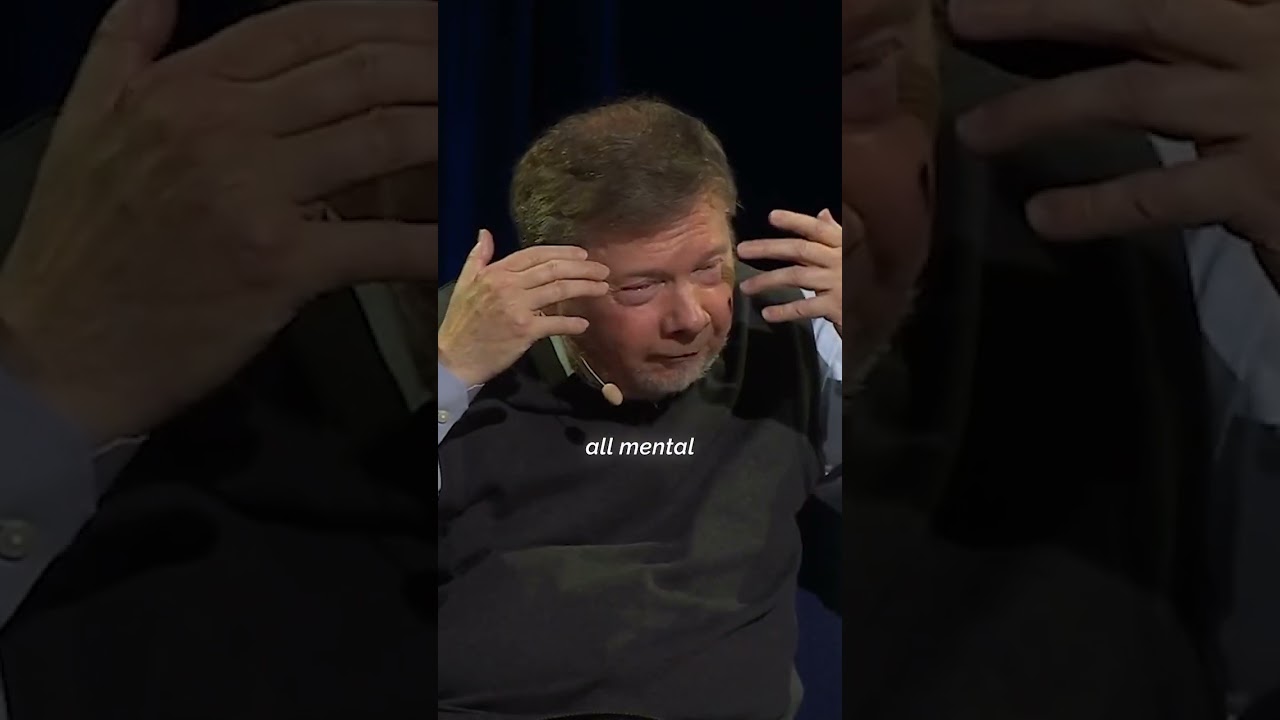
When you stop the habit of narrating yourself to yourself—explaining, judging, interpreting—what is left? Eckhart Tolle points to a fundamental dimension of awareness that exists prior to thought itself. This is not a blank void, but a conscious presence that many contemplatives call "being," "presence," or the "eternal now." By recognizing this ground of awareness, you access a stability that thought cannot provide, and a truer sense of who you actually are beneath the mental story you habitually construct about yourself.
The Cost of Constant Mental Narration
In everyday consciousness, we are rarely just aware. Instead, we are aware of something while simultaneously narrating it. You see a person; your mind immediately comments: "I like them" or "They seem nervous" or "That reminds me of…" You feel an emotion; the mind adds interpretation: "This is anxiety," "I shouldn't feel this way," "This happened because…" This compulsive narration, what Tolle calls the talking mind or the "voice in the head," is so constant that most people mistake it for consciousness itself. They confuse the ability to think about their experience with the experience of being.
This distinction is crucial. The narrating mind is useful for certain tasks—planning, analyzing, communicating. But it is also exhausting. It runs continuously, often in loops, rehashing the past and rehearsing the future. It explains you to yourself ceaselessly, constructing a narrative identity: "I am someone who is anxious," "I'm not good at this," "This is who I've always been." Over time, this mental explanation becomes a prison, because the self you've narrated into being feels fixed, solid, and hard to change.
Yet this narration is not actually who you are. It is a function of the thinking mind, a very recent evolutionary development. Beneath it lies something else—a dimension of awareness that does not think, does not interpret, does not need to explain itself. That dimension is what persists when you let go of thought.
What Is Present When Thought Stops?
When you stop explaining yourself to yourself, you don't disappear. This is the discovery Tolle points to. Instead, you become aware of a quality of presence, of aliveness, of simple awareness itself. This is not an achievement or a profound bliss state reserved for monks. It is available in ordinary moments—when you're absorbed in a task, watching a sunset, playing with a child, or sitting quietly without agenda.
In those moments, the narrator is quiet. There is no mental commentary saying "I am watching the sunset" or "I am being mindful." There is simply watching, being, direct experience. And yet you are there. Consciousness is present. Something is aware. But that "something" is not the thinking ego that normally claims the experience as its own.
This shift from thought-based identity to presence-based identity is foundational to Tolle's teaching. The thinking mind wants to claim every experience as proof of itself: "I noticed that. I felt that. That happened to me." But the actual experience is available whether or not the mind claims it. You can be aware without the mind narrating your awareness.
The Difference Between the Thinking Mind and Consciousness
Consciousness is the ground. Thought is a temporary movement within that ground. Most people are so identified with thought that they believe consciousness and thinking are the same thing. But you can verify this for yourself: right now, beneath any thought you might be having, is there not also an awareness that knows the thought is happening? That knowing is not a thought. It is the witnessing presence to which all thoughts appear.
This is radical because it means your fundamental nature is not mental. You are not the content of your thinking. You are the space, the awareness, in which thinking occurs. And that awareness is accessible. It does not depend on your thoughts being positive, clear, or spiritually advanced. It is present whether your mind is calm or chaotic.
When you truly let go of thought—not through suppression, but through a simple shift of attention from the thinking to the presence that is aware of thinking—you discover what Tolle calls the "I Am" sense. Not "I am anxious" or "I am successful" or "I am this or that," but simply the felt sense of existing, of presence, of being alive. That cannot be taken from you because it is not dependent on circumstances, thoughts, or identity.
Why We Cling to Mental Narration
If presence is always available, why do we stay locked in thought? Partly because the mind is addicted to being the authority. It wants to explain, control, and be in charge. The thinking mind is also very useful for survival and functioning in the world. And partly because the transition from mental identification to presence-based awareness can feel like a loss—a loss of the solid identity, the protective story, the explanation of who you are.
People often report that when they first experience real presence, without mental interpretation, it feels unfamiliar or even threatening. The ego—which is the identification with thought—senses this as a diminishment. It feels safer to keep narrating, to keep building the story, than to rest in the unknown of simple being.
But this is a confusion. Resting in presence is not a loss of yourself; it is actually a recovery of yourself. The narrated identity was never as solid or real as it seemed. It was always a mental construct. What remains when you let go of that construct is not a void, but an aliveness, a wholeness, a sense of being that is much more fundamental.
How to Access What Remains
Tolle's teaching suggests a simple pointer: bring your attention to the present moment without judgment. Not through thought, but through direct noticing. Feel your breath. Notice the sensation of your body. Listen to sounds around you without labeling them. Observe a thought arising, but don't get caught in its story. All of these are invitations to step out of the narrating mind and into direct presence.
Another approach is to notice the gap between thoughts. Even for those identified with thinking, there are natural gaps where the mind is quiet before the next thought arises. These gaps are not unconsciousness; they are moments of pure awareness. By bringing attention to these gaps, you begin to familiarize yourself with the quality of presence that Tolle is pointing to.
You can also explore the question itself: "Who is asking this question? Who wants to know what remains?" The "you" that is asking is not the mind. The mind can only provide mental answers. But there is a knowing prior to the mind that can sense this directly. By turning attention to that knowing, to that aware presence itself, you begin to access what remains.
The Paradox of Identity Without Thought
One of the deepest paradoxes is this: when you are not narrating yourself, you are not less of a self. You are more of a self. You are a self that is alive, responsive, intuitive, and whole. The narrated self is actually fragmented, always trying to defend, explain, and justify itself. The presence-based self is intact. It does not need explanation because it does not rest on a shaky psychological foundation.
When you operate from this deeper identity, your actions flow more naturally. You don't have to think your way through every moment. You respond to what is present with clarity and spontaneity. Relationships become easier because you are not performing a role or defending a narrative. You are simply here, simply being, which paradoxically makes you more genuinely yourself than you could ever be through mental construction.
Where to Go From Here
The invitation Tolle extends is not to believe any of this, but to verify it through your own direct experience. Notice when you are lost in thought-narration and when you are simply present. Feel the difference. See what happens when you pause the internal commentary and just be aware. This is not a special meditation state; it is available right now, in the midst of your ordinary life. The more you familiarize yourself with the presence that remains when thought stops, the more you will live from that ground of being. And in that shift lies a profound freedom—not freedom from life, but freedom within life, freedom to be what you actually are.