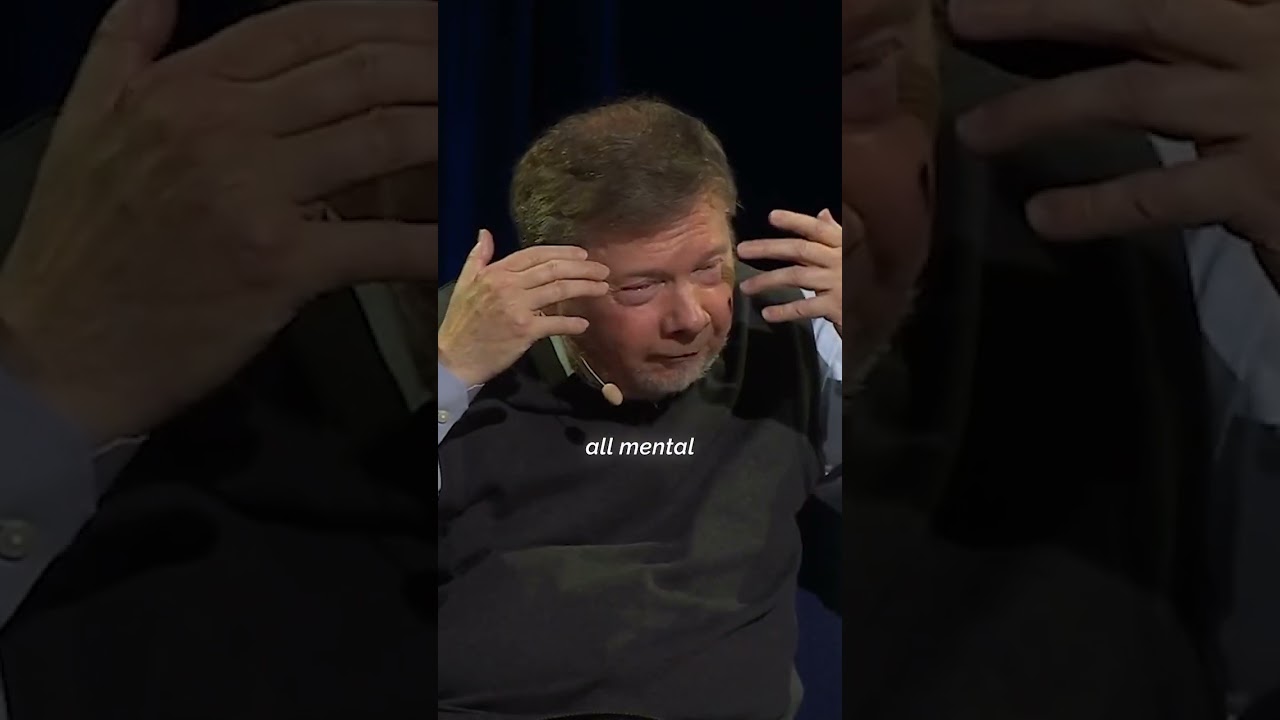
The human mind generates a constant stream of commentary that disconnects us from the present moment, creating unnecessary stress, self-criticism, and a sense of missing our own lives. This talk examines why the mind never stops talking and offers a practical pathway back to presence—the only moment where genuine relief and aliveness actually exist. By understanding the mechanics of mental habituation and recognizing the gap between thought and reality, you can interrupt the pattern and reclaim your experience of living.
Why Does the Mind Never Stop Talking?
The mind's ceaseless internal dialogue is not a flaw or personal failure—it's a habitual pattern that has become so normalized that most people mistake it for reality itself. The voice in the head generates a running commentary on everything: judgments about yourself, worries about the future, regrets about the past, and constant evaluation of whether things are "good" or "bad." This mental machinery was originally adaptive, serving survival functions by scanning for threats and planning. However, in the modern world, this habit persists far beyond its usefulness.
Most people are so identified with their thoughts that they never question whether this constant narration is necessary or even accurate. The mind believes it must keep talking to keep you safe, to keep you motivated, to keep you organized. In reality, much of this chatter serves no productive function—it simply reinforces a sense of separation from the moment and creates a psychological filter between you and direct experience. The mind has essentially become an overactive security system that's triggered by everything, drowning out the possibility of simply being.
How Does Mental Chatter Create Stress and Unhappiness?
The continuous stream of mental commentary generates a particular flavor of suffering. The mind doesn't just observe neutrally—it constantly judges, compares, and criticizes. You wake up and immediately encounter a voice that tells you what you should be doing, what you haven't accomplished, where you're falling short. This self-judgment creates a baseline of stress because you're perpetually being measured against an imaginary standard.
When you're lost in thought, you're essentially missing the actual events of your life as they occur. You might be eating a meal while thinking about a conversation you had earlier, or spending time with someone you care about while your mind generates a running commentary about how awkward you are. This split attention means you're never fully engaged with what's actually happening. The stress compounds because you're not only experiencing life's genuine challenges—you're also experiencing a phantom version of life created entirely by your mind's commentary.
The self-criticism that the mind generates is particularly insidious. It offers itself as helpful guidance, as if harsh judgment will somehow motivate you to be better. In reality, this criticism drains your energy and clouds your ability to respond clearly to actual situations. You operate from a subtle sense of deficiency rather than from presence and clarity.
What Is the Difference Between Thinking and Presence?
Thinking and presence are fundamentally different modes of consciousness. Thinking operates through time—it references the past, projects into the future, and creates narratives that connect these temporal points. It's conceptual, symbolic, and necessarily removes you from direct experience. Presence, by contrast, is the simple awareness of what is here now, unmediated by thought.
This distinction is crucial because presence is not the absence of thinking—it's the absence of identification with thinking. You can think when thinking is useful (solving a practical problem, learning new information, planning concrete action), but you're not trapped in the habit of thinking about everything, all the time. When you're truly present, your awareness is wider than your thoughts. You notice the breath, the sensations in your body, the sounds around you, the visual field. Thought becomes a tool you use rather than a prison you inhabit.
Presence is also where genuine relief and well-being actually reside. The mind cannot be at peace because its nature is to perpetually seek, judge, and comment. Relief comes only when you step back from that mechanism and reconnect with the present moment, where nothing is wrong right now—where you are simply alive.
How Can You Interrupt the Mental Chatter Habit?
The first step is simply noticing. Without judgment, begin to observe how much of your day is spent in thought rather than presence. This observation itself begins to loosen the grip of the habit. You might notice that as soon as you wake up, the mind activates. While you're doing routine tasks, the mind is elsewhere. Even while you're with people, there's a commentary running. This awareness creates a small gap—a moment where you're not entirely identified with the thoughts.
The body is your most reliable anchor. The mind lives in time; the body lives only in the present. When you bring attention to physical sensation—the feeling of your feet on the ground, the sensation of breathing, the texture of what you're touching—you immediately reconnect with now. This isn't visualization or imagination; it's direct sensory awareness. Even a few seconds of genuine body awareness can interrupt hours of mental rumination.
Simple practices help cultivate this capacity. Spending time in nature without mental commentary, doing something with full attention (eating, walking, listening), or noticing the breath for a few moments—these are not mystical practices. They're simply moments where you choose presence over mental habituation. Each time you do this, you strengthen the "muscle" of presence and weaken the automaticity of the mind's chatter.
What Does It Mean to Miss Your Life?
Missing your life is surprisingly literal. If you're predominantly identified with your thoughts, you're not actually here for the moments that constitute your existence. You're here physically, but your awareness is elsewhere—in mental scenarios, in the past, in imaginary futures. This happens so seamlessly that people often don't realize it's happening.
Consider a typical day: You spend the morning lost in thought about work, the afternoon worried about evening plans, the evening replaying a conversation from earlier. When did you actually experience the day? Where was your presence? The irony is that this tendency often increases during important moments—when you're with loved ones, during beautiful experiences, when significant events occur. The mind amplifies its commentary precisely when there's most to be present for.
Missing your life doesn't mean you need to engineer special moments or seek extraordinary experiences. It means you're not even present for the ordinary ones—the simple fact of breathing, of being alive, of having this particular vantage point on existence. This is both sobering and hopeful, because reclaiming your presence doesn't require changing your circumstances; it requires changing your relationship to consciousness itself.
Where to Go From Here
The opportunity is available right now. You don't need to wait for a special retreat, a life transformation, or a major change. You can pause and bring your attention to this moment: What do you see? What do you hear? What sensations are present in your body? This simple redirection of attention is both the practice and the goal. Each time you do it, you're training your consciousness to return home to presence.
Consistent practice gradually reshapes your relationship to the mind. The voice doesn't disappear—it wasn't meant to—but it becomes less tyrannical. Fewer hours are lost to useless commentary. More moments are available for genuine engagement with life. As this shift occurs, stress decreases naturally, not because problems vanish, but because you're no longer adding the suffering of mental commentary to whatever difficulties actually exist.
The 2026 invitation is simple: Stop missing your life. Notice the moments when presence is available. Reconnect with the body. Let the mind do what it needs to do without letting it colonize every waking moment. In this way, the year becomes not something that happens to you while you're lost in thought, but something you actually experience and inhabit.