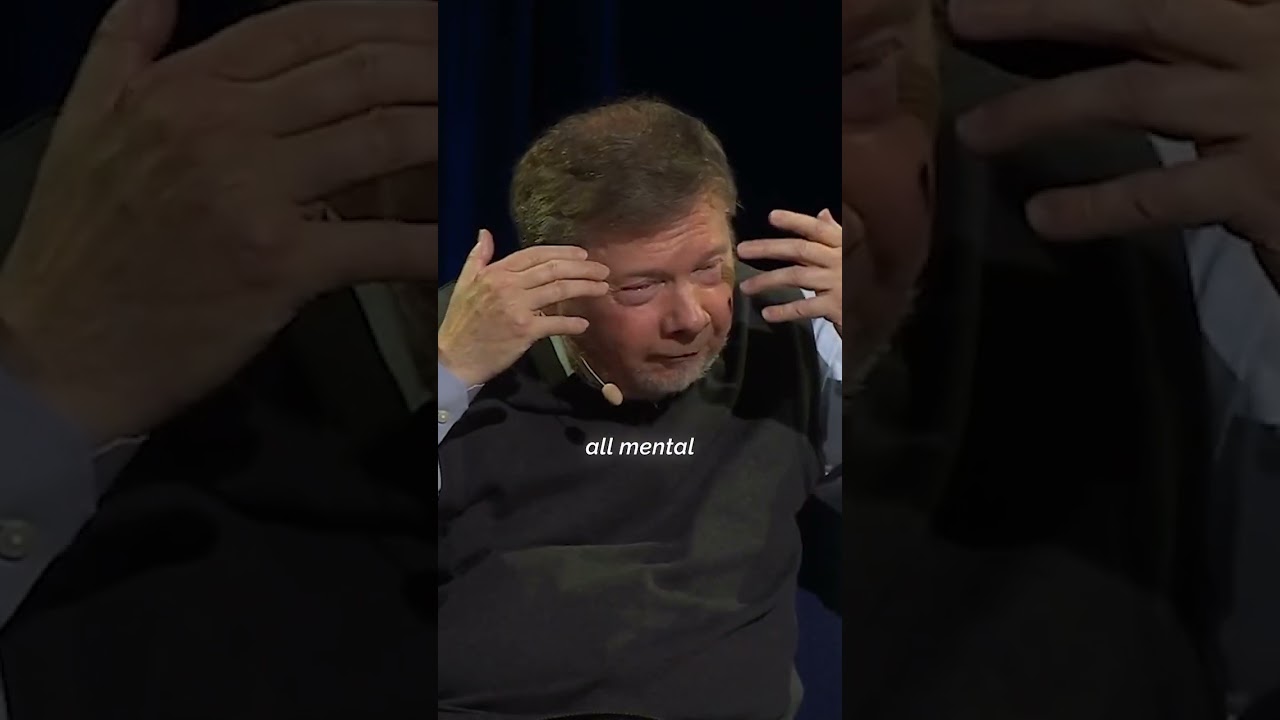
Eckhart Tolle teaches that situations themselves are not the source of suffering—it is the mental story we layer onto events that generates pain. In ordinary moments, we automatically add narratives, judgments, and interpretations to what occurs. By recognizing this mechanism, we can separate the actual situation (which is often neutral or manageable) from the psychological overlay (which amplifies difficulty). This distinction is foundational to reducing unnecessary suffering in daily life.
What Is the Difference Between a Situation and the Story We Tell About It?
One of Tolle's core insights is deceptively simple: a situation is what actually happens, while a story is the mental commentary we add to it. A flat tire is a situation—a neutral event that requires a practical response. The story might be: "This always happens to me. I'm unlucky. My day is ruined. Why does the universe conspire against me?" That narrative is entirely constructed by thought, layered on top of the actual circumstance.
In ordinary moments, this distinction becomes invisible because we are so habituated to adding stories instantly and automatically. When someone doesn't return a text message, the situation is simply that they haven't texted back. The story might be: "They're upset with me. I said something wrong. They don't care about me. I'm not important." None of this is in the situation itself—all of it lives in thought.
The mechanism is particularly powerful because it operates beneath conscious awareness. We experience the story as if it were the situation, as if our interpretation is reality. This collapse is why we suffer: we treat our mental narrative as the event itself, investing emotional energy into a construct that may bear little resemblance to what actually occurred.
How Does Thought Transform a Manageable Situation Into Suffering?
Tolle's teaching points to the architecture of unnecessary suffering. A manageable situation—one you could handle if you remained present—becomes overwhelming the moment thought adds resistance, judgment, or catastrophizing. This is not about denying real problems; it is about recognizing where the actual pain comes from.
Consider a common workplace frustration: your manager gives you critical feedback. The situation is: feedback was given. You now have information about how to improve. That is all. But thought immediately transforms it: "They think I'm incompetent. My job is at risk. I'm a failure. Everyone in the office thinks I'm bad at what I do." The suffering arises entirely from this layer of interpretation, not from the feedback itself.
What makes this mechanism so subtle is that the story feels absolutely real and justified. It feels like you are simply acknowledging the truth of your situation. But if you examine carefully, you will notice that much of what you are suffering about exists only in thought, not in the present moment. The present moment contains only the feedback that was spoken—a finite, workable piece of information. The mind has constructed an entire narrative architecture of shame, fear, and self-judgment that extends far beyond what actually occurred.
Tolle emphasizes that this process happens in ordinary moments throughout the day. It is not reserved for traumatic events; it is the baseline mode of human suffering. You miss an appointment, and thought adds the story of irresponsibility. You make a small mistake, and thought constructs a narrative of inadequacy. Someone looks at you a certain way, and thought weaves an entire story about what they think of you. Each time, the suffering is proportional not to the situation but to the thickness of the psychological overlay.
Why Do We Automatically Add Stories to Situations?
The habit of adding stories is deeply ingrained in human consciousness. It is not something you are doing wrong; it is how the thinking mind operates. Thought's primary function is to interpret, categorize, and create narratives. This was useful for survival in the past—assessing danger, planning, learning from experience. But in modern life, this same mechanism runs constantly, creating elaborate stories about situations that do not require them.
The ego particularly relies on stories. A story gives the mind something to do, a sense of control, and a way to define yourself. "This situation proves I'm unlucky, unlovable, incompetent, special, wronged." The ego feeds on these narratives because they reinforce a particular identity. Without the story, you are simply present with the situation—and that presence cannot be controlled or leveraged by the ego.
Additionally, we have been conditioned to believe that adding stories is the way to make sense of life. We are taught to analyze, interpret, and judge. School rewards thinking about things rather than simply experiencing them. Culture validates the person who has a clever take or a complex explanation over the person who simply remains present. So the habit runs deep.
What Happens When You Recognize the Story Without Believing It?
Tolle's practical invitation is to create separation between the situation and the story. This does not mean denying that you are having the story—the thought is real. It means recognizing that the story is something the mind is doing, not the nature of reality. You can notice: "I'm having the thought that this means I'm a failure" rather than "I am a failure." In that small shift, suffering begins to release.
When you recognize a story without fully identifying with it, you regain access to the present moment. The present moment, in itself, is workable. A flat tire in the present moment is a problem you can solve: you call a tow truck, you change the tire, you get to your destination late. You remain calm and resourceful because you are not also fighting against a mental narrative about what this situation means about you or your life.
This recognition also changes how you respond. Without the story, your response comes from clarity and presence rather than from the reactive patterns generated by thought. You address the actual situation without the emotional friction created by layers of interpretation. This is why Tolle often says that presence is the greatest problem-solving tool available to humans.
Can You Completely Stop Adding Stories?
Tolle teaches that the goal is not to achieve a state in which you never add stories again. That would still be another story—a spiritual achievement story. Rather, the invitation is to develop awareness of when the story is happening. This awareness creates choice. You notice the story, you see it for what it is—a mental construction—and you naturally release identification with it.
With practice, the time between the situation occurring and the story arising can expand. You can have a moment of presence before thought jumps in with its narrative. In that moment of presence, you are free. You are not imprisoned by the interpretation. As this capacity grows, you suffer less, not because your life becomes easier, but because you are no longer multiplying the difficulty through thought.
This is an ongoing unfolding rather than a final attainment. The mind will still generate stories—that is what minds do. But you become less fused with them. You recognize them more quickly. And that shift from fusion to observation is where freedom and reduced suffering are found.
Where to Go From Here
Begin noticing today: when does a situation become painful? Pay attention to the moment thought adds a story. You might catch yourself thinking, "My friend is ignoring me," when the situation is simply that they haven't texted back. You might notice, "I'm going to fail at this," when the situation is that you're facing a challenge. These moments of noticing are the beginning of freedom.
Consider writing down one situation you struggled with today and separating it into two columns: What actually happened? and What story did I add? This simple practice illuminates how much of your suffering is self-generated. Over time, this capacity becomes more immediate, and you carry it with you throughout your day—present with what is, rather than imprisoned by what you think it means.