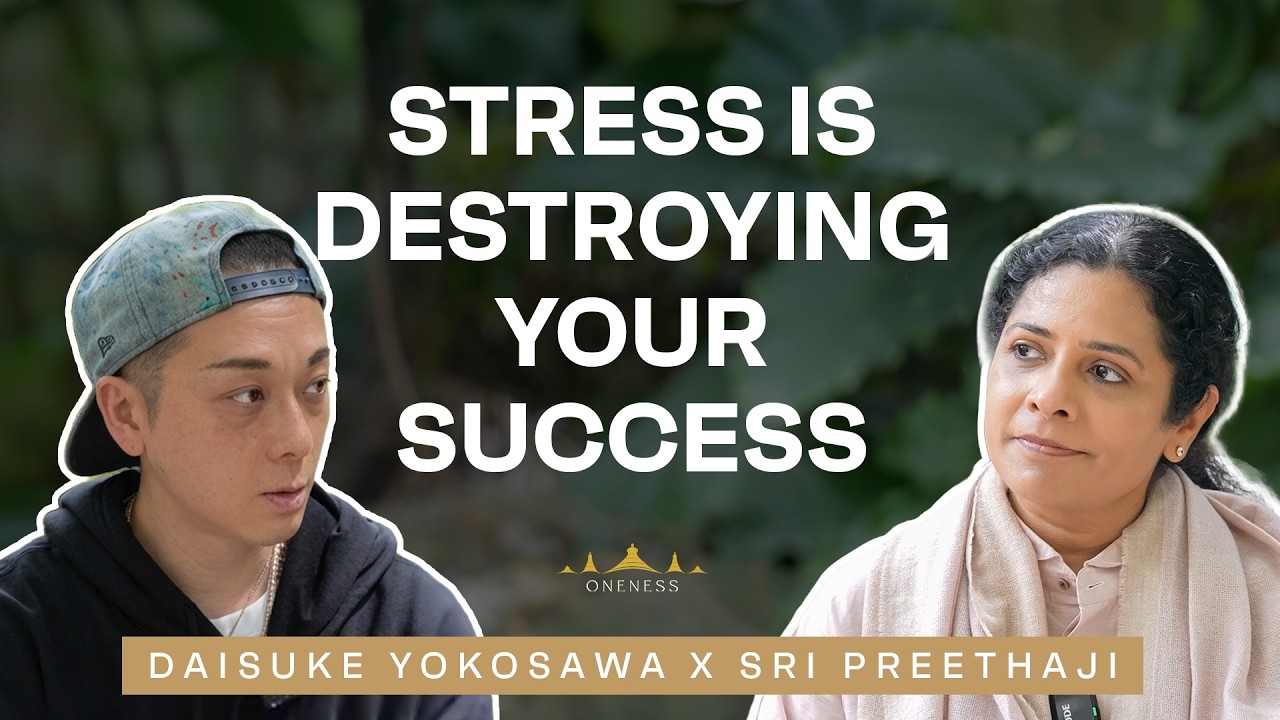
Daisuke Yokosawa discovered that the pressure-driven mindset he believed necessary for business success actually created friction and limitation. Through the Oneness path, he accessed a calm, clear inner space that paradoxically catalyzed greater business results, deeper relationships, and sustained joy—proving that calm is not a sign of weakness but a foundation for thriving.
The Belief That Pressure Equals Success
Many high-performing entrepreneurs and leaders internalize a core assumption early: pressure drives results. The logic feels obvious—stress creates urgency, urgency creates action, and action produces outcomes. Daisuke Yokosawa operated from this paradigm for years, believing that calm was a luxury he could not afford, or worse, a sign of weakness that would erode his competitive edge and business performance.
This cultural narrative runs deep. In many professional and entrepreneurial contexts, busyness is worn as a badge of honor. Stress is rebranded as "being serious" or "taking things seriously." Relaxation feels irresponsible. Under this frame, a calm mind would mean a complacent mind—one that had given up, checked out, or stopped caring about results.
What Changed When He Walked the Oneness Path?
Daisuke's turning point came through engagement with the Oneness path, a contemplative and spiritual framework centered on inner awakening and connection. Rather than adding another productivity system or motivational framework to his life, he began exploring the relationship between his inner state and his outer results.
The Oneness approach emphasizes direct experience of clarity, peace, and coherence within consciousness itself. As he moved deeper into this practice, Daisuke began to notice something unexpected: instead of calm reducing his drive or effectiveness, it created a different quality of mind—one that was clearer, more responsive, and paradoxically more capable of handling complexity and decision-making.
The Calm Space Within and Its Impact on Business
Daisuke discovered what many contemplative practitioners report: beneath the surface turbulence of thought, emotion, and reaction lies a spacious, stable awareness. This inner calm is not numbness or detachment—it is a heightened state of clarity where the mind operates without the static of anxiety, self-doubt, and defensive reactivity.
In business specifically, this shift transformed several domains. Strategic decisions, which had previously been clouded by fear and the need to control outcomes, became more intuitive and responsive to actual market conditions. Client relationships deepened because he could listen more fully rather than anxiously defending positions. Team dynamics improved because he could respond to people's actual needs rather than react from his own stress.
The paradox is that by releasing the grip of constant pressure, performance improved—not despite the calm, but because of it. A calm mind has better access to creative solutions, pattern recognition, and long-term thinking. A pressured mind is stuck in reactive survival mode, which narrows perception and limits the scope of what becomes possible.
How Inner Clarity Extends to Friendships and Relationships
The transformation extended beyond professional outcomes into personal relationships. When operating from pressure and anxiety, many high-achievers default to transactional or surface-level relating—people become obstacles, resources, or problems to solve rather than fellow beings to connect with.
As Daisuke's inner clarity deepened, his capacity for genuine presence in friendships grew. Calm creates space to actually hear what someone else is saying rather than planning your response. It creates patience with others' perspectives and vulnerabilities. Relationships became less about what he could extract or accomplish and more about authentic exchange and mutual care.
The Shift From Weakness to Strength
The core reframing is this: calm is not the absence of power; it is power operating from clarity rather than desperation. A pressured mind is constantly exhausted by its own resistance—fighting reality, fighting outcomes, fighting oneself. A calm mind conserves energy for actual creation and contribution.
This distinction matters because many people conflate calmness with passivity. The evidence from Daisuke's life suggests otherwise. Calm does not mean doing nothing; it means acting from a place of wholeness rather than fragmentation. It means decisions arise from intelligence rather than fear. It means ambition becomes aligned with values rather than driven by insecurity.
Abundance in Multiple Dimensions
The outcomes Daisuke reports touch multiple areas simultaneously: wealth (business results), joy (internal emotional state), love (quality of relationships), and peace (freedom from internal conflict). This multi-dimensional abundance is what the Oneness framework points toward—not success in one narrow domain at the cost of everything else, but integrated thriving.
This is not to suggest that inner work alone creates outer results without action or skill. Rather, the same action and skill—when flowing from calm clarity rather than anxious pressure—tend to produce better outcomes. The mind is more resourceful, the energy is more sustainable, and the resilience in the face of setbacks is greater.
Where to Go From Here
If you resonate with Daisuke's journey—if you recognize yourself in the pressure-driven paradigm and are curious about whether calm might actually serve your goals rather than sabotage them—the invitation is to experiment. Begin noticing the relationship between your inner state and your actual performance in key domains of your life. Observe whether the pressure you've maintained has actually produced the results you sought, or whether there is untapped potential that emerges when the mind is clearer. The Oneness Movement (theonenessmovement.org) and Ekam (ekam.org) offer structured approaches to accessing this inner clarity directly, not as an escape from life but as a foundation for engaging it more fully.