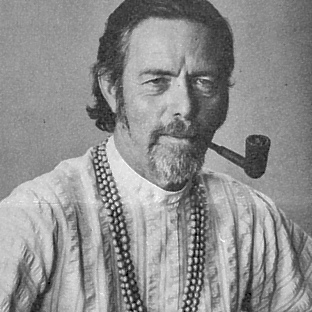
The Paradox of Finding Through Non-Seeking
Alan Watts offers a profound insight when he states, "To stop seeking is the secret of finding." This quote encapsulates a fundamental paradox that lies at the heart of many spiritual traditions, particularly within Zen philosophy. In a world that often equates success with relentless pursuit, Watts invites us to reconsider our approach to fulfillment and understanding. The stakes are high: in our frantic search for meaning, we may overlook the very essence of what we seek, which is often found in stillness and acceptance.
At its core, this teaching challenges the notion that desire and striving are the pathways to discovery. Instead, Watts suggests that true finding emerges from a state of being rather than doing. This perspective encourages us to embrace the present moment, allowing us to uncover the richness of our experiences without the burden of incessant longing. In a culture that prizes achievement and accumulation, this wisdom serves as a gentle reminder that sometimes, the most profound truths are revealed when we cease our relentless quest.
The image / the metaphor
The imagery in Watts's quote evokes a sense of surrender, a release from the grip of desire that often clouds our perception. The act of "seeking" implies a journey, a movement toward something perceived as lacking or absent. In contrast, "finding" suggests a moment of realization, a coming into awareness of what has always been present. The verbs chosen here—stop and find—invite us to consider the dynamic interplay between action and stillness, urging us to pause and reflect on what it means to truly discover.
In the speaker's tradition
Alan Watts's teachings are deeply rooted in Zen Buddhism, a tradition that emphasizes the importance of direct experience and the realization of one's true nature. Concepts such as *sunyata* (emptiness) and *prajna* (wisdom) resonate with the idea that our perceptions of lack and desire are often illusions. In Zen, the practice of *zazen* (sitting meditation) serves as a means to cultivate awareness and presence, allowing practitioners to experience the fullness of life without the distractions of seeking. This non-seeking approach aligns with the Zen understanding that enlightenment is not something to be attained but rather realized in the here and now.
In his work, *The Way of Zen*, Watts draws upon the teachings of Zen masters who emphasize the importance of letting go of attachments and desires. One such text, the *Heart Sutra*, articulates the essence of emptiness, stating that form is emptiness and emptiness is form. This profound realization echoes Watts's assertion that by relinquishing our grasping, we can uncover the inherent completeness of our existence. The wisdom of Zen teaches us that the journey toward understanding is not a linear path but a circular dance of awareness and acceptance.
Living the teaching
Consider a modern scenario where this teaching might resonate: a professional who is tirelessly pursuing a promotion, believing that success will bring happiness and fulfillment. In their relentless quest, they may overlook the joy found in their current work, the relationships they have built, and the skills they are developing. By pausing to reflect on their motivations and desires, they might discover that true satisfaction lies not in the external validation of a title but in the richness of their present experience. This shift in perspective can lead to a more profound sense of contentment and purpose.
In the realm of relationships, the teaching of non-seeking can also illuminate our interactions with others. Imagine a person who is constantly seeking validation from their partner, striving for reassurance and affirmation. This pursuit can create tension and distance, as the partner may feel pressured to fulfill expectations. By embracing the principle of non-seeking, one can cultivate a deeper connection rooted in acceptance and presence, allowing love to flourish without the weight of unmet desires. In this way, the act of finding becomes a shared experience, grounded in authenticity and mutual understanding.
A reflection
As we contemplate Watts's profound insight, we are invited to reflect on our own lives: What are we seeking, and what might we discover if we were to stop and simply be? This question encourages us to explore the areas where we may be grasping or striving, inviting us to consider the possibility that what we seek may already be within our reach. In the stillness of our hearts and minds, we may find that the secret of finding lies not in the pursuit but in the gentle art of letting go.




Join the BrightStar Community
Stay connected with daily inspiration, event announcements, and community wisdom