Embracing the Illusion of Separation
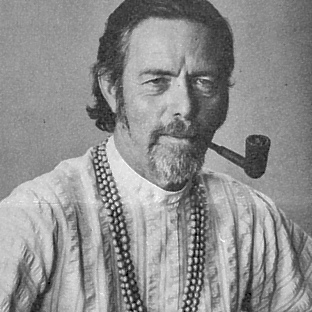
Alan Watts's assertion that "there is no separation between self and other" invites us to reconsider our understanding of identity and interconnectedness. He suggests that the feeling of isolation we often experience is merely a product of our minds—a hallucination that obscures the profound unity of existence. This perspective is not just philosophical; it has practical implications for how we relate to ourselves and the world around us. Recognizing this interconnectedness can lead to a more compassionate and harmonious way of living.
In a world increasingly marked by division and conflict, Watts's words resonate deeply. They challenge us to look beyond the surface of our individual experiences and to acknowledge the shared essence that binds all beings. This realization can be transformative, prompting a shift from a self-centered worldview to one that embraces the collective. As we explore the depths of this teaching, we may find that the boundaries we perceive are not as solid as they seem, and that true liberation lies in the recognition of our shared existence.
The image / the metaphor
Watts's quote evokes a vivid imagery of the self as a mere ripple in the vast ocean of existence. The verbs chosen—"separation," "isolation," and "hallucination"—suggest a dynamic interplay between perception and reality. The notion of an isolated self conjures images of a solitary island, surrounded by an expansive sea, yet this island is an illusion. In truth, the island is part of the ocean, and the ocean is part of the island; they are inseparable, each influencing and shaping the other.
Diving deeper into this metaphor, we can see that the hallucination of separation is akin to mist obscuring a landscape. When the mist lifts, we see the interconnectedness of all things—the trees, the mountains, the rivers, and the sky—all part of a single, unified whole. This imagery invites us to question our assumptions about individuality and to explore the deeper currents of existence that connect us. The more we engage with this metaphor, the more we can appreciate the richness of our shared experience.
In the speaker's tradition
Alan Watts's insights are deeply rooted in Zen Buddhism, where the concepts of sunyata (emptiness) and interdependence are central. In this tradition, the idea of an isolated self is seen as a misunderstanding of the nature of reality. The Zen teachings emphasize that all phenomena arise in relation to one another, and that the self is not a fixed entity but rather a fluid expression of the interconnected web of life. This understanding aligns with the notion of dharma, which teaches that our actions and thoughts are inextricably linked to the greater whole.
In his work, Watts often references the teachings of the Heart Sutra, which encapsulates the essence of sunyata. The sutra states, "Form is emptiness, emptiness is form," highlighting the non-dual nature of existence. This profound realization invites us to transcend the illusion of separation and to embrace the interconnectedness of all beings. By recognizing that our individual experiences are part of a larger tapestry, we can cultivate a sense of compassion and empathy that transcends the boundaries of self and other.
Living the teaching
Consider a modern scenario where this teaching can be applied: during a heated discussion about a contentious issue, one might feel a strong sense of separation from those who hold opposing views. The instinct is to defend one's position, to draw lines between "us" and "them." However, if we pause to reflect on Watts's insight, we might recognize that beneath the surface differences lies a shared humanity. This awareness can foster a more open dialogue, allowing for understanding and connection rather than division.
In the context of relationships, the teaching of interconnectedness can be particularly powerful. Imagine a moment of conflict with a loved one, where feelings of frustration and isolation arise. By remembering that the other person is not separate from us but rather a reflection of our shared experiences, we can approach the situation with greater empathy. This shift in perspective can transform the way we communicate, leading to deeper understanding and healing. The practice of mindfulness can support this process, encouraging us to remain present and aware of our interconnectedness in every interaction.
A reflection
As we contemplate Watts's assertion that "the whole notion of an isolated self is the result of a hallucination," we are invited to explore the nature of our own perceptions. What beliefs do we hold that reinforce the illusion of separation? In what ways can we cultivate a deeper sense of connection with others and the world around us? These questions can serve as a guide on our journey toward greater awareness and unity, encouraging us to embrace the richness of our shared existence.



Join the BrightStar Community
Stay connected with daily inspiration, event announcements, and community wisdom