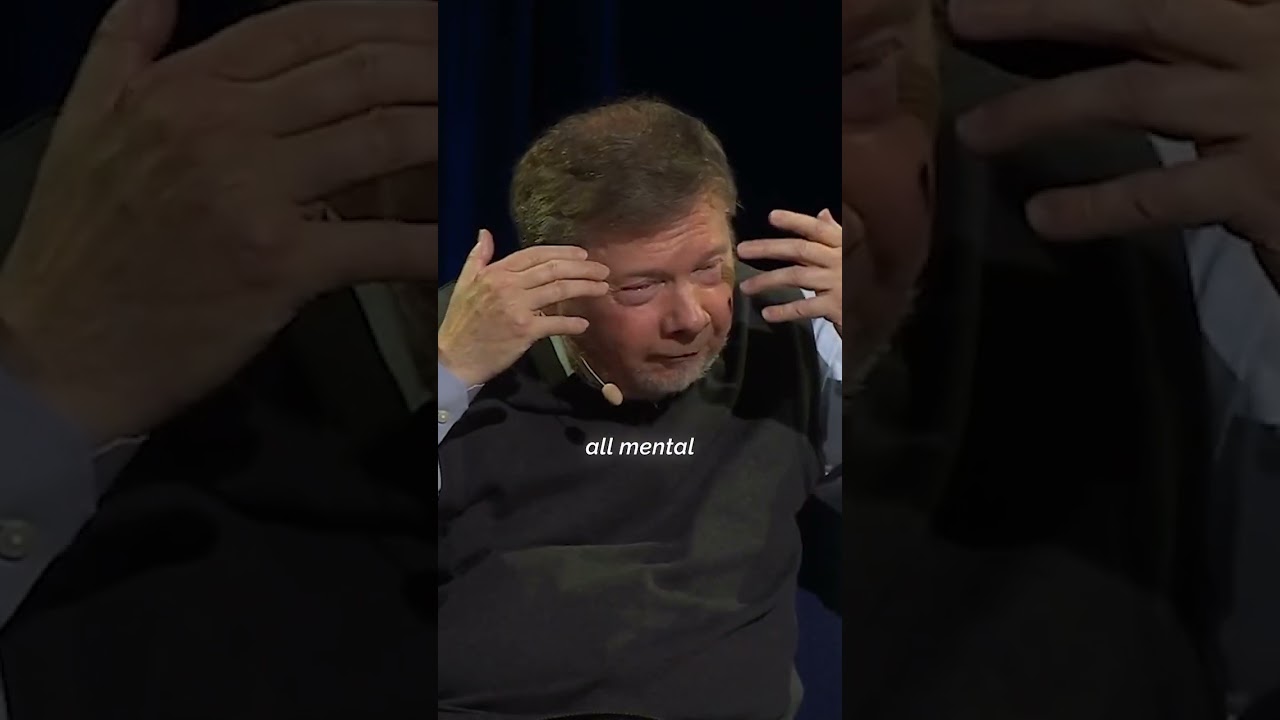
Eckhart Tolle explores the paradox of outcome-dependent happiness: whenever your sense of wellbeing rests on something external happening or remaining a certain way, you create the conditions for future suffering. True peace, by contrast, is not conditional on circumstances changing or staying stable. This distinction cuts to the root of psychological suffering and points toward a more stable foundation for contentment.
Why Happiness Tied to Outcomes Is Structurally Unstable
When you make your happiness contingent on a specific outcome—getting a promotion, maintaining a relationship, acquiring possessions, achieving a goal—you have locked your sense of wellbeing into a deal with the future. The problem is immediate: the future is inherently uncertain. Nothing stays the way you want it. Circumstances change, people change, and what you achieved eventually becomes the baseline against which you measure new disappointments.
This is not a matter of bad luck or personal failure. It is a structural flaw in the contract you've made with happiness. By definition, an outcome-dependent wellbeing requires constant maintenance. You must keep securing the conditions that make you happy. The moment those conditions shift—and they will—happiness collapses into its opposite. You do not simply lose the happiness; you gain unhappiness in its place. The letdown is sharp because you staked your peace on something external remaining stable.
What Actually Happens When Circumstances Change?
Consider the progression: You work toward something. You achieve it. There is relief, often joy. For a period, you feel good because the outcome you wanted materialized. But within weeks or months, the external thing that made you happy becomes normalized. Your mind adapts. The same job title, the same relationship status, the same possession no longer triggers the same satisfaction. You need a new goal, a new outcome, a new promise of future happiness to sustain the feeling.
More critically, any external condition is subject to loss or change beyond your control. A relationship can end. A job can be lost. Your health can shift. A possession can be taken or depreciate. When these inevitable changes occur, you don't merely return to neutral. Because you had made happiness conditional on their stability, their loss becomes a source of active suffering. The unhappiness is proportional to how deeply you had rooted your sense of self and wellbeing in that outcome.
This is why people who achieve significant external goals often report a hollow feeling. They expected lasting happiness. Instead, they find a brief satisfaction followed by emptiness and the compulsive search for the next outcome to fill the void. The structure itself is flawed.
The Role of the Mind in Creating Suffering
The mind generates unhappiness through a specific mechanism: it creates an image of how things should be, measures reality against that image, and produces suffering in the gap between the two. When you make happiness depend on an outcome, you are essentially asking the mind to generate a future fantasy and then tie your peace to its arrival. The mind is excellent at this task—but the task itself is a recipe for disappointment.
Why? Because even when you get what you thought you wanted, the mind quickly moves the goalposts. The outcome you achieved becomes merely a foundation for the next layer of wanting. The gap between what you have and what you imagine you need never closes. You are always pursuing, always anxious, always vulnerable to the next reversal.
What Is True Peace, Then?
True peace is radically different from happiness dependent on outcomes. It does not require specific conditions to be met. It is not absent when circumstances are difficult. True peace is a presence underneath circumstance—a sense of okayness that is not fragile because it does not depend on outcomes staying the way you prefer them.
This does not mean being indifferent to outcomes or ceasing to take action toward meaningful goals. You can still work toward things you value. But you do so from a different place: from the recognition that your fundamental wellbeing, your sense of inner stability, is not on the line. You have something deeper that remains untouched by whether you succeed or fail at any particular endeavor.
When you operate from this place, several things shift. First, you become less desperate, less grasping in pursuit of outcomes. This paradoxically makes you more effective, because you are not clouded by fear of failure or attached to specific results. Second, when things go wrong—and they will—you have a place to land. You are not thrown into an abyss of suffering because your foundation was not built on sand.
The Distinction Between Pleasure and Peace
It is important to clarify: true peace is not the same as pleasure or the good feeling of accomplishment. Pleasure and accomplishment are real and can be enjoyed. But they are transient by nature. They come and go. The mistake is in believing that capturing and holding pleasure is the same as peace. Pleasure happens in the body and mind, which are inherently impermanent. Peace is not a feeling that comes and goes—it is an underlying quality of presence that can coexist with pleasure, pain, accomplishment, or failure.
Many people confuse the two and exhaust themselves trying to make a transient experience permanent. This creates the exact opposite of peace: perpetual anxiety about losing the good feeling and grasping to manufacture it again.
How to Begin Uncoupling Wellbeing from Outcomes
The shift from outcome-dependent happiness to unconditional peace is not intellectual. You cannot think your way into it, though understanding the mechanism (as described above) can loosen its grip. The shift happens through direct observation and a willingness to notice where you have made happiness conditional.
One avenue is to watch your own mind. Notice when you say "I'll be happy when..." or "If this doesn't happen, my life is ruined." These are the moments where the unhappy contract is being written. Can you see it in real time? The moment you can see the mechanism, you have some space around it. You are no longer completely identified with the belief.
Another avenue is to practice resting in the present moment, independent of what you want to happen next. This is not escapism. It is recognizing that right now, in this moment, you are alive, you are aware, and there is nothing fundamentally wrong unless the mind is generating a story about what should be different. As you become more familiar with this, the dependency on outcomes naturally loosens.
Where to Go From Here
The recognition that outcome-dependent happiness is unstable does not require you to stop pursuing meaningful goals. Rather, it invites you to distinguish between the action you take in the world and the peace you rely on internally. You can care about outcomes without making them the foundation of your wellbeing. As you practice this distinction, both your effectiveness and your resilience increase—not because you are trying harder, but because you are no longer asking the impossible of external circumstances. You are no longer trying to make the impermanent permanent. That fundamental shift is where freedom begins.