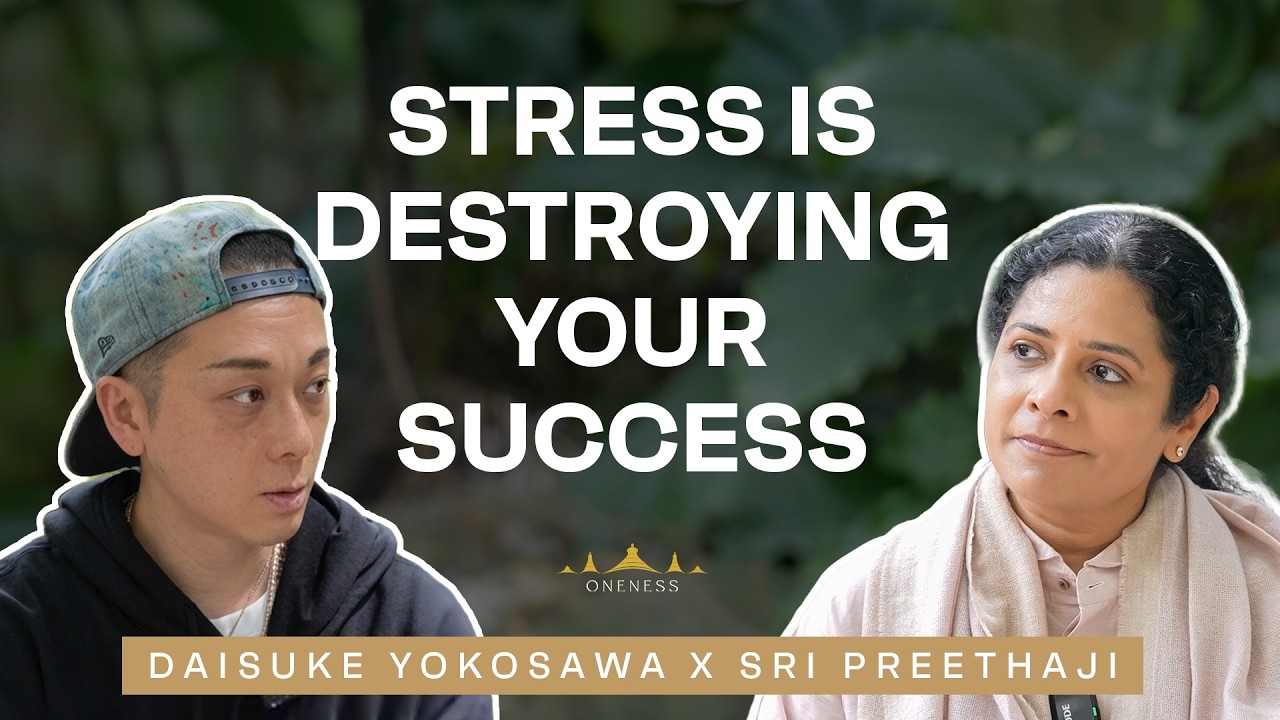
In a call with the European Oneness Community, Sri Preethaji addresses the perceptions that undermine relationships—examining how expectations, control, and misaligned assumptions about partnership create distance and conflict. She offers practical wisdom on reframing relationships as friendships grounded in mutual freedom rather than possession, addressing real questions from seekers on parenting, partner relationships, and the conditions necessary for genuine intimacy and harmony in all relational contexts.
What Are the Core Perceptions That Undermine Relationships?
Most relationship conflict does not emerge from lack of love, but from the perceptions and assumptions partners hold about how relationships should function. Sri Preethaji identifies "wrong perceptions" as the primary source of distance and conflict. These are not surface disagreements—they are deeply held beliefs about what a partner owes us, what commitment requires, and what security means.
Many people approach relationships with a possessive framework: a belief that a partner should fulfill specific roles, prioritize us exclusively, and meet emotional needs that are actually the individual's own responsibility. This creates a contract mentality rather than a friendship. When a partner fails to meet these expectations—which they inevitably will, because they are human—resentment accumulates and distance grows.
Another foundational misperception is the idea that relationships are a solution to loneliness, emptiness, or lack of purpose. While companionship enriches life, placing the burden of personal wholeness on a partner creates an impossible dynamic. The relationship becomes a scaffolding for unmet internal needs rather than a connection between two complete people.
How Does Freedom Function Within Partnership?
Sri Preethaji emphasizes that genuine intimacy requires freedom—not the absence of commitment, but the presence of mutual autonomy. A relationship in which one person feels controlled, monitored, or expected to sacrifice their authenticity is not a relationship; it is a cage.
Freedom in relationship means that each person maintains their own inner life, their own friendships, their own spiritual or creative pursuits, without requiring permission or causing jealousy. It means trusting your partner as an independent being with legitimate needs and desires that have nothing to do with you. This is radically different from the codependent model in which partners become absorbed into each other's identity.
When freedom is present, both people can be genuinely themselves. There is no performance, no suppression of parts of self to keep the peace. This paradoxically creates deeper intimacy because there is nothing hidden, no resentment building beneath surface civility. The relationship becomes a space where both people can grow rather than stagnate.
What Does It Mean to Reframe a Relationship as Friendship?
Sri Preethaji invites people to ask: "If the sexual or romantic component of my relationship were removed, would I still want to spend time with this person? Would I still enjoy their company, their perspective, their presence?" If the answer is no, the relationship is built on insecurity or dependence, not genuine connection.
A relationship structured as friendship means that both people choose to be together not because they need each other, but because they genuinely enjoy each other. There is mutual respect, shared values, and real compatibility. Arguments resolve more easily because they are not entangled with survival anxiety or fear of abandonment.
In this frame, consideration becomes natural rather than obligatory. You think of your partner's wellbeing not because you fear losing them, but because you care. You make compromises not out of guilt or duty, but because a friend's happiness matters. The relationship feels light rather than heavy, alive rather than obligatory.
How Do Wrong Perceptions Manifest in Parenting?
Sri Preethaji addresses parenting questions with the same lens: many parents relate to their children through a framework of control and expectation rather than genuine care. A parent might say they want their child to be happy, but what they actually want is for their child to be the version of happy that fits the parent's vision.
A child who is pressured to follow a particular career path, adopt specific values, or suppress authentic parts of themselves experiences this as suffocation, not love. Over time, the child develops either compliance (suppressing self) or rebellion (rejecting the parent's values entirely)—neither of which is genuine maturity.
When parents can hold their children as separate beings with their own souls, their own lessons, their own paths, parenting becomes about guidance without control. It becomes about creating safety and wisdom that the child can receive or reject according to their own unfolding. This requires the parent to release the need to engineer the child's life and instead trust in a larger process.
What Conditions Enable Genuine Intimacy?
Genuine intimacy requires radical honesty and the absence of judgment. When people fear that vulnerability will be used against them or met with criticism, they remain defended. Over time, this defensiveness becomes the texture of the relationship—distant, formal, safe but empty.
Sri Preethaji implies that many relationships are structured to avoid true intimacy rather than enable it. Partners maintain separate lives not from freedom but from fear. They keep parts of themselves hidden. They manage the relationship rather than inhabit it fully.
The conditions for genuine intimacy include: the freedom to be fully yourself without performance or suppression; the trust that your partner will not weaponize your vulnerability; the acceptance that your partner is not an extension of you but a separate person with their own inner world; and a genuine interest in understanding how your partner actually sees, thinks, and experiences life rather than imposing your interpretation onto them.
How Can People Release Possessive Patterns?
Releasing possessiveness begins with honest self-inquiry: "What am I actually afraid of losing? What need am I trying to fill through this relationship? What would happen if this person left?" Often the fear beneath possessiveness is not really about the partner—it is about the person's own identity, worth, or sense of security.
When someone realizes they are clinging to a partner because they fear being alone, unlovable, or insignificant without them, they have identified the real work to be done: building a sense of self that is not dependent on being chosen by another person. This is not work the partner can do for them. It is the individual's own deepening journey.
As people develop genuine self-worth, they naturally become less controlling. They can accept a partner's independent friendships, interests, and needs because these do not threaten their sense of being loved. A secure person can trust a partner in ways an insecure person cannot.
What Role Does Communication Play in Shifting Perceptions?
Communication in most relationships is transactional: partners discuss logistics, problems, and grievances. True communication is a mutual understanding of how each person actually experiences reality. Sri Preethaji's work invites couples to ask each other not "What did you do?" but "How did that land for you? What did it mean to you? How are you actually feeling?"
When partners truly listen—not to defend themselves but to understand—they often discover that conflict is based on misunderstanding rather than genuine incompatibility. One partner felt rejected when the other was actually preoccupied. One partner felt controlled when the other was trying to protect. One partner felt unloved when the other was actually struggling with their own demons.
This kind of communication requires a willingness to revise your story about what your partner's actions mean. It requires admitting that your interpretation might be incomplete. It requires curiosity rather than certainty.
How Does Wrong Perception Create Loops of Distance?
A classic loop: Partner A feels unloved and becomes withdrawn (displaying hurt to provoke reassurance). Partner B interprets the withdrawal as rejection and pulls away further (protecting themselves from hurt). Each person's attempt to address the pain actually amplifies it, and both become convinced the other has stopped caring. The relationship becomes a feedback loop of hurt confirmation.
Another loop: Partner A expects Partner B to read their mind (based on the belief that true love means intuitive understanding). When Partner B fails to guess what they need, Partner A feels unseen. Partner B, confused and blamed for not knowing something they were never told, feels both resentful and inadequate. The "you should know me" framework makes every mistake evidence of indifference.
These loops persist because both partners are caught in their own narrative. Sri Preethaji's invitation is to step outside the loop and ask: "What perception am I holding that is creating this pattern? Is this perception actually true? What would shift if I released it?"
What Is the Role of Acceptance in Relationships?
Acceptance does not mean tolerating mistreatment or abandoning standards. It means releasing the fantasy of who you wished your partner would be and actually seeing who they are. A person who constantly feels disappointed in their partner often entered the relationship with an unrealistic image and has spent years trying to reshape the real human into the fantasy.
When you accept your partner as they actually are—with their temperament, their limitations, their pace of growth—you stop wasting relational energy on resistance. You can then genuinely choose: "Do I want to be in relationship with this actual person?" If yes, the relationship becomes possible. If no, leaving becomes an act of clarity rather than failure.
Acceptance also means accepting yourself—your own needs, fears, and growth edges—within the relationship. Many people spend years trying to be a certain kind of partner while suppressing their authentic needs, then harbor resentment that the relationship is unfulfilling.
Where to Go From Here
Sri Preethaji's work invites a fundamental reset in how people approach relationships. Rather than viewing partnership as a solution to incompleteness, consider it an opportunity for two complete people to share life. Rather than approaching relationships with a checklist of expectations, enter them with genuine friendship as the foundation and watch how other qualities (loyalty, care, generosity) arise naturally.
Begin with self-inquiry: examine the perceptions you hold about what a partner "should" do, what love "should" look like, and what security "should" feel like. Write down your expectations and ask yourself where they came from and whether they are actually serving your relationship. Notice when you are trying to control your partner rather than trust them. Notice when you are withholding yourself from fear of being hurt.
In conversations with your partner, practice deep listening. Ask not "What did you mean?" but "How did that land for you? What did it make you feel about yourself or about us?" Listen to the answer without defending or explaining. Practice receiving feedback not as attack but as information about how your partner actually experiences you.
If you are parenting, examine your expectations of your children and ask: Is this what I actually want for them, or is this what I want for myself through them? Can I hold them as separate beings with their own unfolding rather than projects to be managed? What would shift in my parenting if I related to my child as I would to a good friend?
The shift from wrong perception to right perception is not a one-time insight; it is a continuous practice of noticing when you have returned to old frameworks and gently redirecting. Over time, relationships become spaces of genuine meeting, mutual freedom, and authentic friendship rather than contracts designed to ease loneliness.