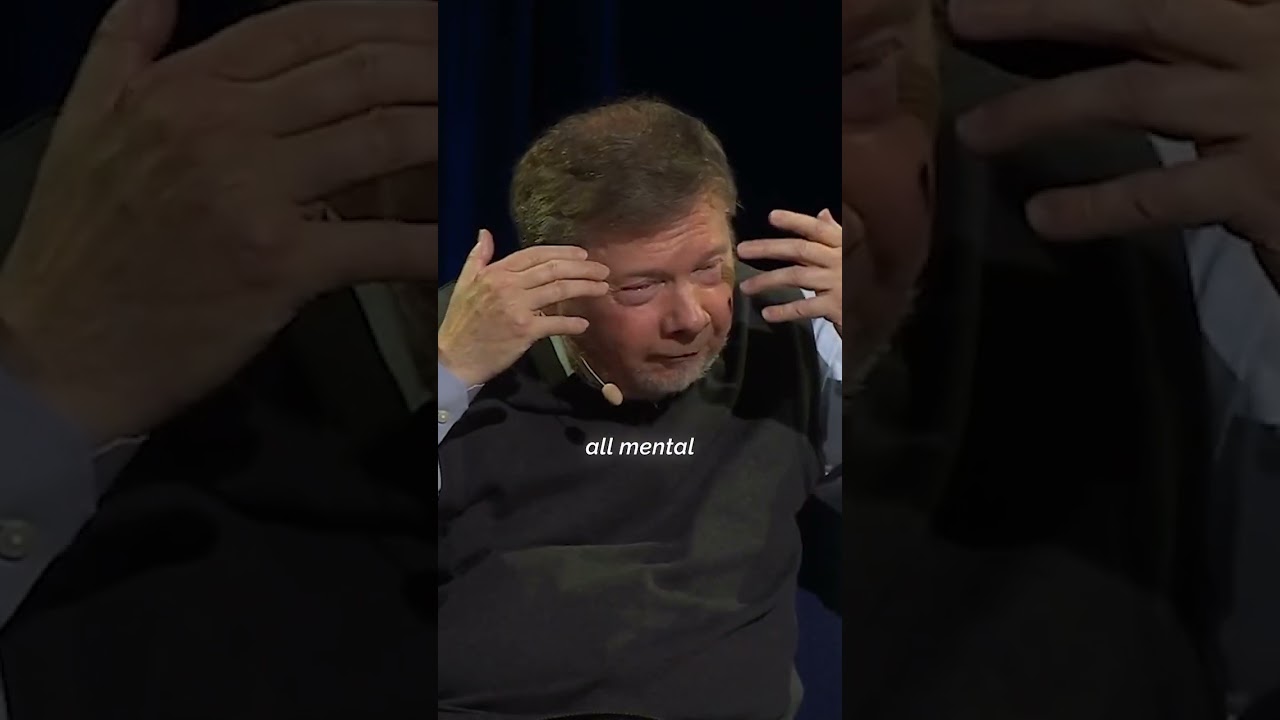
Life's heaviest periods—whether personal crises or collective struggles—are where genuine growth happens. While comfort feels pleasant, it rarely catalyzes the kind of inner development that leads to resilience and clarity. According to Eckhart Tolle, the difference between suffering that breaks us and suffering that shapes us lies not in the circumstances themselves but in how we relate to them. Our mindset and response determine whether difficulty becomes a doorway to deeper presence or a trap of resistance.
Why Comfort Rarely Leads to Growth
There is a widespread belief that growth comes from positive experiences, achievement, and ease. Yet observation of human development suggests otherwise. Comfort, while pleasurable, tends to keep us in habitual patterns. We settle into routines, assumptions, and ways of being that feel familiar precisely because they require no adaptation. The comfortable state asks nothing of us—no new capacities, no reassessment of who we are or what we're capable of.
Difficulty, by contrast, forces a reckoning. When life becomes heavy—whether through loss, illness, relationship breakdown, or uncertainty—our default strategies no longer work. The mind cannot solve the problem through its usual mechanisms. This gap between the difficulty and our capacity to handle it is where transformation becomes possible. It is in this gap that we meet ourselves differently.
How Challenge Reveals Resilience
Resilience is not a quality we are born with in full measure. It develops through encountering resistance and discovering we can meet it. When life is easy, we have no occasion to test ourselves. We don't know what we can endure, what we can learn, or what we can let go of. Difficult times provide this testing ground. Each challenge that we move through—not around—builds a kind of inner capacity that comfort never develops.
The personal challenges are often more visible: grief, illness, failure, rejection. But collective difficulties matter equally. Uncertainty in the world, social upheaval, economic pressure—these force us to examine what we actually control and what we must accept. In facing what we cannot change, we often discover agency where we didn't know it existed. We find clarity about what matters. We become less attached to outcomes we cannot influence and more present to what is actually here.
Mindset Shapes the Experience of Difficulty
The same external circumstance—a job loss, a relationship ending, a health diagnosis—can be experienced in radically different ways depending on the mindset we bring to it. One person sees only catastrophe and loss. Another sees disruption and opportunity for change. Both are responding to the same event, yet their inner worlds and what emerges from the experience are entirely different.
Mindset here does not mean positive thinking or pretending difficulty is not difficult. Rather, it refers to the fundamental stance we take toward what is happening. Are we resisting reality, fighting against what has already occurred? Or are we accepting what is, while considering how to move forward? Resistance to reality creates an additional layer of suffering—not just the difficulty itself, but the energy spent in denying or fighting it.
When we accept that something challenging is occurring, we free up mental and emotional energy for actually responding to it. We can see more clearly, think more creatively, and act with greater authenticity. The heavy feeling often comes from the clash between what we want reality to be and what it actually is. Reducing that gap through acceptance does not eliminate the challenge, but it changes our relationship to it.
Why Response Matters More Than Situation
Two people facing identical hardship will have different outcomes not because of the hardship but because of their responses. One person becomes bitter, closed off, convinced that life is happening to them. Another becomes more compassionate, more aware, more conscious of what truly matters. The difference is not in luck or circumstance—it is in the choices made in how to meet what has arrived.
The response begins with awareness: noticing the impulse to resist, spiral into fear-based thinking, or blame external forces. Many people never develop this awareness—they simply react automatically. But when we can observe our own mind and emotional patterns, we create space to choose differently. We can choose to stay present rather than getting lost in anxiety about the future. We can choose to act from clarity rather than panic. We can choose to remain open rather than hardening against the experience.
This is not about willpower or forcing positive feelings. It is about a subtle shift in consciousness—recognizing that we are not our thoughts, and that our awareness itself can be a stable ground even as circumstances are unstable. From this awareness, a different quality of response becomes possible.
The Dark Night as an Invitation
Spiritual traditions have long recognized that the darkest periods can be invitations to awakening. What feels like dissolution from one perspective can look like clearing away of illusions from another. When everything we relied on—success, relationships, health, identity—is stripped away, we are forced to ask deeper questions: Who am I without these things? What is real? What actually matters?
These questions, asked in the crucible of genuine difficulty, lead to different answers than the same questions asked in comfort. The answers come not from intellectual analysis but from lived experience. We discover capacities within ourselves we did not know existed. We often find that what we fear losing, we were not truly losing, or that losing it made space for something more real.
This is not to romanticize suffering or suggest that hardship is always good. Rather, it is to recognize that hardship, when met with presence and awareness, contains within it the seeds of significant development. The heavy feeling that prompts someone to finally pay attention, to question their life, to seek deeper understanding—that heaviness becomes a teacher.
Integrating Difficulty Into Your Practice
If you are currently in a heavy period, the invitation is not to transcend it through spiritual bypass—pretending it is not happening or that you should be above feeling its weight. Rather, it is to stay present with it. Notice what arises: the fear, the sadness, the resistance. Don't push these away or amplify them. Simply observe them with a kind of gentle attention.
Ask yourself: What am I resisting? What if I accepted this as something that is occurring right now? Notice the difference between the actual situation and the story your mind creates about it. Often much of the heaviness comes from the story—the meaning we assign, the catastrophizing, the personal narrative of failure or injustice—rather than from the situation itself.
Notice too what small moments of clarity or peace appear, even within difficulty. These moments are available. You might find them in a conversation, in nature, in a moment of rest. These are not escapes from the difficulty but pockets of presence within it. They remind you that you contain more than just the problem. Your consciousness is larger than your circumstances.
Where to Go From Here
If life feels heavy right now, you are not being punished. You are being tested, and tests are what reveal and develop capacity. Consider exploring practices that develop presence: meditation, time in nature, conscious breathing, or honest conversation with others who can listen without trying to fix. These are not distractions from difficulty but ways of building the awareness that allows you to meet difficulty differently.
Pay attention to how you talk about your situation. Does your language assume you are helpless or does it acknowledge your agency? Do you speak from victim or from participant in your own life? Small shifts in language often reflect and reinforce shifts in perspective. Seek out teachings, teachers, or communities that support this deeper work—not to bypass what you are experiencing but to move through it with greater consciousness.
Remember that growth from difficulty is not automatic. It requires intention, awareness, and often support. But it is available. The same weight that seems unbearable can, when met rightly, become the weight that strengthens you.