EveryEvent Dublin

Ver Todos los Events

Find every event in Dublin

events

Concerts & Live Music
Festivals
Sports & Recreation
Food & Drink
Arts & Culture
Community
Family & Kids
Nightlife
Comedy
Theater
Destinos Populares
BaliSedonaLos AngelesCosta RicaNew YorkSan FranciscoAustinMiamiJoshua TreeTulum
Ver Todas las CategoríasVer Todos los Destinos

Explorar Todas las Características

Herramientas poderosas para hacer crecer tus eventos

Características de la Plataforma

Precios Dinámicos Inteligentes
Categorías de Entradas
Asientos Asignados
Recuperación de Carritos
Recuperación de Visitantes
Donaciones y Escala Móvil
Motor de Afiliados
Escáner de Entradas
Códigos de Cupón
Preguntas Personalizadas
Compartir Entradas
Ventas Adicionales
Análisis e Informes
Secuencias de Email
Lista de Espera / Notificar / Recordar
Explorar
Discovery HubArtists & PerformersVenuesKnowledge Base
Ver Todas las CaracterísticasSobre Nosotros
PreciosBlog
Ver Todos los Eventos

events

Concerts & Live MusicFestivalsSports & RecreationFood & DrinkArts & CultureCommunityFamily & KidsNightlife

Destinos Populares

BaliSedonaLos AngelesCosta RicaNew YorkSan Francisco

Explorar

Discovery HubArtists & PerformersVenuesKnowledge Base

Características de la Plataforma

Precios Dinámicos InteligentesCategorías de EntradasAsientos AsignadosRecuperación de CarritosRecuperación de VisitantesDonaciones y Escala MóvilMotor de AfiliadosEscáner de EntradasCódigos de CupónPreguntas PersonalizadasCompartir EntradasVentas AdicionalesAnálisis e InformesSecuencias de EmailLista de Espera / Notificar / Recordar
Ver Todas las CaracterísticasSobre Nosotros
PreciosBlog
Iniciar sesiónRegistrarseOrganizadores de Eventos
  • Browse All Events
  • Concerts & Live Music
  • Festivals
  • Sports & Recreation
  • Food & Drink
  • Arts & Culture
  • Community
  • Family & Kids
  • Nightlife
  • Todas las Categorías →
  • All Destinations →
  • For Promoters
  • For Artists
  • For Venues
  • For Festivals
  • For Event Spaces
  • For Nonprofits
  • For Bloggers
  • For Speakers
  • Brand Ambassador
  • Case Studies
  • Red de +350K Compradores
  • Recuperación de Carritos
  • Precios Dinámicos Inteligentes
  • Categorías de Entradas
  • Eventos Recurrentes
  • Asientos Asignados
  • Motor de Afiliados
  • Lista de Espera / Notificar
  • Escáner de Entradas
  • Widget Embebido
  • Event Syndication
  • Message Center
  • Integrations
  • Reports
  • Todas las Características →
  • Acerca de
  • The Ecosystem
  • Blog
  • Glosario
  • Inspiration
  • Centro de Ayuda
  • Contacto
  • Documentación API
  • Recursos de Marca
  • Carreras
  • Prensa
  • Términos de Servicio
  • Política de Privacidad

Events

  • Browse All Events
  • Concerts & Live Music
  • Festivals
  • Sports & Recreation
  • Food & Drink
  • Arts & Culture
  • Community
  • Family & Kids
  • Nightlife
  • Todas las Categorías →

Getaways

  • All Destinations →

For Organizers

  • For Promoters
  • For Artists
  • For Venues
  • For Festivals
  • For Event Spaces
  • For Nonprofits
  • For Bloggers
  • For Speakers
  • Brand Ambassador
  • Case Studies

Características

  • Red de +350K Compradores
  • Recuperación de Carritos
  • Precios Dinámicos Inteligentes
  • Categorías de Entradas
  • Eventos Recurrentes
  • Asientos Asignados
  • Motor de Afiliados
  • Lista de Espera / Notificar
  • Escáner de Entradas
  • Widget Embebido
  • Event Syndication
  • Message Center
  • Integrations
  • Reports
  • Todas las Características →

Empresa

  • Acerca de
  • The Ecosystem
  • Blog
  • Glosario
  • Inspiration
  • Centro de Ayuda
  • Contacto
  • Documentación API
  • Recursos de Marca
  • Carreras
  • Prensa
  • Términos de Servicio
  • Política de Privacidad
EveryEvent
© 2026 EveryEvent Dublin. Todos los derechos reservados.
Inspiration

Stop Resisting Unhappinessto Dissolve It

Eckhart Tolle
Eckhart Tolle
May 20, 2026
6 min read
Watch · 4

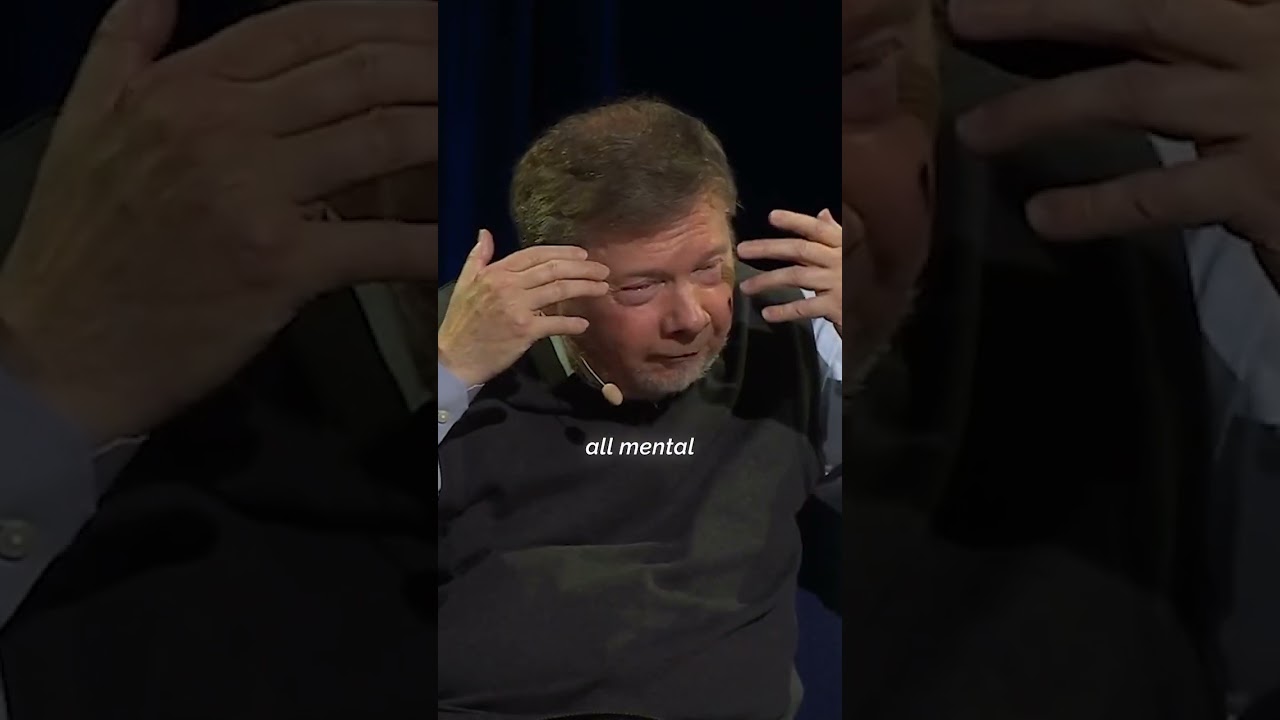
TLDR: A core insight emerges from examining what unhappiness actually requires to persist: does emotional suffering need resistance to survive, or can it exist independently? Eckhart Tolle proposes a radical experiment—adopting complete acceptance of unhappiness rather than fighting it—and suggests that resistance itself may be the fuel that sustains emotional pain. By shifting from struggle to surrender, unhappiness may naturally dissolve without additional effort or willpower.

Read · 6 sections

What Does Unhappiness Actually Need to Survive?

Most people assume that unhappiness is a condition that simply exists, and that the proper response is to fight it, fix it, or eliminate it. But Tolle invites a deeper question: does unhappiness actually require resistance in order to persist? This is not a rhetorical question but an empirical one that can be tested in direct experience.

Unhappiness often arrives with a story attached. A person identifies thoughts like "there's something wrong with me," "there's something wrong with life," or "there's something wrong somewhere." These thoughts frame unhappiness as a problem that demands a solution. That mental framing—the sense that something is amiss and needs to be corrected—creates resistance. It is the resistance itself that may feed and sustain the emotional field of unhappiness.

The distinction here is important: unhappiness can manifest in two ways. Sometimes it is connected to specific mind activity—thought patterns that reinforce a narrative of wrongness. At other times, unhappiness simply exists as an emotional field, a tone or quality of experience that is not tied to particular thoughts. In the latter case, the suffering may be purely emotional rather than conceptual.

Can Unhappiness Survive Surrender?

Tolle proposes a simple but counterintuitive experiment: instead of resisting unhappiness, what if you invited complete acceptance of it? The stance is not positive thinking or forced cheerfulness. Rather, it is a radical acknowledgment: "I'm unhappy. I don't mind being unhappy. It's fine. I'm unhappy, so let me be unhappy."

This does not mean wallowing in misery or adopting unhappiness as a permanent identity. It means dropping the secondary layer of resistance—the fight against the feeling, the judgment that unhappiness is wrong, the belief that something must be done immediately to fix it. In adopting this stance of non-resistance and surrender, the question becomes concrete: does the unhappiness persist, transform, or dissolve?

The mechanism is subtle. Resistance creates a kind of friction or struggle within consciousness. That struggle itself becomes a form of suffering that amplifies the original unhappiness. By removing the struggle, you remove the amplification. The unhappiness may still be present, but it no longer has the fuel of resistance to sustain it.

Does This Approach Actually Work?

Tolle notes that he has received feedback from people who have tested this approach in their own lives. The results are not uniform. For some people, the practice of non-resistance to unhappiness works very well—the emotional state shifts dramatically once the fighting stops. For others, it does not produce the same effect.

This variability suggests that the efficacy of the approach may depend on several factors: the depth of habituation to resistance, the degree to which unhappiness is anchored in recurring thought patterns versus existing as a pure emotional field, and perhaps the individual's capacity to actually surrender rather than merely pretend to surrender.

It is important to note that this is not a technique meant to produce happiness or positivity. The goal is not to achieve something better. The goal, if anything, is to stop the unnecessary struggle. Happiness may or may not follow. What does shift is the relationship to unhappiness itself—from one of conflict to one of acceptance.

The Role of Thought and Emotional Fields

Tolle makes a distinction that is crucial for understanding how this approach might work. Unhappiness can be sustained by thought activity—the mind's story about what is wrong. But unhappiness can also exist as an emotional field independent of any story. When unhappiness is purely emotional, there is no narrative to fight. There is only the feeling itself.

In this case, resistance takes the form of tension around the feeling: the body tightens, the breath becomes shallow, and the mind recoils. This physical and energetic resistance can actually intensify the emotional state. By releasing that tension—by allowing the emotional field to be as it is without fighting it—the state itself may shift.

When unhappiness is linked to mind activity, the mechanism is slightly different. The mind offers solutions, judgments, and stories about why things are wrong. Resistance to unhappiness in this case means engaging with the mind's narrative, trying to argue against it or solve it. By stepping back from that mental engagement—by saying, in effect, "I don't need to solve this right now; I can simply be unhappy"—you interrupt the loop that sustains the suffering.

Surrender as a Practical Stance, Not a Philosophy

Tolle frames this as an experiment rather than a dogma. The point is not to believe that non-resistance will work or to adopt it as a spiritual philosophy. The point is to try it and observe what happens. This empirical approach removes the burden of faith and places the evaluation squarely on direct experience.

The key is that the surrender must be genuine, not performed. A person who says "I'm okay with being unhappy" while secretly hoping it will go away has not actually surrendered. True surrender means releasing the agenda—the hidden demand that unhappiness should disappear. It means being willing to sit with unhappiness indefinitely without that underlying wish for it to change.

This is paradoxical: the only way this approach works is if you let go of the goal of making it work. You stop fighting not because you believe fighting is wrong, but because you see directly that fighting doesn't help. And in that seeing, the fight naturally falls away.

Where to Go From Here

If this exploration resonates, the invitation is to observe your own unhappiness with fresh eyes. Notice where resistance appears—in your thoughts, in your body, in your relationship to the emotional field itself. Notice what happens when you deliberately release that resistance, even for a few moments. You don't need to adopt this as a permanent practice. Simply experiment with what Tolle is pointing to and let your own direct experience be the teacher. The question "Can unhappiness survive without resistance?" is not something to answer intellectually. It is something to investigate in your own life.

Transcript

[0:00] Let's say you're unhappy, of course,

[0:02] it's often connected with certain mind

[0:04] activity, but at other times it may just

[0:07] be that the unhappiness lives in you as

[0:09] an emotional field. You could try say I

[0:13] I'm unhappy. I don't mind being unhappy.

[0:15] It's fine.

[0:17] I'm unhappy, so let me be unhappy.

[0:20] That's answering weird.

[0:23] So let me be unhappy. I don't mind. I'm

[0:25] just unhappy.

[0:27] Another question is can the unhappiness

[0:29] survive in a state of complete

[0:31] surrender?

[0:33] Or does the unhappiness in order to

[0:35] survive needs resistance? There's

[0:37] something wrong with me. There's

[0:39] something wrong with life. There's

[0:41] something wrong somewhere. You need some

[0:43] resistance. And

[0:45] if you I don't mind being unhappy, I'm

[0:48] just assessing it as an experiment. It

[0:51] works. I've had feedback from people.

[0:53] For some people it actually works very

[0:55] well, and for others it doesn't.

Eckhart Tolle
AuthorEckhart Tolle

German-born spiritual teacher whose 1997 book The Power of Now became one of the most widely read spiritual works of the 21st century. After a profound transformation at 29 — movin…

View profileWebsite
Explore Topics
Resistance-sufferingEmotional-acceptanceUnhappinessConsciousnessSurrender

Got Questions?

Frequently Asked Questions

According to this perspective, yes—resistance to unhappiness creates additional friction and struggle that can amplify the original emotional state. The resistance itself becomes a secondary layer of suffering that sustains the unhappiness. Removing the fight against the feeling may reduce the total amount of suffering, even if the original unhappiness remains.
Accepting unhappiness does not mean adopting it as a permanent identity or ceasing to care about your wellbeing. It means releasing the secondary struggle against the feeling while still moving forward with life. Acceptance is a stance of non-resistance, not resignation or passivity.
The efficacy varies based on whether unhappiness is rooted in repetitive thought patterns or exists as a pure emotional field, as well as the individual's actual capacity to surrender rather than merely perform acceptance. For some people, genuine non-resistance produces significant shifts; for others, the emotional pattern is too deeply anchored in habitual thinking.
No—forcing non-resistance defeats the purpose because the underlying agenda is still to escape the unhappiness. True surrender requires releasing the hidden demand that unhappiness should disappear. The practice works only when you genuinely stop trying to make it work and simply observe what happens.
The point is not guaranteed happiness or the disappearance of unhappiness, but rather the interruption of the struggle that intensifies suffering. Even if the emotional state remains, the relationship to it shifts from conflict to acceptance, which itself is a meaningful change in how you experience the state.
No—this is neither positive thinking nor suppression. It is about releasing the mental narrative that something is wrong and the physical tension that accompanies resistance. The feelings are fully acknowledged; only the struggle against them is released.
Surrender is active acknowledgment: "I'm unhappy and I'm okay with that." Ignoring means pretending the unhappiness isn't there. Surrender is present and honest; ignoring is absent and dishonest. Surrender permits the feeling to be consciously experienced without fighting it.

Continue Reading

More from Eckhart

View All
God Beyond the Sky: Rethinking Divine Nature
Featured

God Beyond the Sky: Rethinking Divine Nature

God is not an external judge deciding human suffering. Suffering itself becomes the mechanism through which consciousness awakens to itself.…

1 min read
God, Suffering, and the One Life Across Traditions
Featured

God, Suffering, and the One Life Across Traditions

Eckhart Tolle explores how Islam, Buddhism, and Greek philosophy all point to the same ultimate reality—and why the problem of suffering dis…

1 min read
Why Humanity Cannot Sit in Silence: Disconnection from Being
Featured

Why Humanity Cannot Sit in Silence: Disconnection from Being

The root of human conflict lies in disconnection from the being dimension—the inability to find peace when alone. When disconnected from bei…

1 min read
Who You Really Are Beyond Surface Identity
Featured

Who You Really Are Beyond Surface Identity

You are not your body, name, or conditioned mind. Eckhart Tolle reveals the distinction between surface identity and deeper being.…

1 min read

Keep exploring

Continue your journey

More wisdom and gatherings from across the BrightStar directory.

More Articles

Browse the full library of teachings, interviews, and guides.

Back to all articles →

Teachers & Artists

Explore the lineages, musicians, and guides of the conscious world.

Explore artists →

Find an Event

Kirtan, retreats, sound baths, breathwork, festivals — happening soon.

Browse events →
Read more from BrightStarCreate Free Account
Host your own gatherings?Try the Demo