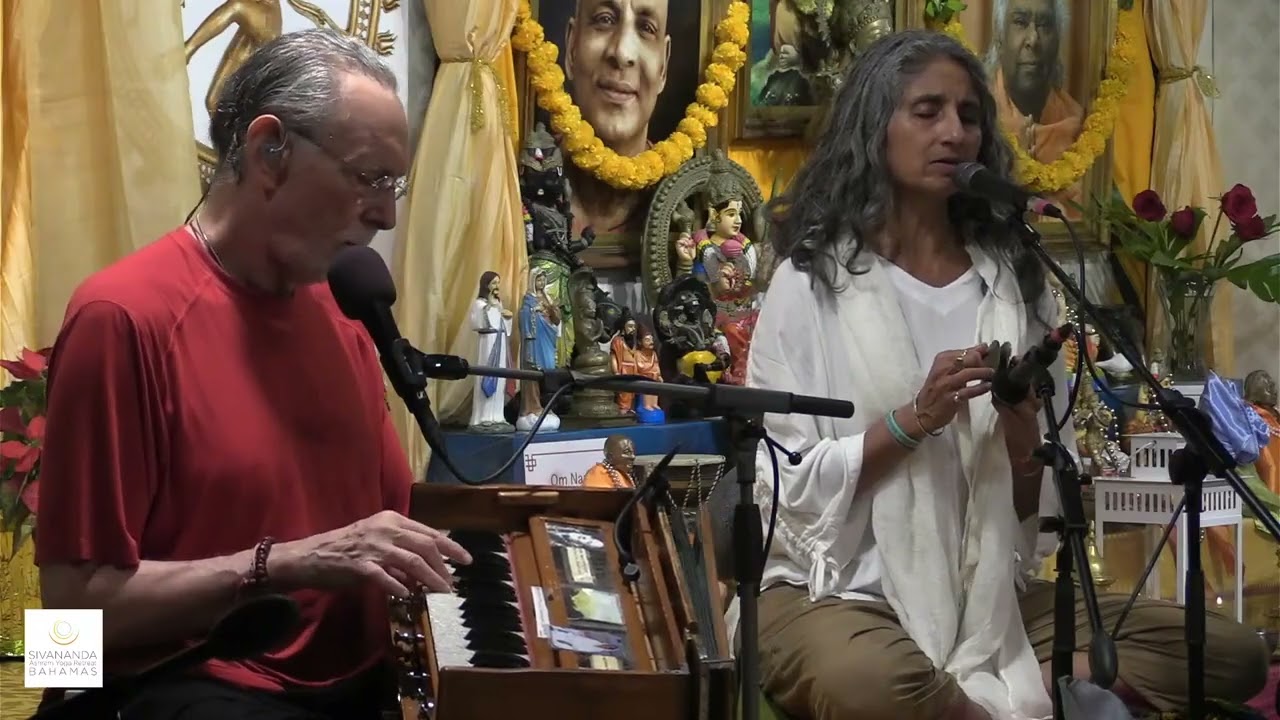
Krishna Das, a renowned kirtan artist and spiritual teacher, leads a live chanting session at Menla Mountain Retreat in 2024. This Thursday Night Satsang explores kirtan—the practice of devotional call-and-response singing rooted in Indian bhakti traditions. The session demonstrates how repetitive chanting of sacred names and mantras can open the heart, quiet the mind, and serve as a direct path to spiritual connection. Kirtan combines music, devotion, and community, creating a container for inner transformation through the vibrational power of sound.
What Is Kirtan and How Does It Function as Spiritual Practice?
Kirtan is a form of devotional chanting central to Hindu and yogic traditions, particularly bhakti yoga—the yoga of devotion. Krishna Das has spent decades bringing this ancient practice to Western audiences, translating sacred Sanskrit names and mantras into accessible, participatory group experiences. Rather than passive listening, kirtan involves the audience in a call-and-response structure where the leader sings a phrase (the "call") and the group echoes it back (the "response"), creating a rhythmic, communal meditation.
The practice rests on the understanding that sacred sound—specifically the names of the divine in various traditions—carries inherent spiritual potency. By chanting names like "Krishna," "Rama," "Durga," or "Hanuman," practitioners engage with qualities those names represent: love, truth, protection, and courage. The repetition creates what some traditions call a "japa"—a meditation through mantra—but within a group setting that amplifies both the energetic and emotional dimensions of the practice.
How Does Chanting Affect the Nervous System and Inner State?
Kirtan operates on multiple levels simultaneously. Physiologically, rhythmic chanting and singing influence the nervous system. The repetitive vocalization, coupled with the breath awareness required for sustained singing, activates the parasympathetic nervous system—the body's "rest and digest" response. This counters chronic stress and the hyperarousal of modern life.
Psychologically, the call-and-response structure gives the thinking mind something to do: follow the melody, listen for the cue to respond, synchronize with the group. This natural absorption in the present moment mirrors meditation, but without the struggle many people experience when trying to "sit still" or "empty the mind." The heart opens through the emotional resonance of devotional lyrics and music, creating what practitioners describe as a "heart opening"—a felt sense of connection, vulnerability, and love.
Spiritually, the names themselves are understood as gateways to states of consciousness. Each name vibrates at different frequencies and points toward specific aspects of divine or ultimate reality. Through sustained repetition, practitioners report experiences of unity, peace, and a dissolution of the boundary between the individual self and something larger—what many traditions call the Self, God, or absolute consciousness.
Why Does Kirtan Create Community Rather Than Isolation?
One distinctive feature of kirtan is that it is inherently communal. Unlike solitary meditation or mantra practice, kirtan gathers people in a shared sonic and spiritual space. Everyone sings together, creating a unified field of sound and intention. This community dimension serves several functions:
- Support for heart-opening: The vulnerability of singing one's own voice, alongside others doing the same, breaks down emotional defenses and creates a container of safety for genuine feeling.
- Amplification of energy: Many practitioners report that group kirtan feels more powerful than solo practice. The combined intention, breath, and sound create a resonant field that is palpable.
- Dissolution of isolation: In a culture that often emphasizes individual achievement and emotional self-protection, kirtan offers an antidote—the experience of singing your heart alongside others, literally and figuratively.
- Teaching through presence: A teacher like Krishna Das leads not only through words but through his own presence, demonstrated devotion, and surrender to the practice. The group witnesses and absorbs this, deepening their own practice.
What Is the Role of the Teacher in Kirtan?
Krishna Das's decades of practice and his relationship with his own guru, Neem Karoli Baba, inform his approach to leading kirtan. A seasoned kirtan wallah (kirtan leader) functions as both musician and spiritual guide. The teacher:
- Selects mantras and melodies appropriate to the moment, the group's energy, and the spiritual work being called forth
- Models devotion through their own singing and presence, showing what surrender and opening look like in action
- Holds and guides the group's energy, recognizing when to build intensity, when to soften, when to shift to a new mantra
- Creates the conditions for grace—a term used in spiritual traditions to describe moments when something beyond individual effort opens or is revealed
Krishna Das is known for weaving together traditional Sanskrit mantras with insights from his own guru's teachings and modern spiritual understanding, making the ancient practice relevant and accessible without diluting its depth.
What Are Common Mantras Used in Kirtan Practice?
Kirtan typically circles around names and phrases from Hindu and yogic traditions, though the underlying principle—sacred sound as a path to awakening—appears across many traditions. Common mantras include:
- Hare Krishna Hare Krishna: Invoking divine love and play (lila), often used to cultivate joy and light-heartedness
- Hare Rama Hare Rama: Connected to truth, righteousness, and the avatar of divine order
- Om Namah Shivaya: "I bow to Shiva"—often used to invoke inner transformation and the witness consciousness
- Lokah Samastah Sukhino Bhavantu: "May all beings be happy and free"—extending compassion universally
- Durga mantras: Invoking the protective, fierce feminine principle that dispels fear and ignorance
Each mantra carries its own frequency, emotion, and spiritual resonance. Over the course of a kirtan session, the teacher typically offers several, responding to what the group needs in the moment.
How Does Kirtan Differ from Other Meditation or Chanting Practices?
While kirtan shares similarities with other contemplative practices—meditation, solo mantra japa, prayer—it has distinct characteristics. Unlike silent meditation, kirtan is actively vocal and engages the body through sound and rhythm. Unlike some forms of yoga that emphasize technique and control, kirtan emphasizes surrender and devotion. Unlike prayer in some Western traditions, which may be petitionary (asking for something), kirtan is typically laudatory and celebratory—praising and invoking the divine.
Kirtan also differs in its emphasis on the group field. While many practices can be done alone or in community, kirtan's power is significantly amplified by the collective. The individual becomes part of something larger, and the boundaries of the isolated self begin to soften in the presence of shared sound and intention.
What Does "Bhakti" Mean and Why Is It Central to Kirtan?
Bhakti yoga, the yoga of devotion, is one of the primary paths in Hindu and yogic philosophy. Unlike karma yoga (yoga of action) or jnana yoga (yoga of knowledge), bhakti emphasizes the heart's capacity to love and surrender to the divine. In bhakti, the divine is not approached as an abstract principle or through intellectual understanding, but as a personal, relational reality—something one can love, praise, and open to emotionally.
Kirtan is bhakti in action. Through chanting sacred names, practitioners cultivate a direct, emotional, devotional relationship with the divine—however they understand or experience it. For some, this is Krishna as a beloved deity. For others, it is a more universal sense of divine love and consciousness. For still others, it is their own deepest self. The practice itself is agnostic about the specific form; it is about the quality of the heart's opening.
Where to Go from Here
If this exploration of kirtan and sacred sound practice resonates, consider exploring Krishna Das's extensive body of work through his website (krishnadas.com), where you can find upcoming events, recommended reading, and access to the Heart Space Digital Library. The practice of kirtan is fundamentally experiential—its effects are best understood through direct participation. Seeking out a local kirtan group or attending a retreat where kirtan is taught offers an immediate pathway into understanding this ancient practice in a living, embodied way. Krishna Das's recordings and teaching continue to serve as accessible entry points for contemporary practitioners seeking to reconnect with the power of sacred sound and devotional practice.