EveryEvent Dublin

Ver Todos los Events

Find every event in Dublin

events

Concerts & Live Music
Festivals
Sports & Recreation
Food & Drink
Arts & Culture
Community
Family & Kids
Nightlife
Comedy
Theater
Destinos Populares
BaliSedonaLos AngelesCosta RicaNew YorkSan FranciscoAustinMiamiJoshua TreeTulum
Ver Todas las CategoríasVer Todos los Destinos

Explorar Todas las Características

Herramientas poderosas para hacer crecer tus eventos

Características de la Plataforma

Precios Dinámicos Inteligentes
Categorías de Entradas
Asientos Asignados
Recuperación de Carritos
Recuperación de Visitantes
Donaciones y Escala Móvil
Motor de Afiliados
Escáner de Entradas
Códigos de Cupón
Preguntas Personalizadas
Compartir Entradas
Ventas Adicionales
Análisis e Informes
Secuencias de Email
Lista de Espera / Notificar / Recordar
Explorar
Discovery HubArtists & PerformersVenuesKnowledge Base
Ver Todas las CaracterísticasSobre Nosotros
PreciosBlog
Ver Todos los Eventos

events

Concerts & Live MusicFestivalsSports & RecreationFood & DrinkArts & CultureCommunityFamily & KidsNightlife

Destinos Populares

BaliSedonaLos AngelesCosta RicaNew YorkSan Francisco

Explorar

Discovery HubArtists & PerformersVenuesKnowledge Base

Características de la Plataforma

Precios Dinámicos InteligentesCategorías de EntradasAsientos AsignadosRecuperación de CarritosRecuperación de VisitantesDonaciones y Escala MóvilMotor de AfiliadosEscáner de EntradasCódigos de CupónPreguntas PersonalizadasCompartir EntradasVentas AdicionalesAnálisis e InformesSecuencias de EmailLista de Espera / Notificar / Recordar
Ver Todas las CaracterísticasSobre Nosotros
PreciosBlog
Iniciar sesiónRegistrarseOrganizadores de Eventos
  • Browse All Events
  • Concerts & Live Music
  • Festivals
  • Sports & Recreation
  • Food & Drink
  • Arts & Culture
  • Community
  • Family & Kids
  • Nightlife
  • Todas las Categorías →
  • All Destinations →
  • For Promoters
  • For Artists
  • For Venues
  • For Festivals
  • For Event Spaces
  • For Nonprofits
  • For Bloggers
  • For Speakers
  • Brand Ambassador
  • Case Studies
  • Red de +350K Compradores
  • Recuperación de Carritos
  • Precios Dinámicos Inteligentes
  • Categorías de Entradas
  • Eventos Recurrentes
  • Asientos Asignados
  • Motor de Afiliados
  • Lista de Espera / Notificar
  • Escáner de Entradas
  • Widget Embebido
  • Event Syndication
  • Message Center
  • Integrations
  • Reports
  • Todas las Características →
  • Acerca de
  • The Ecosystem
  • Blog
  • Glosario
  • Inspiration
  • Centro de Ayuda
  • Contacto
  • Documentación API
  • Recursos de Marca
  • Carreras
  • Prensa
  • Términos de Servicio
  • Política de Privacidad

Events

  • Browse All Events
  • Concerts & Live Music
  • Festivals
  • Sports & Recreation
  • Food & Drink
  • Arts & Culture
  • Community
  • Family & Kids
  • Nightlife
  • Todas las Categorías →

Getaways

  • All Destinations →

For Organizers

  • For Promoters
  • For Artists
  • For Venues
  • For Festivals
  • For Event Spaces
  • For Nonprofits
  • For Bloggers
  • For Speakers
  • Brand Ambassador
  • Case Studies

Características

  • Red de +350K Compradores
  • Recuperación de Carritos
  • Precios Dinámicos Inteligentes
  • Categorías de Entradas
  • Eventos Recurrentes
  • Asientos Asignados
  • Motor de Afiliados
  • Lista de Espera / Notificar
  • Escáner de Entradas
  • Widget Embebido
  • Event Syndication
  • Message Center
  • Integrations
  • Reports
  • Todas las Características →

Empresa

  • Acerca de
  • The Ecosystem
  • Blog
  • Glosario
  • Inspiration
  • Centro de Ayuda
  • Contacto
  • Documentación API
  • Recursos de Marca
  • Carreras
  • Prensa
  • Términos de Servicio
  • Política de Privacidad
EveryEvent
© 2026 EveryEvent Dublin. Todos los derechos reservados.
Inspiration

Inner Silence andCreativity: Socratic Not-Knowing

Eckhart Tolle
Eckhart Tolle
May 1, 2026
8 min read
TLDR: Eckhart Tolle connects Socratic philosophy to modern consciousness, arguing that genuine creativity and wisdom do not emerge from the accumulation of knowledge but from a state of inner silence—a quality of not-knowing that allows authentic insight to arise. This runs counter to the contemporary obsession with information and expertise, suggesting instead that the capacity to rest in stillness without grasping for answers is the true foundation of creative and conscious living.

Read · 7 sections

What Socrates Meant by "I Know That I Know Nothing"

Socrates' famous declaration—that the only thing he knew was that he knew nothing—is often dismissed as rhetorical humility or ironic wordplay. Yet it points to something far more radical: a specific quality of consciousness that Socrates inhabited and that stands in sharp contrast to the accumulated-knowledge paradigm that dominates modern thought.

The statement is not a logical paradox to be dissolved. Rather, it describes a lived reality. Socrates moved through the world not primarily as a repository of facts or doctrines, but as someone in direct contact with his own ignorance. This ignorance was not a deficit; it was a doorway. From that open state of not-knowing, Socrates could engage with others in genuine inquiry, asking questions that penetrated to the root of their assumptions rather than defending a pre-existing position.

This quality of inner silence—the absence of the constant mental commentary and certainty-seeking that characterizes ordinary consciousness—allowed Socrates to perceive with clarity. He was not filtering experience through layers of predetermined belief. He was simply present, alert, and open to what arose in conversation and observation.

Why Knowledge Often Blocks True Understanding

The modern world inverts Socratic wisdom. We are trained from childhood to accumulate facts, credentials, and opinions. Knowledge is power; more information is always better. Yet this very accumulation can become a wall between consciousness and reality.

When the mind is filled with stored knowledge, concepts, and certainties, it becomes harder to perceive what actually is. The mind recognizes patterns based on past learning and fits present experience into those grooves. A surgeon who has seen a thousand cases may miss the unusual symptom because she recognizes the familiar disease pattern first. A spiritual practitioner who has read many teachings may overlay those teachings onto direct experience rather than meeting the experience itself.

Inner silence is the opposite of this mental clutter. It is a state in which the mind is not constantly narrating, judging, and categorizing. In silence, awareness itself becomes available—not as a concept, but as the living ground of perception. In this state, creativity can genuinely originate rather than merely recombine existing elements.

How Stillness Enables Authentic Creativity

True creativity is not the same as cleverness or the manipulation of existing ideas. A clever person can produce endless combinations of known elements—that is intellectual facility. But authentic creativity brings something genuinely new into being, something that could not have been predicted from prior knowledge alone.

This requires a different source. The creative act, whether in art, science, problem-solving, or living itself, must tap into something beyond what the individual mind already knows. This something is accessed not through effort or mental striving, but through stillness.

When Tolle speaks of "the stillness of not knowing," he is pointing to a specific mode of consciousness. The person inhabiting this stillness is not paralyzed or passive. They are intensely alive and alert. But that aliveness is not driven by the thinking mind's agendas. It is availability itself—a quality of openness that allows insight to enter.

In this state, creative solutions arise that the thinking mind would never have conceived. The artist enters flow and the painting emerges, guided by something beyond conscious intention. The scientist encounters a problem, releases the effort to solve it, and the solution surfaces unexpectedly. The speaker finds the exact words needed without having planned them—they come from a place beyond memory and calculation.

The Paradox of Beginning with Not-Knowing

There is an apparent paradox here. If we begin with not-knowing, how do we know where to start? How do we avoid paralysis or incompetence? The answer lies in distinguishing between different uses of the mind.

Using knowledge as a tool is entirely appropriate. A builder needs to know structural principles; a physician needs to know anatomy and pharmacology. The problem arises when knowledge hardens into certainty, when the conditioned patterns of thought become invisible and seem to be reality itself.

Socratic not-knowing does not mean abandoning technical knowledge. Rather, it means holding that knowledge lightly, remaining aware that the full reality always exceeds what any body of knowledge can contain. It means retaining a quality of openness and curiosity even when one is expert in a field.

This is precisely what distinguishes the truly creative expert from the merely competent one. The competent expert knows the rules perfectly and applies them. The creative expert knows the rules, but maintains a kind of inner questioning: "Yes, but what does this situation actually require? What is genuinely alive here?" That inner questioning arises from not-knowing, from humble acknowledgment of the limits of what one has been taught.

Inner Silence as a Modern Spiritual Practice

In contemporary consciousness work, inner silence is cultivated deliberately through meditation and presence. This is not a return to some primitive state before knowledge, but rather a mature integration: the capacity to access both the accumulated wisdom of learning and the creative potential of stillness.

When Tolle discusses Socratic silence, he is speaking to something that can be directly experienced by anyone willing to pause the constant mental narration. Most people rarely, if ever, experience true silence. The mind is always moving—remembering, planning, narrating, judging. Even in sleep, dreams continue the activity. To taste even brief moments of genuine inner stillness is to glimpse something radically different from the normal state of consciousness.

In that silence, two things become apparent: first, that this stillness is one's natural ground, prior to any thinking; second, that from this ground, intelligence and creativity are far more accessible than from the effortful state of mental striving.

Why Modern Culture Resists This Teaching

The message that creativity begins with not-knowing runs counter to several dominant values in contemporary culture. We are sold the idea that success comes through the accumulation of credentials, knowledge, and strategic information. The person who has mastered the most data wins. The person who remains in stillness and not-knowing looks passive or underprepared.

There is also a deep anxiety underlying the resistance to not-knowing. If I don't know, I am vulnerable. If I don't have answers, I am incompetent. If my mind is not constantly working, engaged, producing, then who am I? This anxiety drives the constant mental activity and the desperate grasping for more information and certainty.

Yet it is precisely this resistance that prevents access to genuine creativity and wisdom. The willingness to not-know is the willingness to move beyond the defensive armor of certainty. It requires a kind of courage: the courage to be present without knowing what will happen, to speak without a prepared script, to create without a blueprint.

Where to Go from Here

The exploration of inner silence can begin in simple ways. Notice the moments when your mind is not narrating—perhaps while looking at a sunset, or holding a child, or in the brief space between waking and sleeping. Notice what quality of awareness is present in those moments. Notice whether insight or creativity flows more naturally when you are striving versus when you are simply present.

Experiment with deliberate periods of silence and stillness. This need not be formal meditation, though meditation is a direct path. It can be time in nature, time with a creative practice without goal-orientation, or simply the discipline of pausing the mental commentary for a few minutes daily.

When facing a creative challenge, a decision, or a problem, notice the difference between two approaches: first, thinking about it intensely, trying to figure it out; second, releasing the effort, sitting in not-knowing, and allowing insight to arise. The difference in the quality of result often speaks for itself.

The recovery of Socratic not-knowing is not a return to ignorance but an evolution beyond the limited scope of intellectual knowledge alone. It is the integration of our technical capacities with our deeper creative and intuitive capacities. In a world flooded with information, the ability to access stillness and not-knowing becomes increasingly valuable—not as an escape from engagement with the world, but as a deepening of our capacity to meet it with authentic presence and creativity.

]]>

Transcript

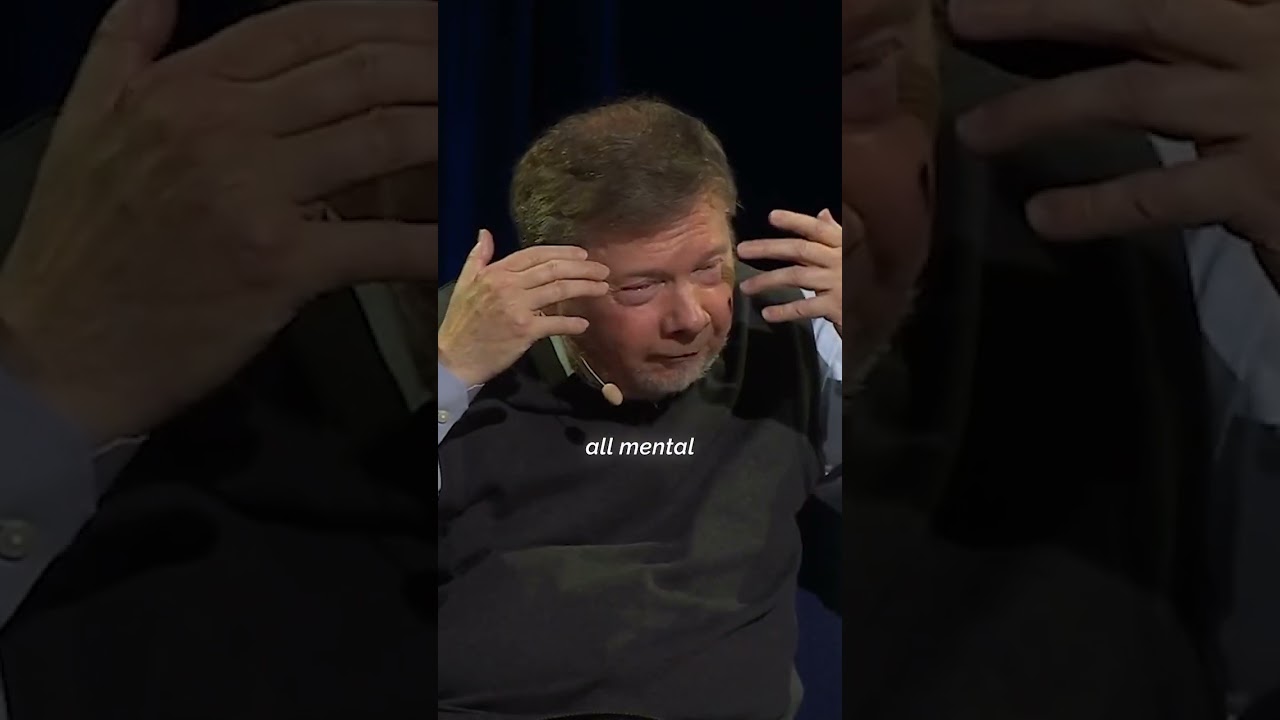
[0:00] Many people say that ancient Greek

[0:02] philosophers, and especially Socrates,

[0:06] he taught us

[0:07] how to think.

[0:10] So, [clears throat] he was thinking able

[0:11] to think creatively, use of his mind. He

[0:15] had access to to the creative creativity

[0:18] within him.

[0:21] And the only way you can do that is by

[0:24] not starting from knowledge, but

[0:26] starting from

[0:28] ignorance.

[0:30] It's

[0:32] to step out of the

[0:35] thinking mind

[0:37] into

[0:39] just aware stillness.

[0:44] And in that moment, you don't know

[0:47] anything.

Eckhart Tolle
AuthorEckhart Tolle

German-born spiritual teacher whose 1997 book The Power of Now became one of the most widely read spiritual works of the 21st century. After a profound transformation at 29 — movin…

View profileWebsite
Explore Topics
Inner-silenceCreativitySocratesNot-knowingConsciousness

Got Questions?

Frequently Asked Questions

No. Socratic not-knowing does not reject knowledge or expertise, but rather holds it lightly without letting it harden into certainty. One can be fully prepared and skilled while maintaining an inner openness and humility about the limits of what any knowledge can contain. This allows genuine presence and responsiveness to what actually arises.
True creativity arises from beyond the thinking mind's stored knowledge. When the mind enters a state of stillness and openness (not-knowing), it becomes a channel for something deeper than mere recombination of existing ideas. This is why creative insights often come unexpectedly, during rest, rather than through forced effort.
Yes. The key distinction is holding knowledge as a tool rather than as a defense mechanism or source of identity. An expert in their field can access inner silence by remaining aware that their knowledge, however extensive, never fully contains reality. This integration of skill and stillness is what distinguishes truly creative experts from merely competent ones.
Thinking is the constant mental commentary, narration, and processing through which we normally relate to experience. Inner silence is the absence of this mental chatter—a state of alert, open awareness that exists prior to and beneath thinking. It is not blankness but a quality of presence that can perceive and respond with greater clarity.
Modern culture equates knowledge with power, security, and worth. This creates anxiety about not-knowing, which feels like vulnerability or incompetence. However, this resistance to stillness and not-knowing actually limits access to genuine creativity and wisdom, which require the openness that not-knowing provides.
Notice the moments when your mind is not narrating—during natural activities, in the spaces between thoughts, or in moments of genuine engagement with something. You can also deliberately practice by pausing mental commentary for brief periods, spending time in nature, or pursuing creative activities without goal-orientation.

Continue Reading

More from Eckhart

View All
God Beyond the Sky: Rethinking Divine Nature
Featured

God Beyond the Sky: Rethinking Divine Nature

God is not an external judge deciding human suffering. Suffering itself becomes the mechanism through which consciousness awakens to itself.…

1 min read
God, Suffering, and the One Life Across Traditions
Featured

God, Suffering, and the One Life Across Traditions

Eckhart Tolle explores how Islam, Buddhism, and Greek philosophy all point to the same ultimate reality—and why the problem of suffering dis…

1 min read
Why Humanity Cannot Sit in Silence: Disconnection from Being
Featured

Why Humanity Cannot Sit in Silence: Disconnection from Being

The root of human conflict lies in disconnection from the being dimension—the inability to find peace when alone. When disconnected from bei…

1 min read
Who You Really Are Beyond Surface Identity
Featured

Who You Really Are Beyond Surface Identity

You are not your body, name, or conditioned mind. Eckhart Tolle reveals the distinction between surface identity and deeper being.…

1 min read

Keep exploring

Continue your journey

More wisdom and gatherings from across the BrightStar directory.

More Articles

Browse the full library of teachings, interviews, and guides.

Back to all articles →

Teachers & Artists

Explore the lineages, musicians, and guides of the conscious world.

Explore artists →

Find an Event

Kirtan, retreats, sound baths, breathwork, festivals — happening soon.

Browse events →
Read more from BrightStarCreate Free Account
Host your own gatherings?Try the Demo