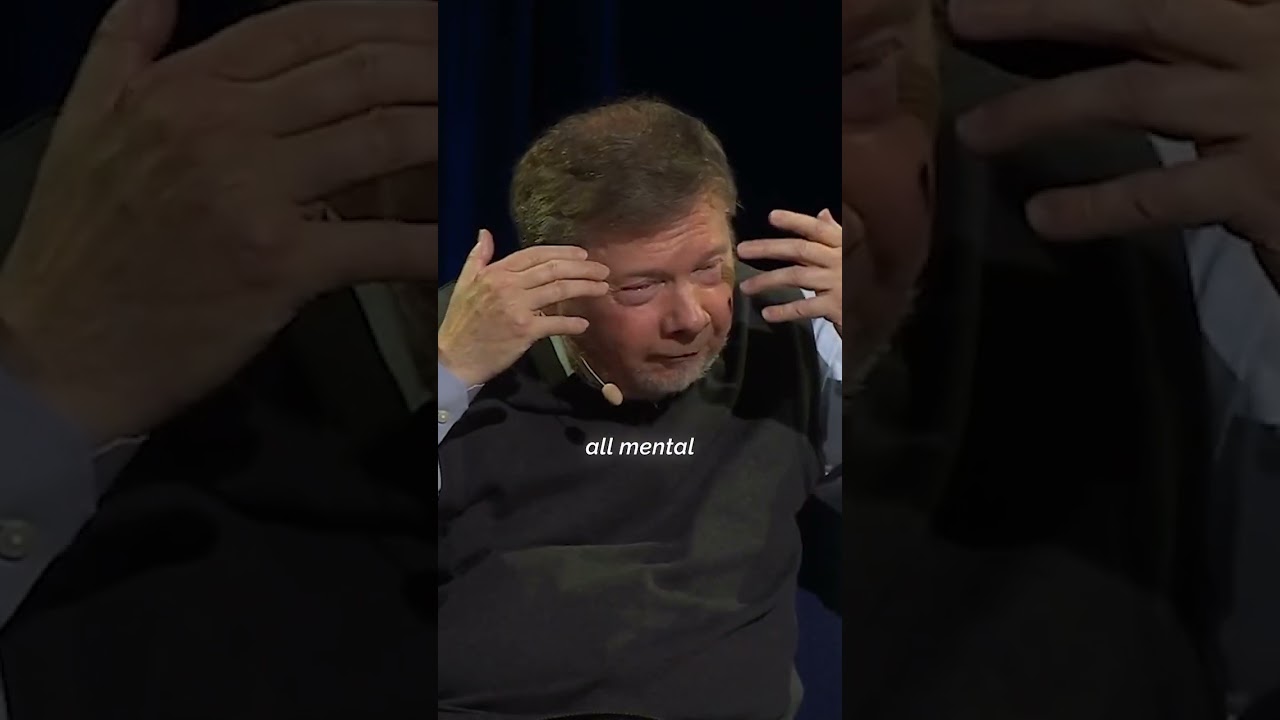
Freedom is not the absence of difficult circumstances but rather a shift in consciousness and awareness independent of external conditions. Eckhart Tolle explores how challenging situations often provide sharper clarity and spiritual insight than comfortable ones, and argues that liberation comes not from manipulating your environment but from changing your relationship to what is happening. The key distinction is between circumstantial freedom—which is always temporary and conditional—and conscious freedom, which arises from presence and inner awareness regardless of what life brings.
What Does It Mean to Say Freedom Has Nothing to Do With Circumstances?
The common cultural narrative equates freedom with favorable external conditions: a comfortable home, financial security, the absence of obstacles, the ability to do whatever you want. This framework assumes that if you can simply eliminate or rearrange your circumstances, you will be free. Yet Tolle's core insight inverts this logic entirely. Freedom, in its deepest sense, is independent of circumstantial reality. You can be in chains yet inwardly free; conversely, you can have every external advantage and still be trapped by your own mind.
This distinction cuts to the heart of why many people with seemingly ideal circumstances still experience anxiety, dissatisfaction, and a sense of confinement. They are pursuing freedom in the wrong domain. They believe that once they achieve the next goal, reach the next milestone, or escape the next constraint, they will finally be free. But this is a perpetual cycle of deferment. Freedom defined as circumstantial achievement is always conditional on future conditions being different from present ones. It is never now.
True freedom, by contrast, exists in this moment regardless of what circumstances present. It arises from awareness itself—the capacity to be present to what is, without resistance or the need to change it immediately. This does not mean passivity or resignation. Rather, it means operating from a different ground: not from the compulsive, reactive need to escape what is, but from consciousness that can hold what is and respond with clarity.
Why Do Difficult Circumstances Bring More Clarity Than Comfortable Ones?
Comfort has a peculiar tendency to obscure. When life is flowing without major friction, the ego-mind can maintain its habitual patterns, stories, and unconscious automations without interruption. You can go for years repeating the same thoughts, reactions, and behaviors without challenge. Difficult circumstances, by contrast, interrupt this automatic functioning. They demand presence. They force attention.
When you face genuine adversity—loss, illness, failure, crisis—your habitual coping mechanisms are tested. The stories you tell yourself about who you are and what you deserve become visible. Your deepest assumptions about safety and control surface. This is why contemplative traditions have long recognized hardship as a catalyst for awakening. The Buddha's first encounter with suffering catalyzed his spiritual quest. The mystics speak of the "dark night of the soul" not as mere suffering but as a crucible for transformation.
Difficulty also strips away the non-essential. When comfortable distractions are removed, you encounter yourself more directly. You see which thoughts are truly yours and which are conditioned reactions. You discover capacities you didn't know you had. You also discover the inadequacy of your usual defenses and the possibility of meeting life from a different place. In this sense, hardship is an invitation—not something to celebrate, but not something that necessarily diminishes your freedom either.
Comfort, meanwhile, can become a prison of its own kind. It can reinforce false beliefs about what sustains you. It can make you brittle—dependent on specific conditions remaining stable. It can obscure the reality that your wellbeing does not ultimately depend on your circumstances being pleasant. Difficulty teaches this lesson directly.
How Does Awareness Create Freedom Independent of Environment?
Awareness is the capacity to observe your experience without being entirely identified with or controlled by it. Most people live in a state of unconsciousness where thought and emotion are not observed but simply believed and acted upon. If an anxious thought arises, you are the anxious thought. If anger surfaces, you are anger. There is no gap, no distance, no observer. This is a state of identification.
Consciousness introduces space. When you become aware of a thought—"I notice this anxious thought arising"—you are no longer wholly identified with it. You are the one observing it. This small shift from being the thought to witnessing the thought is where freedom begins. You cannot be enslaved to something you can observe. The moment you can see it clearly, you have degrees of freedom in relation to it.
This applies directly to circumstantial difficulty. If you are fully identified with your pain—"I am suffering; this situation is unbearable"—then you have no freedom relative to it. Your entire being is contracted around it. But if you can step back and observe the pain, the resistance, the story you're telling about it, something shifts. You are no longer entirely subsumed by the difficulty. You can feel the difficulty and simultaneously be aware of the one who feels. This is the opening.
From this place of awareness, you naturally respond more consciously to your circumstances. You are not acting from reactive contraction but from presence. You can see what needs to be done without the fog of personal drama. You can take action when appropriate, accept what cannot be changed, and discern the difference—without the exhaustion of constant resistance to what is.
External circumstances may remain difficult, unchanged. But your relationship to them has transformed. And that transformation is where actual freedom lives. Not the fantasy of circumstances becoming perfect, but the reality of consciousness expanding to include what is without being diminished by it.
What Is the Difference Between Circumstantial Freedom and Conscious Freedom?
Circumstantial freedom is freedom from: freedom from pain, limitation, unwanted conditions, other people's demands. It is freedom defined by the absence of something negative. The problem is that this form of freedom is always temporary and conditional. You remove one obstacle and another arises. You escape one constraint and find yourself bound by the next. The goalpost perpetually moves. Someone else controls whether your circumstances remain favorable. A recession, an illness, a betrayal, aging itself—any of these can shatter circumstantial freedom.
Moreover, the pursuit of circumstantial freedom creates its own suffering. The mind becomes fixated on what needs to be eliminated or acquired. Anxiety rises about whether you'll successfully obtain it. Resentment builds toward anything that stands in your way. You are living in a state of conditional acceptance of the present: "I will be free once this changes." This is not freedom; it is a kind of slavery to future conditions.
Conscious freedom, by contrast, is freedom to: freedom to be present, to choose your response, to access your innate awareness and wisdom regardless of what is happening. It is not dependent on circumstances cooperating. A person in prison can have conscious freedom if they can access presence and awareness. A person with every advantage can lack it if they are entirely identified with thought and reactive patterns.
Conscious freedom does not mean denying that circumstances matter or that some situations are genuinely harmful. It means that your fundamental sense of aliveness, clarity, and wellbeing does not depend on circumstances being a certain way. You can work skillfully to improve your situation—that is appropriate action—but you are not trapped in the belief that your freedom hinges on the outcome. You are not waiting for conditions to be right to be free. You are free now, in the midst of what is.
How Can You Access Presence During Difficult Times?
The usual response to difficulty is to get lost in the problem-story: "How did this happen? Why me? What will I do?" The mind spins endlessly in resistance and projection. This intensifies suffering and obscures presence. An alternative is to bring attention back to the present moment—to the body, to the breath, to what is actually here now.
This is not bypassing or denying the difficulty. It is using the present moment as an anchor. In this moment, right now, before the mind's story kicks in—are you fundamentally okay? Most people discover that their actual experience in the present moment is often more tolerable than their story about the past or fears about the future. The present moment contains what is, but rarely the catastrophe the mind is imagining.
Breathing is particularly useful. The breath is always now. You cannot breathe in the past or future. When you bring full attention to breathing, you naturally sink into presence. From presence, you can acknowledge pain, loss, or difficulty without being entirely consumed by it. You can feel it and still be aware of the larger context of your being.
Acceptance also plays a role. This does not mean liking the situation or stopping efforts to improve it. It means acknowledging what is true right now without the added layer of denial or rage. When you accept what is—"Yes, this is happening; yes, this is difficult"—the fight against reality ends. Energy that was bound up in resistance becomes available. From this place, you can move forward more effectively.
Where to Go From Here
The invitation in this teaching is to begin experimenting with your own experience. Notice where you are seeking freedom in circumstances and where you might access freedom through awareness instead. When difficulty arises, pause before diving into the problem-story. Bring attention to the present moment. Notice what shifts when you stop resisting what is and simply acknowledge it. Observe how clarity often emerges not from changing conditions but from changing your relationship to them. Over time, this practice reveals that freedom was never dependent on circumstances at all—it was always available within the field of your own conscious awareness.