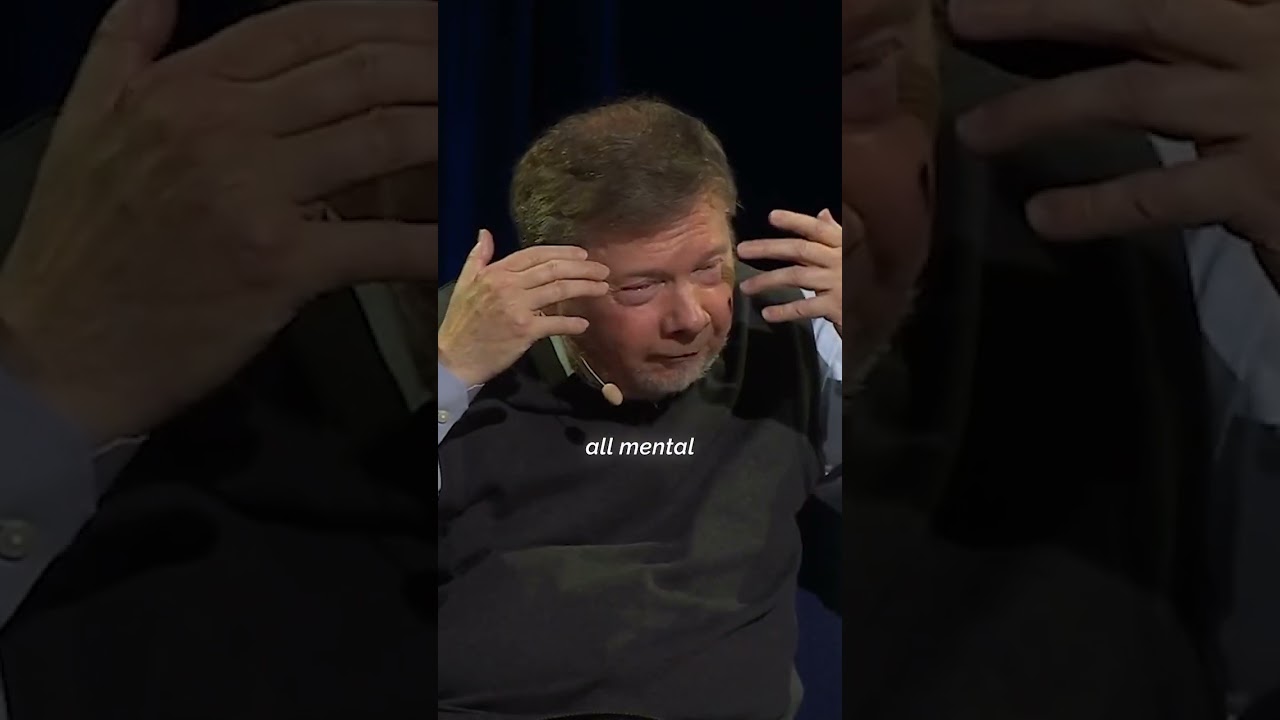
Eckhart Tolle teaches that what truly matters in life is not the external outcomes you achieve—the goals reached, the projects completed, the accomplishments accumulated—but rather the quality of consciousness, presence, and attention you bring to whatever you do. Fulfillment arises not from doing itself, but from the state of being you embody while doing. This shift from obsession with external results to cultivation of inner presence fundamentally rewires how you experience work, relationships, and daily life, transforming even mundane activities into expressions of authentic being.
What Is the Difference Between Doing and Being?
Most people operate under a hidden assumption: that life's quality is determined by what they accomplish. Get the promotion. Finish the project. Check the box. This external orientation toward achievement creates a perpetual treadmill—there is always another goal, another milestone, another marker of success to pursue. Eckhart Tolle identifies this pattern as fundamentally disconnected from true fulfillment.
The distinction he draws is between doing and being. Doing refers to actions, tasks, output, and external results. Being refers to your state of consciousness—your presence, awareness, attention, and the quality of aliveness you inhabit. Most people believe that being follows from doing: "Once I achieve this, then I will be happy." "Once I reach that milestone, then I will be fulfilled." This is backwards. The truth, according to Tolle, is that the quality of your doing flows from the quality of your being. When you are present, when you inhabit a state of conscious awareness, the actions you take naturally carry a different energy and yield a different outcome.
This is not about passivity or refusing to work toward goals. Rather, it is about recognizing that the goal is not the source of fulfillment—the consciousness you bring to the pursuit is. A person can achieve every external goal and remain deeply unfulfilled if they never shift their inner state. Conversely, a person can experience profound fulfillment in simple, ordinary tasks if they do them with full presence and awareness.
How Does Presence Transform Your Daily Work?
Consider the experience of work. For many people, work is something to endure—a means to financial ends, a necessary evil that stands between them and the life they actually want to live. The mind is often somewhere else: planning the weekend, worried about outcomes, comparing yourself to colleagues, or mentally rehearsing conversations yet to come. In this fragmented state, work feels burdensome.
When you bring full presence to work, something shifts. You are no longer performing a task; you are fully inhabiting the action. Your attention is not divided between past regrets and future anxieties. You are here, now, engaged with what is in front of you. This doesn't change the external activity—the email still needs answering, the report still needs writing—but it completely changes your experience of the activity.
Eckhart points out that this quality of presence naturally improves the quality of what you produce. When your attention is fragmented, your work reflects that fragmentation. When your awareness is unified and focused, your work carries that quality. More importantly, you experience less suffering. The chronic low-level stress and dissatisfaction that comes from constantly wishing you were elsewhere dissolves when you are actually present where you are.
This applies whether you are engaged in work you find meaningful or work you consider mundane. Washing dishes, writing code, teaching a class, selling a product—the nature of the task matters less than the consciousness you bring to it. A person can be more fulfilled washing dishes with full presence than another person is earning a six-figure salary while mentally absent.
Why Do We Become Obsessed With External Outcomes?
The human mind has a tendency to postpone life. It creates a narrative: "I will be happy when..." and then it fills in the blank. When I get the job. When I meet the right person. When I have enough money. When I lose the weight. This is not unique to modern culture, but modern life intensifies it through endless comparison, achievement metrics, and social validation tied to externals.
The ego—Tolle's term for the conditioned sense of self based on identification with thoughts, possessions, roles, and accomplishments—constantly seeks validation through achievement. It whispers that you are not enough as you are, that you must become more, accomplish more, have more. This creates a perpetual sense of lack and inadequacy. No external accomplishment ever fully satisfies because the ego always needs more.
This doesn't mean goals are bad or that ambition is inherently problematic. The issue arises when your sense of worth, your sense of aliveness, your sense of being okay is made dependent on achieving those goals. You are living in a conditional state: "I will be happy IF..." But life is now. Fulfillment is available now, in your present state of consciousness, regardless of what you have or haven't yet achieved.
How Does This Shift Change Your Relationships?
The same principle applies to relationships. Many people approach relationships as another arena for achievement: find the perfect partner, make the relationship work, get the other person to behave a certain way. The relationship becomes instrumentalized—valued for what it provides (security, status, companionship) rather than for the quality of presence and connection available within it.
When you bring full presence to a relationship, you stop trying to improve the other person or extract something from them. You are simply here with them. You listen without planning your response. You look without judging. You speak without calculating effect. This quality of authentic presence is what deepens connection—far more than any perfect words or perfectly executed behaviors.
If you are constantly preoccupied with how the relationship measures up to your image of the ideal relationship, or anxious about the other person's opinion of you, you are not fully present. You are caught in a thought-generated narrative rather than inhabiting direct experience. The other person senses this absence and responds accordingly. Conversely, when you show up with genuine presence, the other person feels seen and met in a way that nothing else can replace.
Can You Still Pursue Goals With This Approach?
A natural question arises: if what matters is consciousness and presence, not outcomes, doesn't this suggest you should abandon ambition or goal-setting? Eckhart's teaching is not anti-achievement. Rather, it reframes the relationship to achievement. You can have goals and work toward them, but they should not be the source of your well-being or the measure of your worth.
The shift is from: "My wellbeing depends on achieving this goal" to "I am pursuing this goal from a place of wholeness and presence." In the first case, you are fragmented and desperate. In the second, you are unified and free. Paradoxically, this freedom often leads to more effective action because you are not motivated by fear or desperation but by genuine interest and clarity.
When your sense of okayness is not dependent on the outcome, you are free to take intelligent risks, to learn from failure, to persist without the debilitating self-doubt that comes from making your identity dependent on success. The stakes feel lower because they are—your worth is not on the line.
What Is the Role of the Present Moment in Fulfillment?
Eckhart emphasizes that the present moment is not a means to future fulfillment; it is where fulfillment exists. This is not a poetic or abstract claim but a practical observation. Fulfillment is not an object you obtain; it is a quality of consciousness you access. And consciousness is always now. You cannot experience fulfillment yesterday or tomorrow. You can only experience it now.
When you are fully present, you are no longer identified with the chattering mind, which by nature is always concerned with past and future. You rest in aware presence—alert, alive, undivided attention. In this state, there is an inherent okayness, a natural peace that does not depend on circumstances being a particular way.
This does not mean you never make plans or think about the future. Rather, you do those things from a state of presence. You think about the future, but you are not lost in thought. You plan, but you are not anxious. You pursue goals, but you do not abandon now in service to an imagined better tomorrow.
Where to Go From Here
To apply this teaching, begin with awareness. Notice where you are mentally and emotionally lost in pursuit of future outcomes. Notice how often your attention is absent from what you are actually doing. Without judgment, simply observe the pattern.
Then, in small moments, practice bringing your full attention to simple activities. Feel the water when washing your hands. Listen fully when someone speaks to you. Taste your food. Walk without rushing mentally elsewhere. These small acts of presence are not distractions from your real life; they are your real life happening right now.
Finally, examine your goals and ambitions. You do not need to abandon them. But ask: am I pursuing this from a place of wholeness or from a place of desperate lack? Am I using this goal to validate my existence, or am I pursuing it as an expression of authentic interest? The answer shifts everything—not what you do, but the consciousness you bring to what you do.