The Sacred in the Mundane: Embracing the Omnipresence of Tao
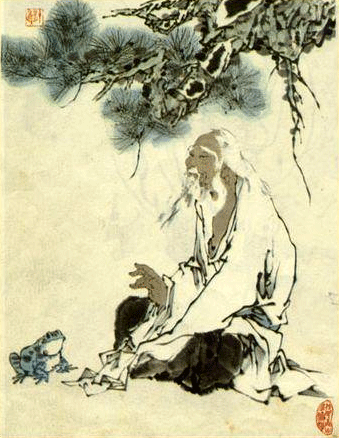
Chuang Tzu's assertion that "Tao is in everything; even in dust, even in dung" invites us to reconsider our relationship with the world around us. This profound statement challenges the notion of sacredness being confined to lofty ideals or pristine environments. Instead, it suggests that the essence of the Tao permeates every aspect of existence, even those we might dismiss as trivial or unclean. Understanding this omnipresence is crucial for cultivating a deeper connection with life itself, as it encourages us to find meaning and beauty in the most unexpected places.
By recognizing the Tao in all things, we are invited to embrace a holistic view of life that transcends dualistic thinking. This perspective fosters a sense of unity with the universe, urging us to see the interconnectedness of all beings and elements. In a world often divided by judgments and hierarchies, Chuang Tzu's words remind us that even the most humble aspects of existence hold intrinsic value and wisdom. This realization can transform our daily experiences, allowing us to approach life with a sense of reverence and gratitude.
The image / the metaphor
The imagery in Chuang Tzu's quote evokes a vivid sense of the ordinary and the overlooked. Dust and dung, often associated with dirtiness and neglect, are transformed into vessels of the Tao, suggesting that divinity is not reserved for the extraordinary. The choice of these particular elements emphasizes the idea that the sacred can be found in the most mundane aspects of life. This invites us to reconsider our perceptions and to recognize that every particle of existence is infused with the essence of the Tao.
Delving deeper into the metaphor, we can see that dust and dung symbolize the cycles of life, decay, and renewal. They remind us of the impermanence inherent in all things, as well as the potential for transformation. Just as dung can nourish the earth, leading to new growth, so too can our encounters with the seemingly insignificant aspects of life lead to profound insights and connections. This perspective encourages us to cultivate mindfulness and appreciation for the world around us, recognizing that every moment holds the potential for awakening.
In the speaker's tradition
Chuang Tzu's teachings are deeply rooted in the tradition of Taoism, which emphasizes the interconnectedness of all things and the importance of aligning oneself with the natural flow of the universe. Concepts such as wu wei (non-action) and yin-yang illustrate the balance and harmony that exist within the Tao. By acknowledging that the Tao is present in every aspect of life, including the mundane, we are encouraged to embrace a sense of humility and openness, allowing us to flow with the currents of existence rather than resist them.
In the context of the Zhuangzi, the text from which this quote originates, we find numerous anecdotes that illustrate the wisdom of embracing the ordinary. For instance, the story of the "Useless Tree" highlights how what may seem unremarkable can possess profound value. This aligns with the idea that the Tao is present in all things, urging us to look beyond surface appearances and to recognize the inherent worth in every aspect of life.
Living the teaching
Consider a modern scenario where this teaching might resonate: a busy urban environment filled with noise, pollution, and chaos. In such a setting, it can be easy to overlook the beauty in the mundane—perhaps a cracked sidewalk, a discarded piece of litter, or the sound of a distant train. By consciously choosing to see the Tao in these elements, we can cultivate a sense of presence and appreciation for the life that unfolds around us. This practice encourages us to slow down, breathe, and recognize that even in the most chaotic moments, the essence of the Tao is at work.
In relationships, this teaching can manifest in moments of conflict or misunderstanding. When faced with a challenging interaction, we might find ourselves focusing on the flaws or shortcomings of the other person. However, by remembering that the Tao exists in every individual, we can approach these situations with compassion and understanding. This perspective allows us to see beyond the surface and to recognize the shared humanity that connects us all, fostering deeper connections and healing in our relationships.
A reflection
As we contemplate Chuang Tzu's assertion that "Tao is in everything; even in dust, even in dung," we are invited to explore the presence of the sacred in our daily lives. What aspects of your environment do you often overlook or dismiss? How might embracing the omnipresence of the Tao transform your perception of the world around you? Allow these questions to guide your reflections, encouraging you to seek the divine in the ordinary and to cultivate a deeper appreciation for the interconnectedness of all things.



Join the BrightStar Community
Stay connected with daily inspiration, event announcements, and community wisdom