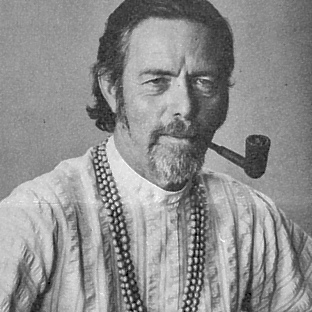
The Dance of Existence: Embracing the Present Moment
Alan Watts invites us to reconsider our relationship with life through the lens of dance. He suggests that life is not merely a journey toward a destination but rather an intricate dance where the joy lies in the movement itself. This perspective challenges the relentless pursuit of goals that often dominates our lives, urging us to find fulfillment in the present moment. By shifting our focus from the end result to the experience of living, we can cultivate a deeper sense of peace and connection with ourselves and the world around us.
In a society that prizes achievement and productivity, Watts's assertion resonates profoundly. The metaphor of dance implies fluidity, spontaneity, and grace, qualities that can often feel elusive in our fast-paced lives. When we become overly fixated on reaching a particular outcome, we risk missing the beauty and richness of the experiences unfolding in the here and now. This teaching invites us to embrace life as a dynamic process rather than a linear path, encouraging us to engage fully with each moment as it arises.
The image / the metaphor
The imagery of dance evokes a sense of rhythm and flow, suggesting that life is not a rigid structure but a series of movements that can be both joyful and expressive. The verb "dancing" implies an active participation in life, where one is engaged in the moment rather than merely observing from the sidelines. This active engagement fosters a sense of liberation, allowing us to let go of the constraints of expectation and control. In this dance, we find ourselves moving in harmony with the world, responding to its rhythms and nuances.
Diving deeper into the metaphor, we can see that dance embodies the essence of spontaneity and creativity. Just as a dancer responds to music, so too can we respond to the unfolding of our lives. The act of dancing requires trust—trust in oneself, in the music, and in the moment. This trust is essential for allowing ourselves to be vulnerable and open to whatever arises, whether it be joy, sorrow, or uncertainty. In this way, the dance becomes a powerful metaphor for embracing the totality of our human experience.
In the speaker's tradition
Alan Watts, a prominent figure in the popularization of Eastern philosophy in the West, draws heavily from Zen Buddhism, which emphasizes the importance of living in the present moment. Concepts such as *sunyata* (emptiness) and *dharma* (the path of righteousness) resonate with the idea that life is a dance. In Zen, the focus is often on the process rather than the outcome, encouraging practitioners to engage fully with their experiences without attachment to results. This aligns beautifully with Watts's assertion that the essence of life lies in the dance itself, rather than in reaching a predetermined destination.
In his work, Watts often references the notion of *wu wei*, or effortless action, which complements the idea of dancing through life. This principle teaches us to align ourselves with the natural flow of existence, allowing us to move gracefully through challenges and uncertainties. A relevant text that embodies this teaching is the *Tao Te Ching*, where Lao Tzu speaks of the importance of flowing with the currents of life rather than resisting them. Both Watts and Lao Tzu remind us that true wisdom lies in embracing the dance of life with an open heart and a willing spirit.
Living the teaching
Consider a modern scenario where this teaching can be applied: the experience of commuting to work. Many people approach their daily commute with a sense of dread, viewing it as a necessary evil on the way to a more desirable destination. However, if we shift our perspective and embrace the commute as part of the dance of life, we can find moments of beauty and connection. Perhaps we notice the changing scenery, engage in a conversation with a fellow traveler, or simply take a moment to breathe and appreciate the journey itself. This shift in mindset transforms a mundane task into an opportunity for presence and awareness.
A reflection
As we contemplate Watts's invitation to view life as a dance, we are left with a profound question: How can we cultivate a deeper awareness of the present moment in our daily lives? This question encourages us to reflect on our habits, our routines, and the ways in which we might be holding ourselves back from fully engaging with the dance of existence. By exploring this inquiry, we open ourselves to the possibility of transformation, inviting more joy, spontaneity, and connection into our lives.



Join the BrightStar Community
Stay connected with daily inspiration, event announcements, and community wisdom