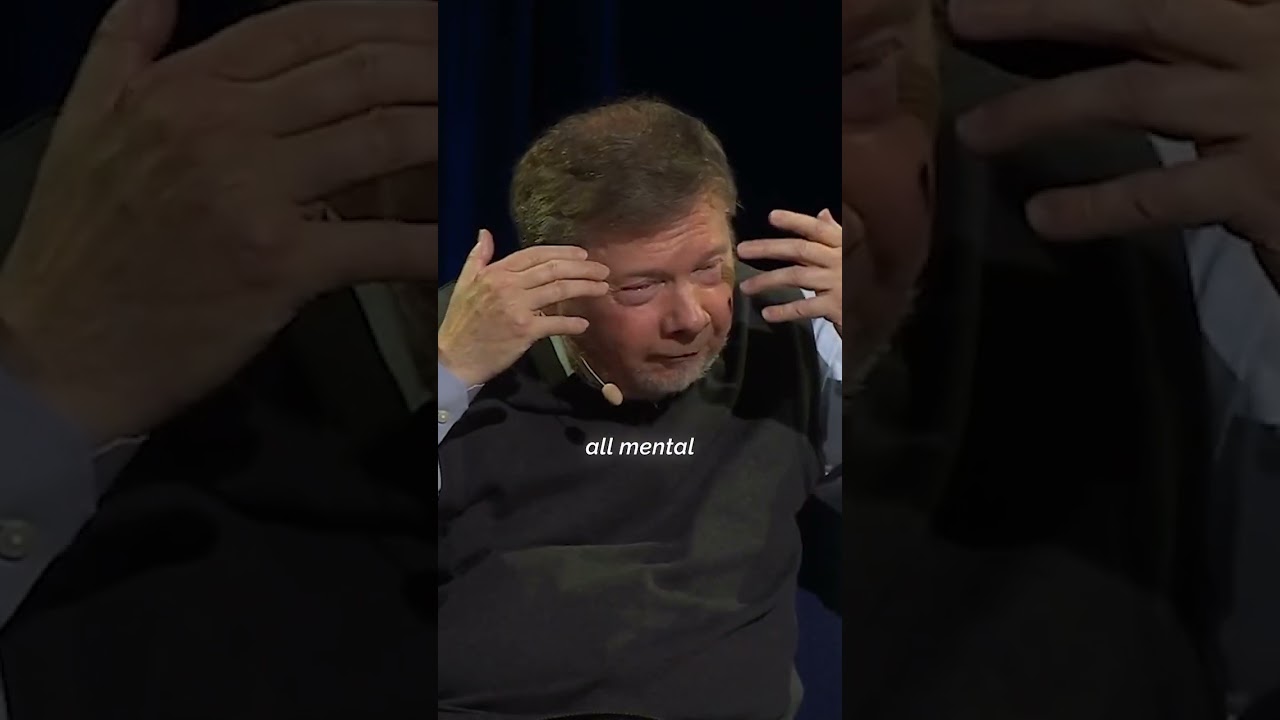
Eckhart Tolle addresses the peculiar phenomenon of intense anxiety that strikes in the middle of the night, particularly around 3 AM. He explains that worry feels compellingly real because our mind constructs imagined future scenarios while our body is in a vulnerable, depleted state. The antidote lies not in fighting the anxiety, but in shifting attention to what is actually happening in the present moment—where, invariably, nothing is wrong. This simple but profound shift in awareness can loosen anxiety's grip and restore a sense of groundedness.
Why Does Anxiety Intensify at 3 AM?
There is a reason that 3 AM has become synonymous with spiraling worry and existential dread. Tolle points to a convergence of physiological and psychological factors. At this hour, the body is depleted from a lack of sleep, the nervous system is more susceptible to dysregulation, and the mind operates with less executive control. The rational, grounded part of consciousness that keeps catastrophic thinking at bay during waking hours is now offline or severely weakened.
In this state, the mind becomes a prolific generator of "what-if" scenarios. It projects into an imagined future filled with potential problems, threats, and failures. Because the body is physically vulnerable and the mental apparatus is compromised, these imagined scenarios feel not like abstract possibilities but like imminent, concrete dangers. The mind is essentially rehearsing disaster in an attempt to prepare and protect—an evolutionary holdover that is now maladapted to modern life, where most perceived threats are mental constructs rather than physical dangers.
How Does the Mind Create the Illusion of Present Danger?
Tolle's central insight is that worry creates a compelling sense of reality by collapsing the future into the present moment of experience. When you lie awake at 3 AM worrying, your body is responding as if the danger is happening now. Your heart rate elevates, your breathing becomes shallow, your muscles tense—not because a threat exists in the present moment, but because your mind is convincingly narrating a story about what might happen.
The anxiety feels absolutely real because the body is genuinely activated. There is a genuine physiological response. But the actual trigger—the imagined future scenario—is not present. The mind has successfully hijacked the nervous system's alarm system and pointed it at a phantom threat. This is the mechanism that makes 3 AM worry so visceral and disorienting: the body's stress response is real, but its target is illusory.
What Is Actually Happening in This Present Moment?
Tolle's practical intervention is deceptively simple but requires a deliberate shift in attention: when you notice that nothing is actually wrong in this moment, the grip of anxiety begins to loosen. This is not positive thinking or denial. It is direct observation. He invites the person caught in 3 AM anxiety to examine the facts of what is happening right now, in this very instant, in the physical space they occupy.
In most cases, the answer is: you are safe. You are in a bed. You are warm. You are alive. There is no actual threat present. Any danger exists only as a thought—a story the mind is telling about a possible future. By directing attention away from the narrative and toward the concrete reality of the present moment, something shifts. The body begins to recognize that the alarm is false. The nervous system starts to downregulate.
This is not a matter of willpower or positive affirmations. It is a matter of truthfulness—of aligning your attention with what is actually the case, rather than with what you are imagining might be the case. When you stop feeding the mental story with your attention, the story begins to lose its power over your physiology.
Why Does Noticing the Present Moment Dissolve Anxiety?
The mind can only generate anxiety by pulling you out of the present moment. Anxiety is always about the future—about what might happen, what could go wrong, what you might fail at. It requires that you absent yourself from what is actually occurring now and invest your awareness in an imagined scenario.
When you notice the present moment—really notice it, with direct sensory awareness—you simultaneously step out of the anxiety-generating mechanism. You are no longer collaborating with the mind's rehearsal of disaster. You are not adding energy to the story by paying attention to it. Instead, you are anchoring yourself in the one place where life is actually happening: right now.
This shift is not about relaxation techniques, though those can be helpful. It is about a fundamental reorientation of consciousness. Rather than being lost in thought about the future, you become present to reality as it is. And in that presence, anxiety loses its grip because it has nothing to attach to—the danger it was projecting simply does not exist in this moment.
How Can This Awareness Be Cultivated During Daily Life?
While Tolle's teaching speaks most directly to the 3 AM experience, the principle applies to any moment when anxiety arises. The practice is to develop a habit of checking in with present reality, particularly when the mind is spinning. What is actually happening right now? What can you directly perceive through your senses, rather than what are you imagining?
This requires training the attention to notice when it has been hijacked by thought and gently redirecting it to the present moment. Over time, this becomes a more automatic response. Instead of being caught for hours in the anxiety spiral, you notice the pattern sooner and shift attention more quickly. The grip of worry loosens not because the worry disappears, but because you have stopped feeding it with your full engagement.
What Is the Difference Between Thinking About a Problem and Being Lost in Anxiety About It?
An important distinction emerges here: anxiety is not the same as practical problem-solving. You can think clearly about a genuine challenge in the present moment, assess it, and decide on a response. That is functional thinking. But anxiety is thinking that has become detached from present reality and is instead cycling through imagined scenarios in a state of heightened emotional charge.
When you are caught in 3 AM anxiety, your mind is not actually solving anything. It is repetitively spinning through "what-ifs" that may never occur, generating a stress response that is both unnecessary and depleting. The clarity and resourcefulness needed for actual problem-solving are not available when you are in this state. That is why the shift to present-moment awareness is not an escape from dealing with life's challenges—it is the prerequisite for dealing with them effectively.
Where to Go from Here
If you struggle with middle-of-the-night anxiety, the invitation is to begin experimenting with this simple practice: when worry grips you, pause and ask yourself what is actually wrong right now, in this present moment. Not what might be wrong, not what could go wrong, but what is demonstrably wrong in your immediate reality. Usually, you will find nothing. From that recognition, the nervous system can begin to settle. Over time, as you practice this reorientation of attention, the grip of anxiety loosens, not because you have eliminated worry through force, but because you have stopped collaborating with the mind's fictional narratives and have returned to the truth of what is actually happening.