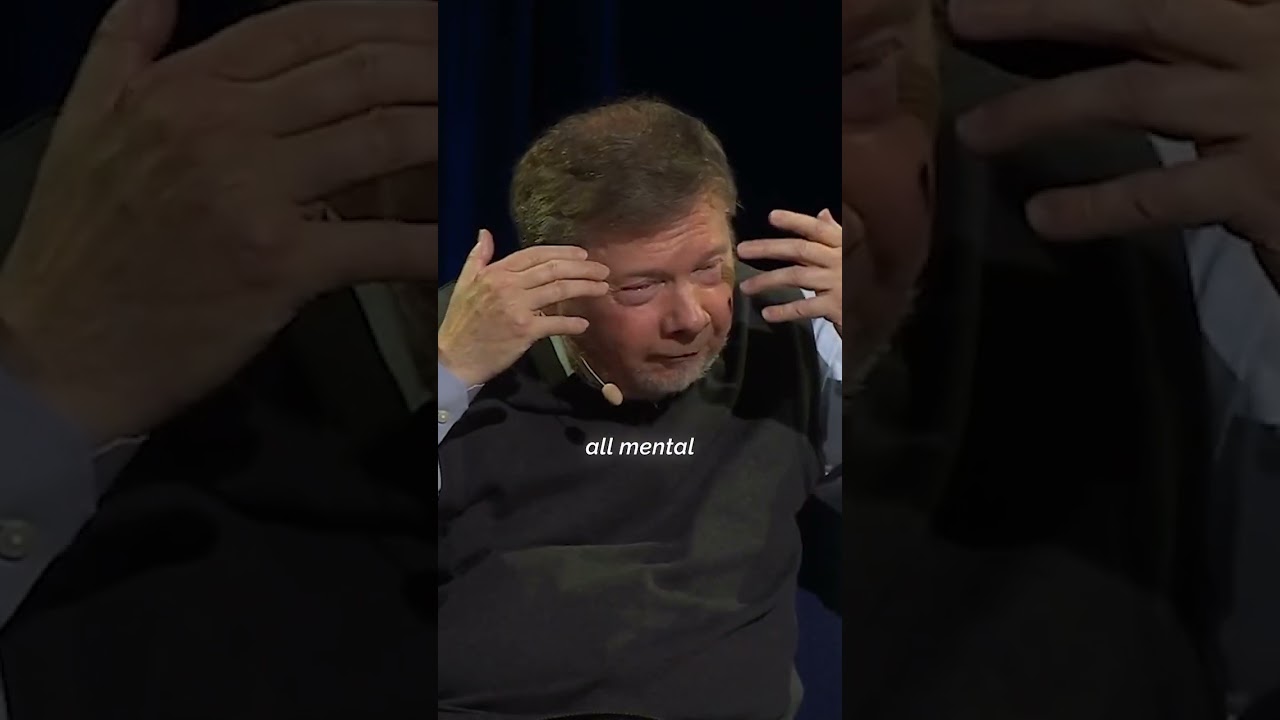
Eckhart Tolle teaches that true stillness is not an intellectual concept or something you think about—it is a direct, lived experience that dissolves the egoic mind's narrative. When you sit in silence and watch what happens without resistance, the constant stream of mental chatter and self-referential thinking quiets naturally. This silence reveals a deeper dimension of aliveness and peace that exists beneath thought. Rather than trying to achieve silence through effort, presence emerges when you observe the mind without judgment and allow the egoic structures to dissolve.
What Is True Stillness and How Does It Differ from Quieting Thoughts?
Tolle emphasizes a critical distinction: true stillness is not something achieved through force or willpower, nor is it the absence of thought alone. Many practitioners mistakenly approach meditation or silence as an intellectual target—something to accomplish or attain through effort. This very effort, rooted in the doing-mode of the egoic mind, actually prevents the experience of stillness.
Instead, Tolle points to stillness as a dimension of consciousness that is always present but usually obscured by the incessant activity of thought. When you sit in silence and simply watch what happens—observing your thoughts, sensations, and emotions without trying to change them—something shifts. The relentless narrative of the ego, which continuously interprets experience through the lens of "me" and "my story," gradually loses its grip.
This is fundamentally different from suppressing thoughts or forcing mental silence. The latter approach treats the mind like an enemy to be conquered, which only reinforces the separation between awareness and thought. True stillness, by contrast, emerges from a non-resistant, accepting awareness that allows the mind's activity to naturally subside.
How Does the Egoic Narrative Dissolve in Silence?
The egoic mind operates through a constant stream of story-making. It judges, compares, plans, regrets, and constructs a continuous sense of "I" based on past and future. This narrative is not inherently bad, but it creates a filter through which all experience is interpreted. When you sit in silence and observe without judgment, this narrative has nothing to feed it—no stimulus to react to, no external problem to solve, no story to defend.
As the mental chatter quiets, the identification with thought weakens. You begin to recognize that you are not your thoughts. The thoughts still arise—this is the nature of mind—but they no longer command your entire being. There is a witnessing awareness that is distinct from the content of the mind. This recognition is pivotal because it reveals that beneath the egoic narrative lies a spacious, undisturbed presence.
Tolle teaches that silence literally dissolves the egoic structures that require constant mental activity to maintain themselves. The ego cannot exist in true silence because it depends on the narrative—the story of separation, the story of a self distinct from the world. When silence deepens, that distinction becomes increasingly transparent.
What Is the Connection Between Silence and Presence?
Presence, in Tolle's teaching, is the direct experience of the now. It is not a state you achieve at some future moment; it is the only moment that actually exists. Yet most people live in their minds, dwelling in past memories or future projections. Silence is the gateway to presence because it interrupts this habitual mental time-traveling.
When external noise quiets and mental chatter subsides, what remains is the raw, undeniable fact of being alive right now. There is still sensation, still perception, still the aliveness of the body and the world—but it is not filtered through the lens of the thinking mind. This is presence: consciousness aware of itself, aware of the present moment without the mediation of thought.
Tolle emphasizes that this presence is not blank or empty—it is intensely alive. It is a dimension of peace, yes, but also of aliveness and clarity. When you rest in presence, you touch something that is always there, always available, but habitually obscured by the noise of mental activity. Silence reveals this because it removes the obstruction.
Why Does Trying to Achieve Silence Often Backfire?
A common trap in practice is approaching silence as yet another goal to achieve. The mind, operating in its habitual mode, asks: "How do I get silent? What technique will work? Am I doing it right?" This goal-oriented mindset keeps the egoic mind in charge, perpetuating the very mental activity that obscures stillness.
Tolle teaches that effort, when applied to the pursuit of silence, reinforces the illusion that you must do something to access stillness. But stillness is not a destination you arrive at through effort—it is what you are when you stop struggling. The moment you accept what is—the sounds, the thoughts, the restlessness—and observe it without resistance, the struggle itself dissolves. And with it goes the very tension that prevented silence from emerging naturally.
This points to a paradox at the heart of practice: you access presence not through more doing but through allowing. This requires a fundamental shift from the doing-mode of the ego to a state of receptive awareness. You sit down, and instead of chasing quiet, you simply watch. You notice the resistance, the desire for the experience to be different, and you observe that too, without judgment.
What Happens When You Watch Without Resistance?
Tolle invites practitioners to actually experiment: sit in silence and observe what arises. You may notice thoughts, emotions, sensations, restlessness, or peace. The instruction is not to change any of it but to watch it with a kind of open, allowing awareness. This is called non-resistance or acceptance.
When you truly accept what is present—rather than fighting it or trying to manipulate it into a different state—something remarkable occurs. The energy you were using to resist, to struggle, to control, becomes available. The constant war with reality ceases. And in that ceasing, there is relief, a lightening. The mind, no longer caught in opposition, begins to settle.
Tolle teaches that this watching is itself the practice. It is not a preliminary step on the way to real meditation; it is the real thing. Through this simple act of allowing presence—of being aware without agenda—the deeper dimension that silence points to begins to reveal itself. The aliveness underneath thought emerges, and you recognize it as your true nature.
How Does Silence Shift Your Relationship to Daily Life?
Tolle's teaching is not about escaping into silence and remaining there. Rather, the experience of silence and the recognition of presence that it opens transforms how you move through the world. When you taste true stillness, you realize it is not separate from activity. You can be active and present simultaneously.
The value of practicing stillness is that it rewires your relationship to thought, emotion, and circumstance. You learn experimentally that you are not your thoughts, that peace does not depend on circumstances changing, and that presence is available even in difficulty. This shifts how you respond to challenges, relate to other people, and navigate the texture of daily life.
Moreover, the recognition that arises in silence—that you are the spacious awareness in which all experience occurs—persists. You carry this awareness into activity. Tolle teaches that this is the gradual transformation: the boundary between silence and noise, meditation and daily life, gradually dissolves. Presence becomes increasingly your baseline mode, and the egoic reactivity that once dominated becomes a smaller part of the picture.
Where to Go From Here
Begin with direct experience rather than theory. Set aside time—even 10 or 15 minutes—to sit in silence with no agenda. Do not try to achieve anything. Simply sit and observe whatever arises: thoughts, sensations, emotions, restlessness, peace. The practice is in the allowing, in the non-resistant awareness. Notice what happens when you stop fighting reality and simply witness it.
Pay attention to moments in daily life when the mental chatter quiets naturally—perhaps during a walk in nature, in conversation, or during routine activities. These glimpses reveal the presence that is always available. Over time, with gentle, regular attention, the recognition deepens: you are not the noise of the mind, but the awareness in which all experience occurs. Silence becomes less something you do and more something you are.