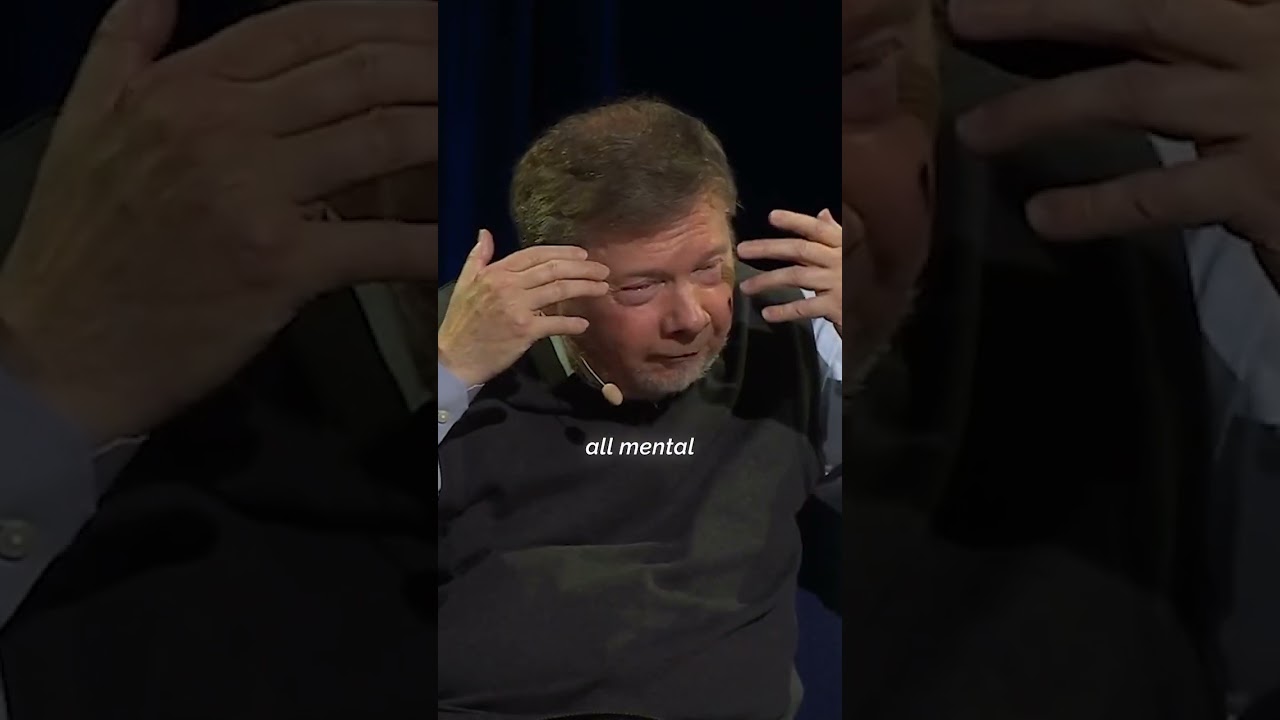
Eckhart Tolle examines how cultural conditioning operates invisibly in your mind, shaping beliefs and thoughts you assume are purely your own. Rather than condemning this mechanism, he points to the distinction between the conditioned mind and conscious presence—the space in which you can observe conditioning without being entirely enslaved by it. The teaching includes a reflection on why animals like dogs often bring more contentment than humans do: they exist primarily in the present moment, unencumbered by the accumulated mental structures that condition human experience.
What Is Cultural Conditioning?
The central theme of Tolle's talk is deceptively simple: culture conditions every thought you believe is your own. This is not presented as judgment, but as fact. From birth, you inherit language, belief systems, social norms, and interpretive frameworks that were themselves inherited by your parents and their culture. These conditioning patterns become so transparent, so normalized, that you stop noticing them. You mistake them for reality itself, or worse, for your individual personality.
Conditioning operates through language, family messaging, media, education, and the broader cultural narrative. A child born into a particular society absorbs its values about success, beauty, masculinity, femininity, worth, and belonging before conscious thought even begins. By adulthood, these patterns run so deep that they feel intrinsic to who you are. You attribute a thought to yourself—"I want this," "I believe that," "I am this kind of person"—without recognizing the cultural script underneath.
Tolle's point is not that conditioning is evil or that you should reject your culture wholesale. Rather, he invites you to see the mechanism. The moment you notice that a thought or belief is conditioned—borrowed from your culture rather than arising from your own genuine experience—you create a small gap. In that gap lies freedom.
Why Does Conditioning Run So Deep?
Culture conditions you so thoroughly because it is, in a sense, invisible. You don't learn cultural conditioning as you learn history or mathematics. Instead, you absorb it osmotically, through language itself. The way your parents spoke to you, the stories you heard, the failures that were punished and successes that were praised—all of this became woven into your sense of self before you had the cognitive tools to question it.
One reason conditioning is so pervasive is that it serves a function. Cultural systems exist to organize large groups of people into cooperative structures. Shared values, shared beliefs about money, time, morality, and success allow societies to function. In this sense, some degree of cultural conditioning is necessary for human civilization. But the price is high: the individual often loses touch with what Tolle calls presence—the direct, unmediated experience of this moment, prior to thought.
Another reason conditioning persists is that most people never question it. If everyone around you believes something, if it's reinforced constantly through media, education, and casual conversation, it becomes "common sense." You don't experience it as ideology; you experience it as reality. To suggest that it might be conditioned can feel threatening, like someone is suggesting you're not free or not real.
The Gap Between Conditioned Mind and Conscious Presence
Tolle's teaching is not that you should fight your conditioning or feel guilty about it. Instead, he points toward what happens when you become aware of conditioning in the moment. Awareness itself is not conditioned. Your capacity to observe a thought, to notice that a belief came from your culture rather than your direct experience, is something else entirely. This observing awareness is what Tolle calls presence.
The distinction matters. Your thoughts and beliefs are conditioned; your awareness of those thoughts is not. You cannot uncondition yourself through effort or willpower—that would simply create new conditioning. Instead, you can develop the capacity to notice when you're operating from conditioned patterns versus when you're responding freshly to the present moment.
This doesn't mean becoming unconscious of your cultural inheritance. Rather, it means holding it more lightly. You can participate in your culture—use its language, follow some of its norms—without being entirely identified with its scripts. There is a vast difference between "I am ambitious because that's what my culture values" (identification with conditioning) and "I notice I feel driven to succeed; I can observe that this partly comes from my cultural conditioning, and I can choose how to relate to that drive" (awareness of conditioning).
Why Your Dog Makes You Happier Than Most People
Embedded in the talk is a more subtle teaching, illustrated through an observation about animals. Tolle notes that dogs often make people happier than other humans do. On the surface, this seems odd: humans are more complex, more intelligent, more capable of reciprocal relationship. Why would a dog provide more contentment?
The answer lies in presence. A dog is not burdened by cultural conditioning in the way humans are. A dog does not ruminate about what it should be, what it failed to do yesterday, or what it fears about tomorrow. It exists primarily in the present moment. When a dog greets you, it is fully present; when it plays, it is fully engaged; when it rests, it is at rest. There is no resistance to what is.
Humans, by contrast, are often absent even when physically present. Your mind is caught in conditioned narratives about the past or future. You are performing a role shaped by cultural expectations. You are defending a self-image. The other person can sense this absence, this dividedness. What you most crave from other humans—genuine, undivided presence—is precisely what is rarest because it requires stepping outside the conditioned mind.
This is why a dog's companionship can feel so nourishing. The dog offers presence without judgment, without agenda, without the baggage of conditioning. It meets you as you are in this moment. In return for this simple presence, humans feel their own burden lighten slightly.
Recognizing Conditioning Without Blame
A critical element of Tolle's teaching is that recognizing cultural conditioning is not about blaming your parents, your society, or yourself. Conditioning happened to you before you had the capacity to consent or resist. Your parents were conditioned; their parents before them were conditioned. The culture itself is not consciously trying to oppress you; it is simply perpetuating patterns.
What matters is what you do now, with the awareness you have now. The moment you recognize a thought as conditioned is the moment choice becomes possible. You cannot choose to uncondition yourself—that effort would itself be conditioned—but you can choose to pause, to notice, to ask whether this thought or belief is serving you in this moment, or whether it is simply an old recording playing.
This practice is not about rejecting your culture or becoming isolated. Most of life will continue to flow through conditioned patterns, and that is fine. But the more you develop the capacity to notice when you are identified with conditioning versus when you are present, the more freedom and authentic choice become available to you.
Where to Go From Here
The first step is simply to begin noticing. Pay attention to your automatic thoughts, especially the ones about who you should be, what you should want, what success looks like, or how you should feel in particular situations. Ask yourself: Is this thought arising from my direct experience and genuine values, or is it a cultural script I've internalized?
Notice the difference between being in your head (lost in conditioned thought) and being present (aware, open, responding to what is actually in front of you). This difference is more obvious than you might think. When you are identified with conditioned thought, you feel tense, defended, separate. When you are present, there is an ease and aliveness.
Finally, notice what happens in your relationships when you bring presence instead of conditioned performance. Pay attention to moments when you are fully with another person—not thinking about what to say next, not performing a role, not defending an image. In those moments, connection deepens. This is not because presence is a technique; it is because presence is what was missing, and its return is naturally nourishing.