EveryEvent Dublin

Alle Events durchsuchen

Find every event in Dublin

events

Concerts & Live Music
Festivals
Sports & Recreation
Food & Drink
Arts & Culture
Community
Family & Kids
Nightlife
Comedy
Theater
Beliebte Reiseziele
BaliSedonaLos AngelesCosta RicaNew YorkSan FranciscoAustinMiamiJoshua TreeTulum
Alle Kategorien anzeigenAlle Reiseziele anzeigen

Alle Funktionen entdecken

Leistungsstarke Tools für Ihre Veranstaltungen

Plattform-Funktionen

Intelligente dynamische Preisgestaltung
Ticket-Kategorien
Sitzplatzreservierung
Warenkorbabbruch-Wiederherstellung
Besucher-Wiedergewinnung
Spenden & Staffelpreise
Affiliate-System
Ticket-Scanner
Rabattcodes
Individuelle Fragen
Ticket-Teilen
Upsells & Add-ons
Analysen & Berichte
E-Mail-Sequenzen
Warteliste / Benachrichtigen / Erinnern
Entdecken
Discovery HubArtists & PerformersVenuesKnowledge Base
Alle Funktionen anzeigenÜber uns
PreiseBlog
Alle Veranstaltungen durchsuchen

events

Concerts & Live MusicFestivalsSports & RecreationFood & DrinkArts & CultureCommunityFamily & KidsNightlife

Beliebte Reiseziele

BaliSedonaLos AngelesCosta RicaNew YorkSan Francisco

Entdecken

Discovery HubArtists & PerformersVenuesKnowledge Base

Plattform-Funktionen

Intelligente dynamische PreisgestaltungTicket-KategorienSitzplatzreservierungWarenkorbabbruch-WiederherstellungBesucher-WiedergewinnungSpenden & StaffelpreiseAffiliate-SystemTicket-ScannerRabattcodesIndividuelle FragenTicket-TeilenUpsells & Add-onsAnalysen & BerichteE-Mail-SequenzenWarteliste / Benachrichtigen / Erinnern
Alle Funktionen anzeigenÜber uns
PreiseBlog
AnmeldenRegistrierenVeranstalter
  • Browse All Events
  • Concerts & Live Music
  • Festivals
  • Sports & Recreation
  • Food & Drink
  • Arts & Culture
  • Community
  • Family & Kids
  • Nightlife
  • Alle Kategorien →
  • All Destinations →
  • For Promoters
  • For Artists
  • For Venues
  • For Festivals
  • For Event Spaces
  • For Nonprofits
  • For Bloggers
  • For Speakers
  • Brand Ambassador
  • Case Studies
  • 350.000+ Käufernetzwerk
  • Warenkorbabbruch-Wiederherstellung
  • Intelligente dynamische Preisgestaltung
  • Ticket-Kategorien
  • Wiederkehrende Veranstaltungen
  • Sitzplatzreservierung
  • Affiliate-System
  • Warteliste / Benachrichtigen
  • Ticket-Scanner
  • Einbettungs-Widget
  • Event Syndication
  • Message Center
  • Integrations
  • Reports
  • Alle Funktionen →
  • Über uns
  • The Ecosystem
  • Blog
  • Glossar
  • Inspiration
  • Hilfe-Center
  • Kontakt
  • API-Dokumentation
  • Marken-Assets
  • Karriere
  • Presse
  • Nutzungsbedingungen
  • Datenschutzrichtlinie

Events

  • Browse All Events
  • Concerts & Live Music
  • Festivals
  • Sports & Recreation
  • Food & Drink
  • Arts & Culture
  • Community
  • Family & Kids
  • Nightlife
  • Alle Kategorien →

Getaways

  • All Destinations →

For Organizers

  • For Promoters
  • For Artists
  • For Venues
  • For Festivals
  • For Event Spaces
  • For Nonprofits
  • For Bloggers
  • For Speakers
  • Brand Ambassador
  • Case Studies

Funktionen

  • 350.000+ Käufernetzwerk
  • Warenkorbabbruch-Wiederherstellung
  • Intelligente dynamische Preisgestaltung
  • Ticket-Kategorien
  • Wiederkehrende Veranstaltungen
  • Sitzplatzreservierung
  • Affiliate-System
  • Warteliste / Benachrichtigen
  • Ticket-Scanner
  • Einbettungs-Widget
  • Event Syndication
  • Message Center
  • Integrations
  • Reports
  • Alle Funktionen →

Unternehmen

  • Über uns
  • The Ecosystem
  • Blog
  • Glossar
  • Inspiration
  • Hilfe-Center
  • Kontakt
  • API-Dokumentation
  • Marken-Assets
  • Karriere
  • Presse
  • Nutzungsbedingungen
  • Datenschutzrichtlinie
EveryEvent
© 2026 EveryEvent Dublin. Alle Rechte vorbehalten.
Inspiration

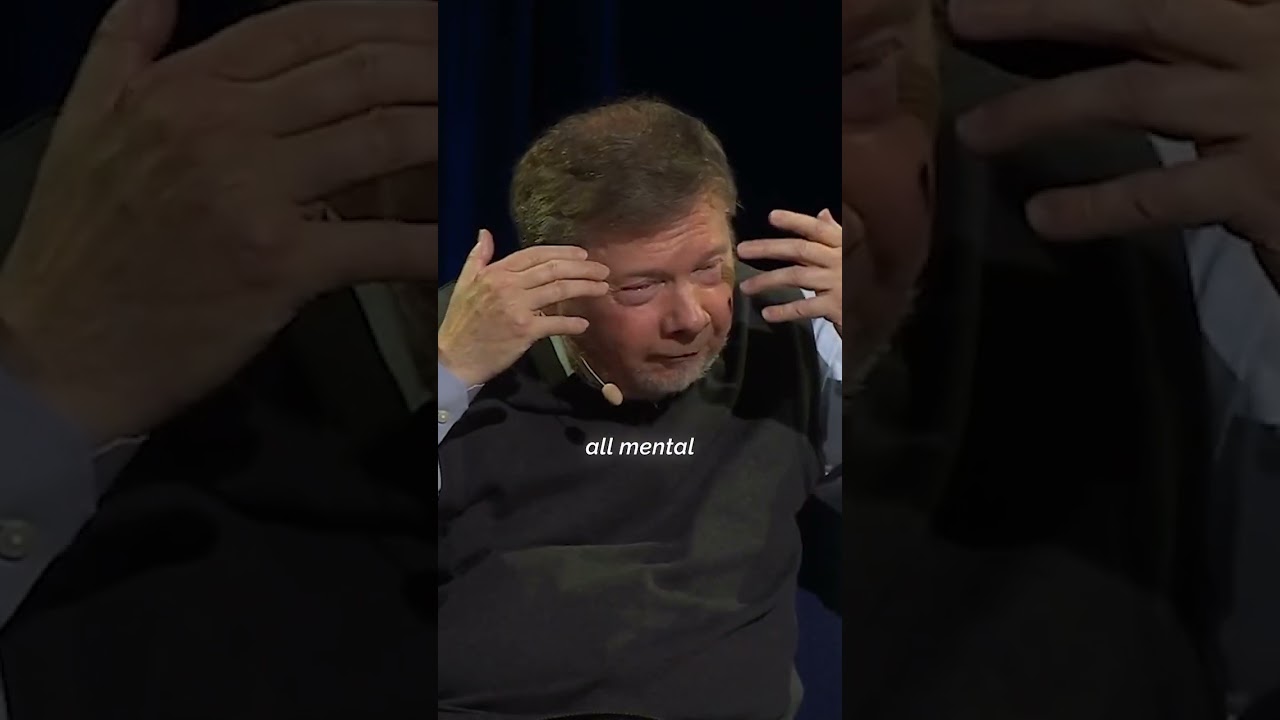
Thinking as an Illusion: Why"I Think" Is Not

Eckhart Tolle
Eckhart Tolle
Apr 13, 2026
6 min read

TLDR: The common phrase "I think" assumes you consciously choose your thoughts, but for most people, thinking is an involuntary process that simply occurs. This illusion of choice creates a false sense of agency over the mind. Understanding that you are the awareness observing thoughts—rather than the thoughts themselves—is fundamental to escaping mental conditioning and accessing presence.

Read · 6 sections

The Illusion of Deliberate Thought

Most humans operate under a core misunderstanding: that they actively think. The phrase "I think" carries an implicit assumption of authorship and choice. When you say "I think about my problems" or "I choose to think positively," you are asserting that you are the author of your thoughts. But this is not how the mind actually works for the majority of people.

Thinking, in reality, is something that happens to you, not something you do. Thoughts arise unbidden—a memory surfaces, a worry emerges, a mental commentary begins—and only after the fact does consciousness claim ownership of the process. The mind generates thought automatically, based on accumulated conditioning, past experiences, beliefs, and psychological patterns. You do not decide to think; thinking simply occurs within the field of consciousness.

This distinction is not merely semantic. It is the difference between genuine agency and the illusion of agency. Most people operate in a trance state, convinced they are directing their mental activity while in fact being directed by it. Thoughts appear and you follow them. Emotions trigger and you justify them with thought. A fear arises and the mind spins narratives to protect itself. All of this feels intentional because the mind immediately narrates the process, but the narration comes after the fact, not before.

How Conditioning Creates Automatic Thought

The mechanism behind involuntary thinking is conditioning. From childhood onward, you have absorbed patterns of thought from your environment: family beliefs, cultural narratives, trauma responses, learned anxieties. These patterns became automated in the nervous system and brain. Now, when a similar situation arises, the old thought pattern activates automatically—before any conscious decision has been made.

A person who was criticized as a child may find that whenever they make a mistake, a thought of self-blame automatically arises. They did not decide to blame themselves; the thought appeared. Someone with financial anxiety may find that thoughts of scarcity automatically consume their attention whenever money is discussed. These are not chosen thoughts. They are conditioned reflexes of the mind.

The brain is fundamentally a pattern-recognition and pattern-completion machine. It has been programmed by experience. Consciousness simply witnesses this programming in action, but mistakenly believes it is in control. This is the illusion: the belief that the voice in your head, the continuous mental commentary, is "you" making decisions. It is not. It is a program running.

The Gap Between Observer and Thought

The key to freedom lies in recognizing this gap. There is a difference between thoughts and the awareness that observes them. You are not your thoughts. You are the presence, the awareness, in which thoughts appear. This is a radical shift in identification.

Most people have fused their sense of self with the thinking process. They believe they are their thoughts. As a result, they defend thoughts, cling to thoughts, and suffer through thoughts, all while maintaining the illusion that this is who they are. When a negative thought arises, they identify with it: "I am anxious," "I am a failure," "I am unworthy." The thought and the self have become one.

But there is another possibility: to recognize yourself as the awareness that observes the thought. From this vantage point, a thought about failure is simply a thought—a pattern, a sound vibration in consciousness—not a statement of reality about who you are. The anxiety is simply a sensation and a story, not your identity. This shift in perspective does not require you to change the thought content; it requires a change in where you stand relative to thought.

Why This Matters for Presence and Freedom

As long as you believe "I think" and that thoughts are your deliberate creation, you remain trapped in the mental realm. You are identified with the mind and its endless production. You are caught in reactivity—reacting to the mind's productions as if they were instructions, taking them seriously, building your life around them.

When you recognize that thinking happens automatically, you step out of that trap. You begin to see the mind as a tool—a useful tool for practical problems, but not the totality of your being. This creates space. It creates what is often called "the gap"—a space between stimulus and response where genuine choice becomes possible.

In this gap, you can observe a thought without immediately accepting it. You can feel an emotion without immediately acting on it. You can witness the conditioned pattern without continuing to feed it with your belief. This is not about controlling or suppressing thought; it is about disidentifying from it. It is about recognizing that you are not your mind.

From this stance, presence becomes possible. Present-moment awareness is fundamentally different from the mind's time-based thinking. The mind always operates in past and future—memory and anticipation. But awareness itself is always now. When you rest in awareness rather than in thinking, you are here, in the only place where life actually occurs.

The Role of Observation Without Judgment

The practice of recognizing this illusion involves observation. Watch your thinking without trying to change it. Notice how thoughts arise seemingly from nowhere. Notice how the mind generates worry about the future or rehashing of the past, and how most of this activity is automatic and habitual. Notice that there is something in you that is aware of this process—that can step back and see it happening.

This observation itself is the first step toward freedom. It weakens the identification with thought. As you repeatedly observe that thoughts simply occur, the illusion that "I think" gradually dissolves. You begin to recognize yourself as the aware space in which thoughts occur, rather than as the thoughts themselves.

This is not about positive thinking or thinking better thoughts. It is about recognizing the actual structure of your consciousness. For most people, most of the time, thinking is happening to them. They are not the author; they are the witness. Once you truly understand this, the pressure to control your thoughts, to fix your mind, to become a better thinker—all of that falls away. What remains is the freedom of simple presence.

Where to go from here

If you recognize yourself in this description—that thoughts are happening to you rather than being chosen by you—the next practice is simple: become more aware of this process. In meditation, in daily life, pause and notice. Notice the thought that is present. Ask yourself: Did I choose this thought? Where did it come from? Can I observe it without identifying with it? This inquiry, practiced consistently, weakens the hypnotic trance of identification with the mind and opens access to the present moment where your actual life is unfolding.

Eckhart Tolle
AuthorEckhart Tolle

German-born spiritual teacher whose 1997 book The Power of Now became one of the most widely read spiritual works of the 21st century. After a profound transformation at 29 — movin…

View profileWebsite
Explore Topics
Thinking-mindEgo-illusionConsciousnessPresenceSelf-inquiry

Got Questions?

Frequently Asked Questions

Most thinking is automatic and conditioned, arising from your past experiences and learned patterns. While the mind claims authorship after the fact, genuine deliberate thinking is rare. The distinction matters: recognizing thoughts as automatic rather than chosen frees you from identifying with them and opens access to genuine presence.
Rather than trying to stop or change automatic thoughts, the practice is to recognize that you are not your thoughts—you are the awareness observing them. This shift in identification weakens the thought's hold on you without requiring effort to control it. Over time, thoughts lose their compelling power.
You are the awareness or presence in which thoughts appear. Thoughts are temporary patterns that come and go, while awareness is the constant space that witnesses them. Most people fuse these two together, but recognizing the gap between observer and observed is fundamental to freedom from the mind's conditioning.
Responsibility shifts from the content of the thought to your relationship with it. You are not responsible for the automatic thought arising, but you are responsible for whether you identify with it and act from it. This is where genuine agency enters—in the choice to observe rather than to react.
Yes. Meditation creates space to observe thinking without being swept along by it. By repeatedly noticing thoughts arising and passing away while you remain as the silent witness, the illusion of ownership gradually weakens. This direct experience is more powerful than intellectual understanding alone.
It means thoughts arise automatically based on your conditioning, past experiences, and neural patterns—not from a conscious decision you make in each moment. You notice the thought after it has already begun, which creates the false impression that you authored it. Seeing through this illusion is the beginning of real presence.

Continue Reading

More from Eckhart

View All
God Beyond the Sky: Rethinking Divine Nature
Featured

God Beyond the Sky: Rethinking Divine Nature

God is not an external judge deciding human suffering. Suffering itself becomes the mechanism through which consciousness awakens to itself.…

1 min read
God, Suffering, and the One Life Across Traditions
Featured

God, Suffering, and the One Life Across Traditions

Eckhart Tolle explores how Islam, Buddhism, and Greek philosophy all point to the same ultimate reality—and why the problem of suffering dis…

1 min read
Why Humanity Cannot Sit in Silence: Disconnection from Being
Featured

Why Humanity Cannot Sit in Silence: Disconnection from Being

The root of human conflict lies in disconnection from the being dimension—the inability to find peace when alone. When disconnected from bei…

1 min read
Who You Really Are Beyond Surface Identity
Featured

Who You Really Are Beyond Surface Identity

You are not your body, name, or conditioned mind. Eckhart Tolle reveals the distinction between surface identity and deeper being.…

1 min read

Keep exploring

Continue your journey

More wisdom and gatherings from across the BrightStar directory.

More Articles

Browse the full library of teachings, interviews, and guides.

Back to all articles →

Teachers & Artists

Explore the lineages, musicians, and guides of the conscious world.

Explore artists →

Find an Event

Kirtan, retreats, sound baths, breathwork, festivals — happening soon.

Browse events →
Read more from BrightStarCreate Free Account
Host your own gatherings?Try the Demo