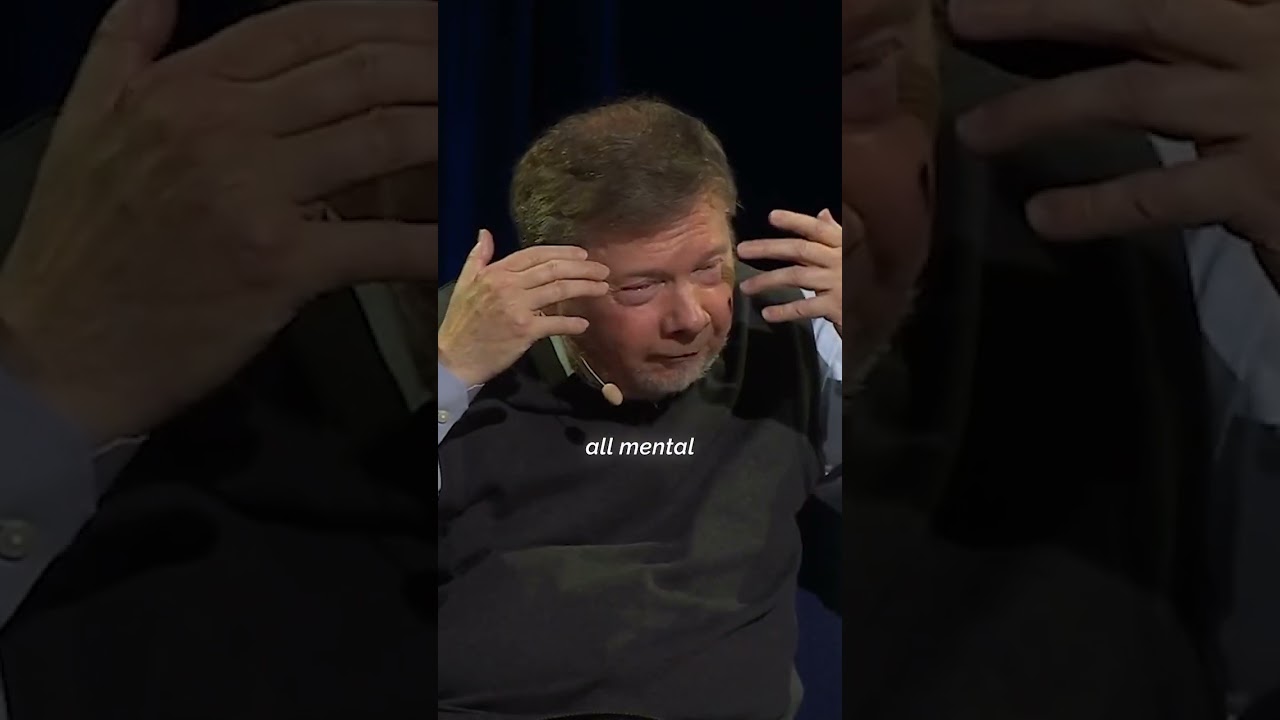
The past does not exist as an independent reality separate from the present moment—it only exists as a thought, memory, or mental construct arising in consciousness right now. Eckhart Tolle teaches that whether you encounter an idea 20 years from now or today, you will always be experiencing it in the present moment, because there is only ever the now. This dissolves the illusion of psychological time and reveals the timeless nature of consciousness itself.
Is the Past Really Over, or Does It Still Exist Somewhere?
A fundamental misunderstanding shapes how most people relate to time. We assume the past is "gone"—that it exists in some completed, fixed state somewhere behind us, while we live in the present and reach toward the future. But Eckhart Tolle points to a radical insight: the past has no independent existence outside of this moment. You cannot go back and touch the past. You cannot access any moment except the one you are in right now.
When you think about a memory—a conversation from ten years ago, an event from childhood, a historical moment you learned about in school—where does that occur? It occurs in your mind, in the present moment. The past is not a place you can enter. It exists only as a thought, an image, a sensation, or a story that arises in consciousness now. This is not a philosophical abstraction. It is the direct, observable reality of how experience works.
What Is Psychological Time?
Tolle distinguishes between clock time and psychological time. Clock time is a useful tool—it helps you schedule, coordinate actions, measure durations. Psychological time, however, is a mental construct where you carry the past with you as a weight, and you project yourself into an imagined future filled with worry or anticipation. In psychological time, you are never fully present, because your mind is divided between what already happened and what might happen next.
The problem with psychological time is that it becomes a prison. You identify with your past—your mistakes, your achievements, your trauma, your history—and you carry it into every moment. You say, "I am the person who did that" or "I am not good enough because of what happened." The past, which exists only as a mental story, colonizes your present consciousness and shapes how you perceive yourself and act now.
Why Is There Only Ever the Now?
Tolle emphasizes a simple but profound observation: you can only ever be conscious in the present moment. Even if you watch this video in 20 years, you will be watching it now. There is no alternate timeline where you experience the year 2045; you experience 2045 as the present moment when it arrives. Time is always now from your perspective. The "future" you worry about will become the present when it arrives, at which point it will no longer be the abstract, imaginary thing you were anxious about—it will be a concrete, immediate experience.
This means the future, like the past, only exists as a thought-construct in the present moment. You imagine tomorrow, but you imagine it today. You fear next week, but that fear occurs now. The fear itself is real; the scenario you fear is not happening now—it is only happening in your mind as a mental projection.
How Does This Collapse the Illusion of Time?
When you recognize that you can only ever exist in the present moment, and that both past and future exist only as mental constructs arising in that moment, the tyranny of psychological time begins to dissolve. You are no longer trapped in a narrative where your identity is locked into history, and where your worth depends on achieving some imagined future state.
This recognition does not mean you ignore practical necessities. You still use clock time to plan, to coordinate with others, to accomplish tasks. But you use it as a tool, not as the container of your existence. You are not identified with your past. You are not enslaved by your future. You rest in the awareness that there is only ever this present moment, and this present moment contains everything—past as memory, future as anticipation, and what is actually happening right now.
What Changes When You Accept That the Past Only Exists Now?
If the past only exists as a thought-form in your present consciousness, then you are not actually imprisoned by what happened. You may carry habits, conditioning, and beliefs formed by past experiences, but the original events themselves are not happening to you anymore. The suffering comes from the thoughts about what happened, not from the events themselves, which no longer exist.
This opens the possibility of genuine psychological freedom. You can look at past events without the compulsion to define yourself by them. A difficult childhood still shaped you, but it is not happening now. A failure you experienced is not failing you now—the mental story about that failure might be, but the event itself has no power except the power you give it through your thoughts.
Similarly, anxiety about the future loses its grip when you recognize that the future is not real. It is a phantom constructed by your mind, often drawn from patterns learned in the past. When you are actually in the moment where that future arrives, it will not be the thing you imagined—it will be present reality, which you can respond to with clarity rather than with fear.
Where to Go From Here
Begin to notice the difference between clock time and psychological time in your daily life. When you are planning or scheduling, you are using clock time appropriately. But when you are worrying about something that hasn't happened, or carrying resentment about something that has, you are lost in psychological time. Notice how the mind creates narratives about past and future, and recognize that these narratives, while they affect your feelings now, are not actual experiences of past or future—they are thoughts happening in the present.
Practice returning your attention to what is actually happening right now—the sensations in your body, the sounds around you, the quality of this breath. The present moment is always available, always free of the past and future. The more you recognize that there is only ever the now, the less power the psychological past has over you, and the less the imagined future can drain your energy.