EveryEvent Dublin

Alle Events durchsuchen

Find every event in Dublin

events

Concerts & Live Music
Festivals
Sports & Recreation
Food & Drink
Arts & Culture
Community
Family & Kids
Nightlife
Comedy
Theater
Beliebte Reiseziele
BaliSedonaLos AngelesCosta RicaNew YorkSan FranciscoAustinMiamiJoshua TreeTulum
Alle Kategorien anzeigenAlle Reiseziele anzeigen

Alle Funktionen entdecken

Leistungsstarke Tools für Ihre Veranstaltungen

Plattform-Funktionen

Intelligente dynamische Preisgestaltung
Ticket-Kategorien
Sitzplatzreservierung
Warenkorbabbruch-Wiederherstellung
Besucher-Wiedergewinnung
Spenden & Staffelpreise
Affiliate-System
Ticket-Scanner
Rabattcodes
Individuelle Fragen
Ticket-Teilen
Upsells & Add-ons
Analysen & Berichte
E-Mail-Sequenzen
Warteliste / Benachrichtigen / Erinnern
Entdecken
Discovery HubArtists & PerformersVenuesKnowledge Base
Alle Funktionen anzeigenÜber uns
PreiseBlog
Alle Veranstaltungen durchsuchen

events

Concerts & Live MusicFestivalsSports & RecreationFood & DrinkArts & CultureCommunityFamily & KidsNightlife

Beliebte Reiseziele

BaliSedonaLos AngelesCosta RicaNew YorkSan Francisco

Entdecken

Discovery HubArtists & PerformersVenuesKnowledge Base

Plattform-Funktionen

Intelligente dynamische PreisgestaltungTicket-KategorienSitzplatzreservierungWarenkorbabbruch-WiederherstellungBesucher-WiedergewinnungSpenden & StaffelpreiseAffiliate-SystemTicket-ScannerRabattcodesIndividuelle FragenTicket-TeilenUpsells & Add-onsAnalysen & BerichteE-Mail-SequenzenWarteliste / Benachrichtigen / Erinnern
Alle Funktionen anzeigenÜber uns
PreiseBlog
AnmeldenRegistrierenVeranstalter
  • Browse All Events
  • Concerts & Live Music
  • Festivals
  • Sports & Recreation
  • Food & Drink
  • Arts & Culture
  • Community
  • Family & Kids
  • Nightlife
  • Alle Kategorien →
  • All Destinations →
  • For Promoters
  • For Artists
  • For Venues
  • For Festivals
  • For Event Spaces
  • For Nonprofits
  • For Bloggers
  • For Speakers
  • Brand Ambassador
  • Case Studies
  • 350.000+ Käufernetzwerk
  • Warenkorbabbruch-Wiederherstellung
  • Intelligente dynamische Preisgestaltung
  • Ticket-Kategorien
  • Wiederkehrende Veranstaltungen
  • Sitzplatzreservierung
  • Affiliate-System
  • Warteliste / Benachrichtigen
  • Ticket-Scanner
  • Einbettungs-Widget
  • Event Syndication
  • Message Center
  • Integrations
  • Reports
  • Alle Funktionen →
  • Über uns
  • The Ecosystem
  • Blog
  • Glossar
  • Inspiration
  • Hilfe-Center
  • Kontakt
  • API-Dokumentation
  • Marken-Assets
  • Karriere
  • Presse
  • Nutzungsbedingungen
  • Datenschutzrichtlinie

Events

  • Browse All Events
  • Concerts & Live Music
  • Festivals
  • Sports & Recreation
  • Food & Drink
  • Arts & Culture
  • Community
  • Family & Kids
  • Nightlife
  • Alle Kategorien →

Getaways

  • All Destinations →

For Organizers

  • For Promoters
  • For Artists
  • For Venues
  • For Festivals
  • For Event Spaces
  • For Nonprofits
  • For Bloggers
  • For Speakers
  • Brand Ambassador
  • Case Studies

Funktionen

  • 350.000+ Käufernetzwerk
  • Warenkorbabbruch-Wiederherstellung
  • Intelligente dynamische Preisgestaltung
  • Ticket-Kategorien
  • Wiederkehrende Veranstaltungen
  • Sitzplatzreservierung
  • Affiliate-System
  • Warteliste / Benachrichtigen
  • Ticket-Scanner
  • Einbettungs-Widget
  • Event Syndication
  • Message Center
  • Integrations
  • Reports
  • Alle Funktionen →

Unternehmen

  • Über uns
  • The Ecosystem
  • Blog
  • Glossar
  • Inspiration
  • Hilfe-Center
  • Kontakt
  • API-Dokumentation
  • Marken-Assets
  • Karriere
  • Presse
  • Nutzungsbedingungen
  • Datenschutzrichtlinie
EveryEvent
© 2026 EveryEvent Dublin. Alle Rechte vorbehalten.
Inspiration

Mindful Breathing Practice: ConnectWith Earth and Self

Thich Nhat Hanh
Thich Nhat Hanh
Oct 19, 2025
6 min read
Watch · 8

TLDR: This guided meditation from Sister Don Hanh teaches practitioners to cultivate inner presence through breath awareness while simultaneously recognizing their interconnection with Earth and the air. The 8-minute practice moves through four distinct phases: establishing a comfortable posture, observing natural breath patterns, building body awareness and relaxation, and culminating in a reciprocal recognition that the practitioner is part of Mother Earth while Mother Earth dwells within them. Rather than imposing technique, the meditation invites practitioners to simply notice what is already happening—a foundational approach to mindfulness rooted in the Plum Village tradition.

Read · 7 sections

Why Start With Physical Comfort and Posture?

Sister Don Hanh begins by inviting practitioners to "find a comfortable position" in either a chair or cushion, emphasizing that the body can be "straight but relaxed" (0:15–0:26). This instruction acknowledges a core principle in contemplative practice: the body and mind are not separate. Discomfort or tension in the physical form creates distraction and resistance. By establishing a stable, relaxed posture from the start, practitioners create conditions for the mind to settle naturally rather than spending the meditation negotiating with an aching knee or tight shoulders.

The phrase "let go all the tensions" (0:28) is not a command to force relaxation but an invitation to notice where holding occurs and gently release it. This mirrors a Zen principle: practice works by allowing rather than controlling. The option to close the eyes (0:33) further signals permission—some practitioners benefit from reduced visual input, while others may find it unsettling. Sister Don Hanh trusts the practitioner's own wisdom about what serves them.

What Does the Bell Sound Represent?

The meditation opens and closes with three sounds of the bell (0:37–0:48 and 7:36–7:42). In Zen monasteries, the bell serves multiple functions: it marks transitions, calls practitioners to presence, and symbolizes the interconnection of all beings. Sister Don Hanh recites an invocation with the bell: "I listen. I listen this wonderful sound. Give me back to my true home." This frames the bell not as mere ritual but as a return to one's essential nature—the "true home" being the present moment before thought elaborates upon it.

How Does Breath Observation Build Awareness?

After the opening bell, Sister Don Hanh introduces the core practice: simple breath awareness. Practitioners are invited to notice, "Breathing in, I know that this is an in breath. Breathing out, I know that this is an out breath" (1:32–1:44). This is not visualization or breath control. The teacher explicitly permits natural variation: "If our breath is short, we allow it to be short. If our breath is long, we allow it to be long" (2:20–2:31).

This permissive stance is pedagogically crucial. Many beginners approach meditation expecting to alter their breathing—to make it deeper, slower, or more rhythmic—and then feel they are "failing" when the mind wanders or breath remains shallow. Sister Don Hanh eliminates that trap by making the practice one of observation rather than manipulation. The breath becomes a mirror: noticing what is present teaches the practitioner to be present. This mirrors a teaching common in Zen: enlightenment is not about becoming different but recognizing what already is.

What Is the Role of Body Scanning in This Practice?

Roughly midway through the meditation, Sister Don Hanh introduces a body-awareness phase: "Breathing in, I become aware of my whole body. Breathing out, I smile and relax my whole body" (2:58–3:09). This pairs breath with gentle somatic attention. Rather than tensing and releasing muscles systematically, the practice uses the exhale as an opportunity for the body to release what it has been holding—a natural softening that occurs when tension is not actively maintained.

The instruction to "smile" (3:07) may seem small, but it carries significance in Vietnamese Zen practice. A slight facial smile signals to the nervous system a state of safety and ease, which the body can then internalize. It also serves as a gentle reminder of kindness toward oneself—the practice is not grim endurance but a warm, accepting attention to what is.

How Does the Meditation Connect Personal Breath to Planetary Air?

The meditation's most distinctive turn occurs when Sister Don Hanh shifts from individual body awareness to awareness of Earth and atmosphere. "As I breathe in, I am aware of our beautiful planet Earth, the most beautiful in the entire solar system. As I breathe out, I smile with gratitude to Mother Earth" (4:04–4:40). This is not metaphorical thinking; it is a shift in the scope of attention.

Oxygen that enters the lungs originates in Earth's atmosphere, created and maintained by the biosphere. The air inside the body and the air outside are continuous. By bringing this scientific reality into conscious awareness during meditation, Sister Don Hanh dissolves the illusion of a separate, isolated self. The practice becomes an ecology: "Breathing in, I feel the earth holding me. Breathing out, the air accepts and supports me just as I am" (5:08–5:23).

This recognition is not sentimental. It is precise: the Earth does hold us through gravity; the air does accept and support us through buoyancy and oxygen exchange. The meditation invites the practitioner to feel these facts, not just think them.

What Is the Meaning of "I Am Part of Mother Earth" and "Mother Earth Is Within Me"?

The meditation culminates in a reciprocal affirmation: "As I breathe in, I know that I am part of mother earth. As I breathe out, I see that mother earth is within me" (6:09–6:22). These two statements dissolve the boundary between self and world. The first half—"I am part of Mother Earth"—asserts that the individual is not separate from the planetary system. The second half—"Mother Earth is within me"—completes the circle: the large contains the small, and the small contains the large.

In Buddhist philosophy, this teaching is central to understanding non-self (anatta in Pali). There is no solid, independent self standing apart from the world. Instead, what we call "self" is a process—a temporary organization of matter, energy, and awareness that remains utterly dependent on everything around it. The meditation offers a direct, felt experience of this interdependence rather than an abstract concept.

Where to Go From Here

This guided meditation is a gateway practice. Practitioners who find it resonant may explore deepening through several paths. First, one can return to this same meditation regularly, allowing familiarity and subtlety to emerge over weeks and months. Consistency matters more than duration; five minutes daily outweighs sporadic longer sessions.

Second, practitioners interested in the ecological dimensions of this teaching may explore the full "Zen and the Art of Saving the Planet" (ZASP) course mentioned in the video description. This course situates mindfulness practice within climate awareness and collective action—extending the personal breath-and-Earth connection into questions of how to live in alignment with that recognition.

Third, those drawn to the Zen lineage itself can investigate the Plum Village tradition, founded by Thich Nhat Hanh (Sister Don Hanh's teacher), which emphasizes engaged Buddhism—the integration of meditation practice with compassionate action in the world. The philosophy here is that inner peace and outer justice are not separate pursuits but two expressions of the same awakening.

Transcript

[0:00] And I would like to invite you um

[0:02] practice a guided meditation

[0:05] in which we have the opportunity to

[0:08] connect with ourself with our breath our

[0:11] body and also with the air. So I invite

[0:15] you to find a comfortable position.

[0:18] If you are sitting a in a chair or in a

[0:22] cushion you can be

[0:26] straight but relaxed.

[0:28] And you can let go all the tensions. And

[0:33] if you wish you can close your eyes

[0:37] and we will start with three sounds of

[0:39] the bed.

[0:42] I listen. I listen

[0:45] this wonderful sound. Give me back to my

[0:48] true home.

[0:58] [Music]

[1:30] Breathing in.

[1:32] I know that this is an inb breath.

[1:41] Breathing out.

[1:44] I know that this is an outreath.

[1:50] In breath.

[1:53] Out breath.

[2:08] Just observing

[2:11] being aware of our breath

[2:14] of the air entering and leaving our

[2:17] body.

[2:20] If our breath is short,

[2:23] we allow it to be short.

[2:28] If our breath is long,

[2:31] we allow it to be long.

[2:58] Breathing in,

[3:00] I become aware of my whole body.

[3:07] Breathing out,

[3:09] I smile and relax my whole body.

[3:18] In breath

[3:20] I become aware of my body.

[3:25] Out breath

[3:27] I smile.

[3:30] I relax.

[4:04] As I breathe in,

[4:07] I am aware of our beautiful planet

[4:10] Earth,

[4:12] the most beautiful in the entire solar

[4:15] system.

[4:20] As I breathe out,

[4:23] I smile with gratitude to Mother Earth,

[4:30] aware of our beautiful planet Earth,

[4:35] a smiling with gratitude to Mother

[4:38] Earth.

[5:08] Breathing in,

[5:10] I feel the earth holding me.

[5:16] Breathing out,

[5:19] the air accepts and supports me just as

[5:23] I am.

[5:28] Breathing in the air holding me.

[5:35] Breathing out

[5:38] the air accepting and support me.

[6:09] As I breathe in, I know that I am part

[6:13] of mother earth.

[6:18] As I breathe out, I see that mother

[6:22] earth is within me.

[6:28] Aware that I am part of mother earth.

[6:31] See

[6:35] that mother earth is within me.

[7:20] Thank you dear friends for practicing

[7:22] this guided meditation together.

[7:25] I hope you enjoyed and that you were

[7:28] able to connect with yourself and with

[7:32] our planet, our beloved planet.

[7:36] We are ending this guided meditation

[7:38] with three sounds of the bed.

[7:50] [Music]

[8:10] [Music]

Thich Nhat Hanh
AuthorThich Nhat Hanh

Vietnamese Zen master, poet, and peace activist. Founded Plum Village in France and was central to the engaged Buddhism movement. His teachings on mindfulness, interbeing, and walk…

View profileWebsite
Explore Topics
Breath-awarenessMeditation-practiceEarth-connectionZen-buddhismMindfulness

Got Questions?

Frequently Asked Questions

Rather than deepening or slowing your breath, simply observe it as it naturally occurs. If your breath is short, allow it to be short; if long, allow it to be long. The practice is noticing, not controlling. You can silently note, 'breathing in' and 'breathing out' to anchor attention, but your breath determines the pace, not your effort.
Physically, the oxygen you breathe comes from Earth's atmosphere, and the atoms in your body originated from the planet. Philosophically, this points to non-separation: there is no solid boundary between you and the world. You are a process dependent on and inseparable from the larger Earth system.
Sister Don Hanh recommends a comfortable position that is 'straight but relaxed'—sitting in a chair or on a cushion works best because it keeps the spine naturally aligned without requiring muscular effort. Lying down may invite sleep, which isn't the goal of meditation, but a reclined prop-supported position can work if sitting is physically impossible for you.
A gentle facial smile signals ease and safety to your nervous system, which can then relax more deeply. It also cultivates an attitude of kindness toward yourself and your experience, reminding you that meditation is not grim effort but warm, accepting presence.
The video is about 8 minutes, which is a complete practice session. However, consistency matters more than length—five minutes daily is more valuable than a sporadic 30-minute session. You can also use portions of it (just the breath awareness, or just the Earth gratitude section) as anchors throughout your day.
In Zen tradition, the bell marks a transition and calls practitioners to presence. The opening bell invites you to return to your 'true home'—the present moment before thought elaborates. The closing bell honors the practice you've just shared and signals a gentle return to daily activity.

Continue Reading

More from Thich

View All
Liberation Through Grief and Self-Worth in Buddhist Practice
Featured

Liberation Through Grief and Self-Worth in Buddhist Practice

Br. Phap Huu explores how recognizing our inherent goodness and learning to grieve openly within community liberates us from suffering and s…

1 min read
Living Gems Archive: Preserving Thích Nhất Hạnh's Dharma for the World
Featured

Living Gems Archive: Preserving Thích Nhất Hạnh's Dharma for the World

Living Gems is a searchable digital archive of Thích Nhất Hạnh's teachings, built by Plum Village to preserve and share the dharma globally …

1 min read
Embrace Suffering with Tenderness: A Practice of Self-Compassion
Featured

Embrace Suffering with Tenderness: A Practice of Self-Compassion

Learn how mindful awakening and intentional daily practices help us meet suffering with compassion rather than judgment, transforming our in…

1 min read
Coming Home Through Mindfulness: Self-Doubt and Worthiness
Featured

Coming Home Through Mindfulness: Self-Doubt and Worthiness

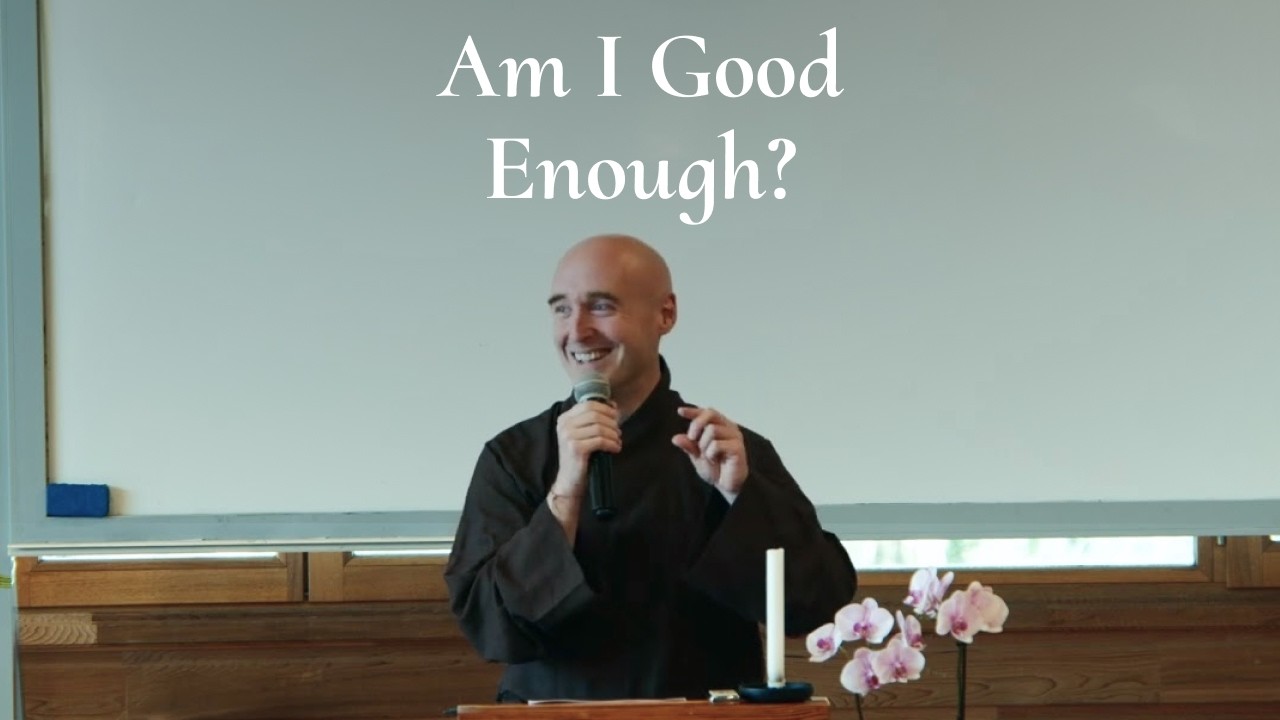
Br. Bao Tang explores the question "Am I good enough?" and how mindfulness and coming home to the present moment can free us from self-doubt…

1 min read

Keep exploring

Continue your journey

More wisdom and gatherings from across the BrightStar directory.

More Articles

Browse the full library of teachings, interviews, and guides.

Back to all articles →

Teachers & Artists

Explore the lineages, musicians, and guides of the conscious world.

Explore artists →

Find an Event

Kirtan, retreats, sound baths, breathwork, festivals — happening soon.

Browse events →
Read more from BrightStarCreate Free Account
Host your own gatherings?Try the Demo