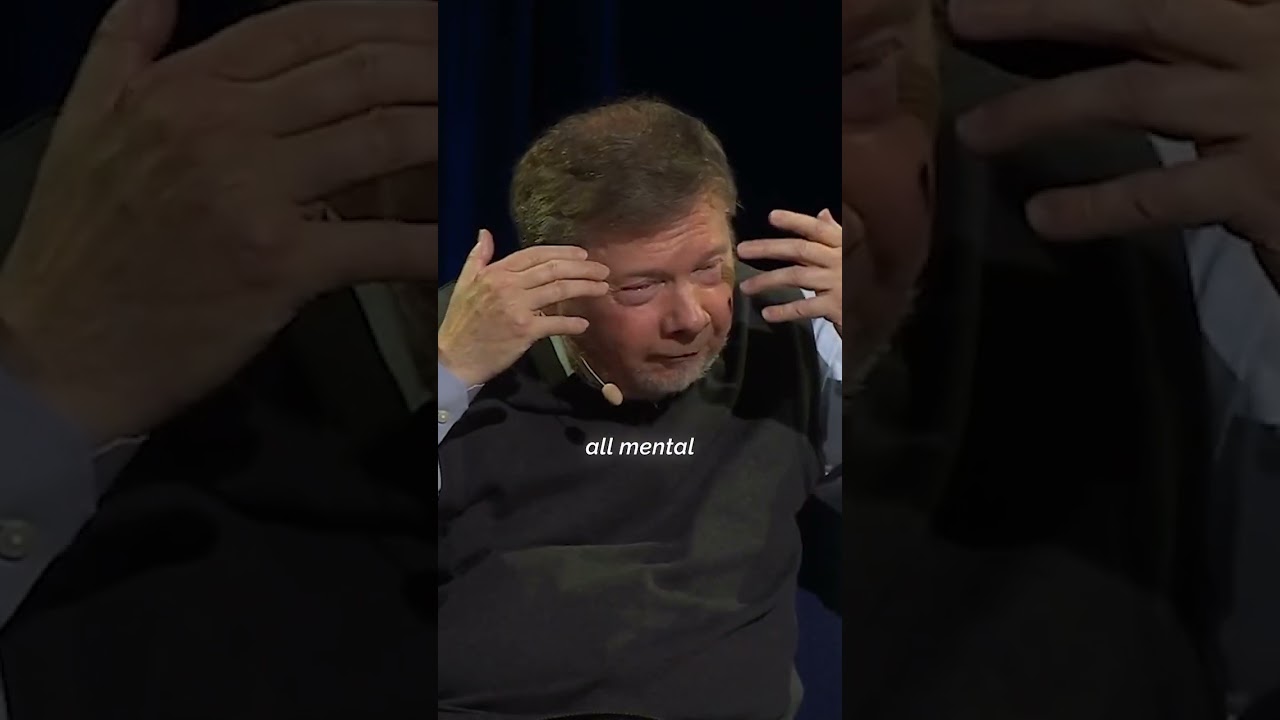
Eckhart Tolle argues that true freedom is fundamentally independent of external circumstances—including physical confinement. Rather than being determined by where your body is, freedom emerges when you stop resisting the present moment and accept what is. This teaching challenges the common equation of freedom with physical mobility, offering imprisoned individuals a path to inner peace that does not depend on release.
What Is True Freedom?
The dominant cultural narrative links freedom to physical liberty: the ability to move, to leave, to choose location. Yet Tolle's teaching inverts this assumption. Freedom, according to this perspective, is not a condition of the body but a state of consciousness. A person locked in a cell can be free. A person walking the streets can be imprisoned—bound by the mind's resistance to what is happening.
This distinction separates psychological freedom from physical freedom. Physical freedom describes the absence of external constraints on movement. Psychological freedom, by contrast, describes the absence of internal resistance to present-moment reality. Tolle's work centers on the latter: the liberation that comes when the mind stops arguing with what is.
How Does Resistance Create Imprisonment?
Resistance operates as an invisible cage. When the mind rejects the present moment—when it says "this shouldn't be happening," "I shouldn't be here," "my circumstances are unfair"—it creates suffering independent of the external facts. A prisoner who accepts his confinement and directs his awareness to what is available now (the breath, the light, a thought, a sensation) experiences less suffering than a free person whose mind is consumed by regret, resentment, or anxiety about the future.
This is not passivity or resignation. Acceptance of what is does not mean approval or permanent surrender. It means clarity: seeing the situation as it actually is, without the distortion of mental resistance. From that clarity, appropriate action becomes possible. But as long as the mind is locked in "this shouldn't be," energy is consumed by resistance rather than available for response.
Can Inner Freedom Exist in Physical Confinement?
Tolle's teaching suggests yes. The present moment is always available, regardless of walls or bars. A person in a cell can notice the quality of light, the rhythm of breath, the sensations in the body. These direct experiences of now are not confined. They exist as an immediate refuge—not as escape from reality, but as full arrival in it.
This does not minimize the hardship of imprisonment. Physical confinement is painful and unjust. But within that painful reality, a space exists where the mind can stop fighting. That space is freedom. It is available even when the body is not.
What Role Does Present-Moment Awareness Play?
Tolle's central teaching revolves around presence—the state of being fully aware in the now rather than lost in mental narratives about past or future. In a prison cell, as anywhere, the present moment contains what is immediately real: sensation, perception, the bare facts of this breath, this second. It does not contain the story "I am unjustly confined" or "my life is ruined" or "when will this end?" Those are thoughts, not present reality.
When awareness rests in direct experience rather than thought, the quality of consciousness shifts. Suffering, which depends on mental resistance and narrative, loosens its grip. This does not erase the difficulty of the situation. But it creates internal space—a clarity and peace that exist alongside hardship.
How Might Prisoners Apply This Teaching?
Practically, this might look like: noticing the breath without trying to change it; observing thoughts without believing them; feeling the body without the story about why it is where it is. These are not magical practices that dissolve injustice. They are ways of withdrawing energy from the mind's resistance machine and returning it to direct awareness.
Over time, this shift can reduce psychological suffering. A prisoner who spends less energy resisting confinement has more energy for connection (with cellmates, with oneself), for learning, for growth—even within constraints. Some prisoners have reported that spiritual practice, including presence-based approaches, becomes a genuine source of peace and even meaning during incarceration.
What Is the Relationship Between Acceptance and Injustice?
A common misunderstanding equates acceptance with approval. To accept that you are in prison does not mean accepting that incarceration is just. Rather, acceptance means: "This is what is true right now. My mind's rejection of it does not change the fact, but it does add suffering." From that clarity, one might advocate for change, work toward justice, or prepare for release—all without the added layer of mental resistance that clouds thought and exhausts the spirit.
Tolle's teaching does not address justice systems directly but rather the internal freedom available regardless of external system. It is a teaching for the mind, not a solution to injustice. But for those caught in unjust systems, it offers something: a way to not be doubly imprisoned—imprisoned both by circumstance and by resistance to circumstance.
Where to Go From Here
For those interested in deepening this inquiry: explore what you are resisting in your own life right now, whether large or small. Notice the difference between acknowledging a difficult situation and arguing with it mentally. Investigate whether it is possible to be present—fully aware, fully here—even while facing something you would prefer not to face. This investigation, available in any circumstance, is the ground of Tolle's teaching on freedom. The implication is that freedom is not something you need to be released into. It is something you can access by releasing your grip on the story of how things should be.