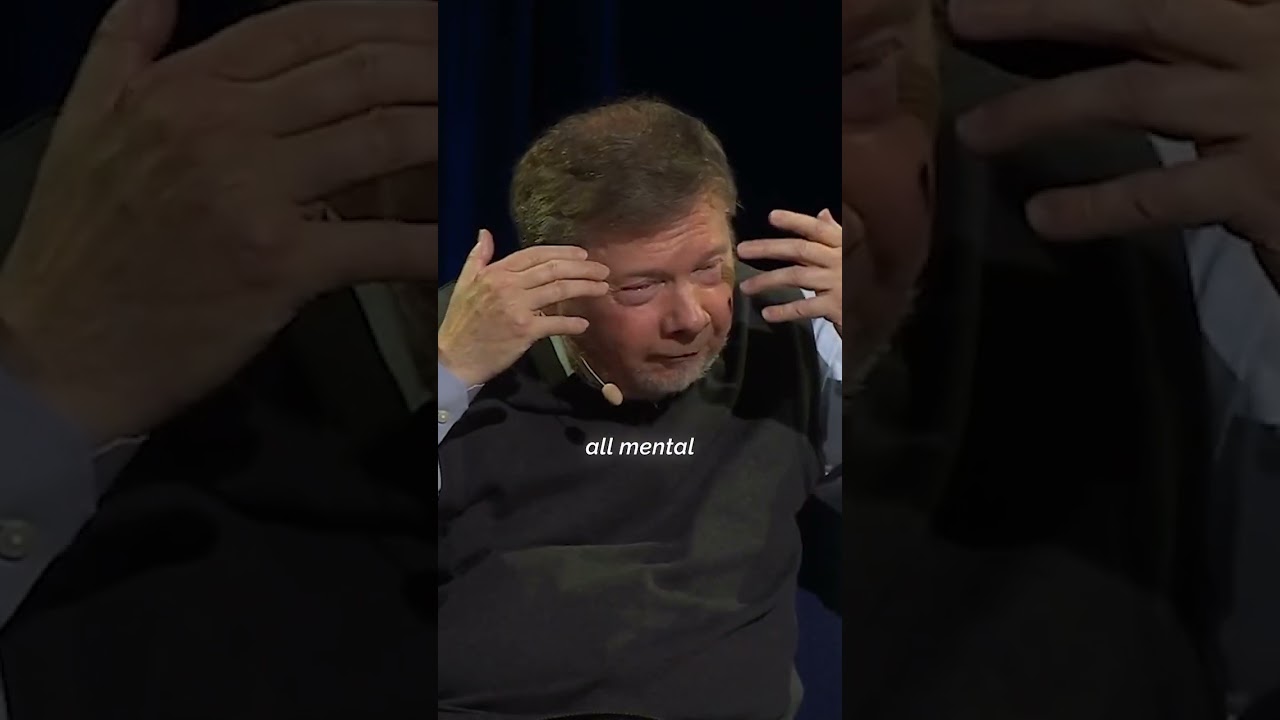
Eckhart Tolle presents death not as an ending to fear, but as a gateway to presence and the formless dimension beyond identification with physical form. Through the lens of his consciousness teachings, death becomes an opportunity to release egoic attachment and meet the final transition with acceptance, peace, and greater awareness. This approach offers profound comfort to hospice patients, families, and caregivers navigating life's closing chapter.
What Is the Formless Dimension Tolle References?
Tolle's core teaching distinguishes between the form dimension—the world of physical, material existence—and the formless dimension, the deeper level of consciousness and being that underlies all existence. Most people spend their entire lives identified with form: the body, the mind, thoughts, emotions, possessions, roles, and personal history. This identification creates what Tolle calls the "egoic mind," which generates fear, resistance, and suffering.
The formless dimension is not abstract or distant. It is the present moment itself—the space of awareness in which all experience arises. It is consciousness prior to thought, the stillness beneath mental activity, the aliveness of being itself. When Tolle says "death is a great opportunity because death is one way in which the formless dimension comes into this life," he points to the paradox that dying strips away everything that belongs to form—the body, personality, accumulation—and invites direct encounter with the dimension beyond form that has always been present but obscured by identification with material existence.
Why Is Death Called Your Last Chance to Go Beyond Form Identification?
Throughout life, we have opportunities to recognize that we are not fundamentally our forms. Meditation, spiritual awakening, and moments of grace can reveal that consciousness—the awareness behind thought—is our true nature, not the body or ego. However, these moments remain optional; the identity with form persists and can be returned to.
Death, by contrast, is involuntary and absolute. The body will cease. The personal mind as we know it will dissolve. All identification with form becomes unsustainable. In this sense, Tolle views death as the ultimate invitation to what many spiritual traditions call liberation: the release of false identification and the recognition of what remains when form falls away. It is not escape or annihilation, but a fundamental shift in identification from the temporary to the eternal, from the personal to the universal presence of consciousness itself.
For those approaching death with awareness rather than resistance, this shift can be experienced not as loss but as homecoming—a return to the source from which all form emerges and to which it returns.
How Does Presence Change the Experience of Dying?
Presence, in Tolle's teaching, means being fully alive to the reality of this moment—not lost in thoughts about the past or anxiety about the future, but aware and awake to what is occurring now. When facing death and uncertainty, most minds contract into fear: "What will happen? Will it hurt? What will I lose?" These thoughts are projections into a future that has not yet come, and they pull consciousness away from the aliveness of the present moment.
By returning attention to presence—to the breath, to sensation, to the awareness that observes thought—the dying person encounters the present moment as it actually is, which is often far less frightening than the mind's projections. In the now, there is simply existence, sensation, perhaps discomfort, but not the compounded suffering created by resistance and mental fear.
Presence also shifts the quality of grief and loss. Rather than identifying with the ego's story about death as annihilation or personal failure, presence allows grief to be felt authentically, without the armor of denial or the collapse into despair. Grief becomes a natural movement of the heart, met with the spaciousness of awareness. This distinction is crucial for caregivers and family members as well: being present with a dying loved one—not trying to fix them or manage their death—is the greatest gift of peace one can offer.
What Role Does Acceptance Play in End-of-Life Peace?
Acceptance does not mean resignation or giving up. It means recognizing what is true and no longer wasting energy in resistance to reality. Death is coming; resistance to this fact adds only suffering. Acceptance acknowledges: "Yes, this is happening. This is the way life unfolds."
When acceptance is present, the nervous system can rest. The constant internal struggle—between what is and what we wish were true—ceases. In that cessation of struggle, peace becomes possible. The Eckhart Tolle Foundation's Hospice & Elderly Outreach Initiative brings these teachings to patients and families specifically because acceptance and presence are not merely philosophical concepts but practical tools that measurably reduce suffering and increase peace during the dying process.
Acceptance also opens the possibility of meaning-making: using the final days or weeks not to rage against death, but to repair relationships, express love, complete unfinished business, and consciously prepare for transition. Many who approach death with acceptance report a deepening of peace, clarity, and even gratitude that would be impossible within a frame of denial or struggle.
How Can Caregivers and Families Meet This Teaching?
The presence teachings apply equally to those surrounding the dying person. Caregivers often carry heavy burdens: anticipatory grief, guilt, uncertainty about whether they are doing enough, exhaustion. The mind projects ahead into loss and imagines failure.
When caregivers return to presence—being fully with the person in front of them, rather than lost in worry about their decline—the quality of care transforms. It becomes less about doing and more about being. A hand held in presence, a conversation genuinely listened to, silence shared without the need to fill it—these are the gifts that matter most and are, paradoxically, available only in the present moment, not in planning or controlling.
The Eckhart Tolle Foundation's outreach specifically acknowledges that families and caregivers themselves need support and teachings, not just the dying. The formless dimension—the peace and presence beyond form—is available to all, regardless of whether death is imminent. This is why the Foundation dedicates resources to make Tolle's teachings accessible to vulnerable populations including hospice communities, the elderly, and those supporting them.
What Is the Broader Vision Behind This Initiative?
The Eckhart Tolle Foundation's mission is rooted in the conviction that awakening human consciousness and reducing suffering caused by egoic dysfunction requires making these teachings available precisely where suffering is most acute. Rather than teachings remaining the province of the comfortable or the spiritually curious, the Foundation brings presence and acceptance to hospices, prisons, youth centers, and among the most vulnerable.
Tolle himself has long taught that collective awakening depends not on converting everyone to spiritual practice, but on sufficient numbers of conscious individuals bringing presence and peace to their immediate circles. When a patient learns to meet dying with acceptance, when a family finds peace amid grief, when a caregiver exhausted with duty reconnects with the aliveness of presence, a ripple of consciousness touches everyone in proximity. This is how, Tolle suggests, the awakening of human consciousness actually happens—not through mass movements, but through individual awakening spreading through relationship and presence.
Where to Go From Here
If you or someone you care about is navigating end-of-life, consider exploring Tolle's full teachings through the Eckhart Tolle Foundation's resources, available free or by donation to hospice patients, families, and caregivers. The Foundation's website offers access to teachings, book donations, and digital programs designed specifically for those walking this path.
If you are simply curious about how to live with greater presence and less identification with form—whether facing mortality or not—Tolle's core teachings are universally applicable. The formless dimension is available now, not only at life's end. Learning to meet this moment with acceptance and awareness is learning to die before you die, in the metaphorical sense that spiritual traditions have long taught: releasing attachment to a false self and discovering what remains.
For those supporting the work of conscious end-of-life care, the Eckhart Tolle Foundation welcomes contributions to fund book donations and digital access for vulnerable populations. In this way, presence and peace become not privileges of the affluent or the prepared, but gifts available to all.