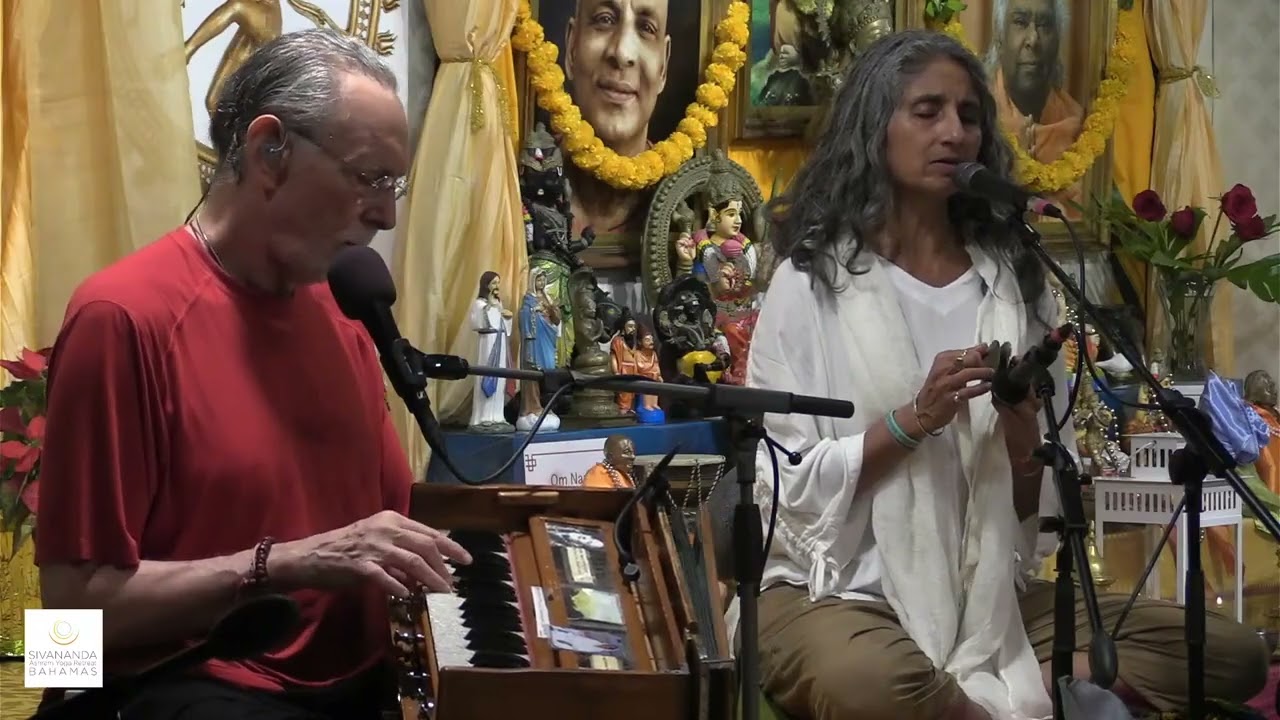
In this fireside talk, Krishna Das reads from "The Divine Reality" and discusses one of the core teachings of his guru Maharaji: that attachment—the root cause of spiritual delusion—can only be dispelled by grace, which manifests through the constant repetition of God's name. The teaching is not about achieving blissful feelings during practice, but about persisting in the practice itself, without expectation or judgment, so that grace can work within us. This parallels Maharaji's central instruction to his students: remember God, serve people, and practice chanting the divine name.
What Is Maya and Why Does Attachment Bind Us?
Krishna Das begins with a story from Maharaji's life involving a devoted student named Kishan Lal Sha, who came to Maharaji feeling depressed about the evil he saw in the world and his own lack of spiritual progress. Before the student could even ask his question, Maharaji told him: "You see others trapped by Maya illusion. Nar and Barrett, great saints were entrapped by Maya. These great sages were trapped by it. So what is there to say about other people?"
The point is not to despair, but to understand that delusion operates universally—even great saints have been caught in it. This is the nature of the mind bound to the physical body. As Maharaji teaches in the text, "The mind bound by the physical body has its own limitations." We identify with the body and its perceptions. We think "I am this; you are that," which is itself the fundamental delusion. Maya (illusion) makes everything appear real to us because we are attached to the physical form and its experiences.
When Kishan Lal returned to Maharaji with unexpressed questions, Maharaji answered them without being asked. The student thought: "This temple and whatever is seen by the human eye are illusion. What can be done about it?" Maharaji's response was direct: "Delusion makes everything look real." The problem is not the world itself, but our attachment to it—our identification with form as the source of identity and security.
How Does Grace Dispel Attachment?
At the heart of Maharaji's teaching lies a statement that Krishna Das emphasizes repeatedly: "Attachment is only dispelled by his grace. By the grace of God." This is not something we can think our way out of, nor can we force detachment through willpower alone. Grace must work on us, and that grace is brought about through one specific means: the constant repetition of God's name.
When the question arose in Kishan Lal's mind—"And how can one obtain his grace?"—Maharaji answered: "Constant repetition of God's name brings out his grace. Once this is realized, there is no room for any misgivings. Constant repetition of God's name, even without feelings of devotion in anger or lethargy, brings out his grace."
Krishna Das stresses the radical nature of this instruction. The teaching does not say: "Chant when you feel devoted" or "Chant until you experience bliss." It says: "Constant repetition of God's name even without feelings of devotion in anger or lethargy brings out his grace." This dissolves the trap of expectation. Many spiritual practitioners sit down expecting to feel uplifted, blissed out, and happy. When that doesn't happen, they conclude the practice doesn't work or that they are unsuited for it. Then they stop. This expectation, Krishna Das says, "is what destroys us."
Why the Name Is Not Mere Sound
Krishna Das explains that the divine names—like Ram, Sita Ram, or Hanuman—are not ordinary words like "Frank or Tom or Joe." These names carry sacred resonance. "These names are the echoing of reality coming out from within. The sound of reality. The form the sound form of reality which is beyond form which is beyond thought, emotion, any any thinking." The name itself is a bridge between the formless reality and the conditioned mind. It is, in a sense, reality condensed into sound.
Moreover, Krishna Das notes that spiritual teachers have said "inside of us the name is always going on is resounding within us all the time because the name is a mystery." The repetition is not creating something new; it is attuning our awareness to what is always already present. In this sense, chanting is not willpower imposed from ego, but a way of aligning with what is eternally resonating within consciousness itself.
Practice Starts Where We Are: Effort and Grace
A paradox arises: if attachment is dispelled only by grace, what is the role of our effort? Krishna Das addresses this through a teaching from his own guru, Sidima. When he asked her directly—"Is it all his grace or is our effort required?"—she answered: "It's all grace, but you have to act like it isn't because we see it. We don't see it as all grace."
This is the crucial insight. From the absolute perspective, everything is grace. But from where we stand—still identified with the body, still thinking "I am this, you are that"—we must act as though effort matters. We must practice, we must chant, we must serve. We do this not because it will make us enlightened (grace alone does that), but because "our practice starts where we are and from here we can be we can move more deeply into ourselves." The practice is not the goal; it is the vehicle by which grace can begin to work on us.
Krishna Das is emphatic: "You don't do it, nothing happens. Nobody can do it for us." The responsibility is ours to practice consistently, without expectation of immediate results. Once we understand this—truly understand that grace will manifest through constant repetition of the name—then, Maharaji says, "there's no room for any misgivings." The doubt dissolves. You know what to do and how it works.
Meditation, Concentration, and Easier Paths
Maharaji also teaches that for those focused on meditation and concentration alone, there are important cautions. "A meditative state of mind must be acquired gradually or else there's a risk of becoming insane." Concentration can impart genuine insight and can even lead toward self-realization. Maharaji himself said: "If you bring your mind to one point, you'll see God. Being God is another thing, but seeing God will be okay." However, he also taught that "for those who remember God and serve living beings, meditation and other kinds of ritual worship are not necessary."
This points to a simpler, more accessible path. When asked directly how to find God, Maharaji replied: "Serve people. How do you raise kundalini? Feed people. Love everyone. Serve everyone. Remember God." There are no prerequisites of perfect meditation or advanced yogic technique. The path is remembrance—the constant repetition of the name—combined with the spirit of service. These are, in Maharaji's words, "easy methods to progress on the spiritual path."
The Miraculous Nature of Grace: The Old Man on the Bus
In the latter part of the talk, Krishna Das reads a story that illustrates grace working in the world. A devotee traveling on a double-decker bus in London encountered an old beggar with tattered clothes and a red and blue blanket. The beggar's gentle smile reminded the devotee of Maharaji, who was known as "the old man with the blanket." Within moments, the beggar vanished—the bus had not stopped, and there was no way for him to have exited. Within days, friends of the devotee suddenly felt inspired to sponsor his travel to India to see Maharaji in person. Moreover, when the devotee applied for travel funds from his university, the authorities issued double the amount requested, and upon checking, insisted the amount was correct.
This story illustrates how grace operates not as a reward for virtue but as the direct intervention of the divine in the lives of sincere practitioners. The grace manifest through Maharaji's presence orchestrated circumstances to bring a devoted student into his physical darshan (blessed presence). The teaching here is that grace is constantly working, constantly arranging things, but we must be open to it—and openness comes through consistent practice and remembrance of God.
Where to Go From Here
The immediate practice is simple: take up the repetition of God's name—Ram, Sita Ram, Hanuman, or whichever name resonates with you. Repeat it constantly, not waiting for feelings of devotion to arise. Do it in anger, in lethargy, in joy, in sorrow. Do it without expectation of what will happen. Trust that grace is working through the practice itself, not as a reward for doing it well, but as the nature of the practice itself. Simultaneously, cultivate the spirit of service—remember that loving and serving others, feeding the hungry, caring for those in need—is not separate from the spiritual path but integral to it. As you continue this practice and this service, watch how grace begins to dissolve the attachments that bind you, not through your effort, but through its own mysterious operation.