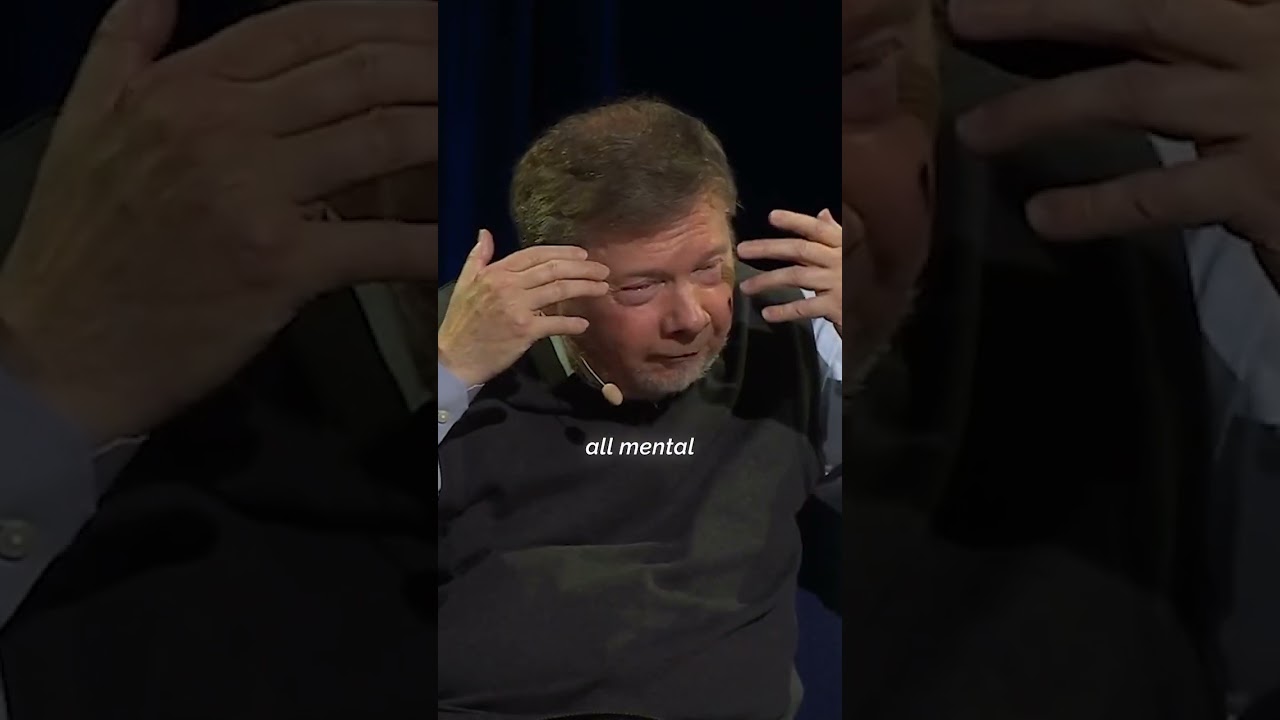
Eckhart Tolle addresses a pervasive challenge in adolescence: the sudden surge of anger and emotional overwhelm that confuses both teenagers and their parents. Rather than treating teenage anger as a behavioral problem to manage, he frames it as the activation of what he calls the pain body—a collective field of unprocessed emotional pain stored in the psyche. When teenagers enter puberty and their consciousness expands, they become suddenly aware of this deeper layer of pain, both their own and inherited from family and culture. The solution is not suppression or distraction, but conscious awareness and gentle presence from parents who can help their teens recognize what is actually arising without judgment.
What Is the Pain Body and Why Does It Activate in Teenagers?
Eckhart Tolle's central concept in understanding teenage anger begins with the pain body—not a physical organ, but a psychological entity made up of accumulated, unprocessed emotional pain. This pain is not created by the teenager; it is inherited and absorbed from family dynamics, cultural conditioning, and earlier life experiences. During childhood, many young people are relatively protected from full access to this deeper layer of pain because their consciousness is more present and less identified with the thinking mind.
When adolescence arrives, something shifts. The teenager's consciousness expands, their self-awareness increases, and suddenly they gain access to layers of emotional pain they were previously shielded from. This is not a failure or a disorder—it is a natural unfolding of human development. The pain body, now activated and conscious, begins to express itself through anger, frustration, emotional overwhelm, and a deep sense that "something is wrong" without the teenager being able to articulate what.
Parents often mistake this activation for rebellion, disrespect, or hormonal moodiness. But from Tolle's perspective, what is really happening is that the teenager is suddenly encountering their own and inherited pain, and they lack the vocabulary and awareness tools to navigate it consciously.
How Does Anger Serve the Pain Body?
Anger, in this framework, is not simply an emotion to be controlled or eliminated. It is an expression of the pain body seeking to perpetuate itself. The pain body is, in a sense, alive—it feeds on emotional reactivity, drama, and conflict. When a teenager gets angry, the pain body has found fuel. The anger feels real, justified, and often necessary to the teenager in that moment, but it is the pain body speaking through them, not their true self.
This is crucial for parents to understand. When a parent responds to teenage anger with their own anger, judgment, or attempts to shut down the emotion, they are actually feeding the pain body rather than helping the teenager move through it. The pain body thrives on resistance, drama, and the belief that it is being wronged.
The anger also serves another function: it creates a sense of identity and power. For a teenager who feels overwhelmed, confused, and often powerless in the world, anger feels like control. It feels like something. The pain body leverages this need, offering anger as a substitute for true presence and agency.
How Can Parents Help Their Teenagers Recognize the Pain Body?
Eckhart Tolle's guidance for parents is radical in its simplicity: presence. Rather than lecturing the teenager about their emotions, trying to fix their mood, or engaging in power struggles, the parent's task is to remain present and help the teenager develop awareness of what is actually happening inside them in real time.
This begins with the parent staying relatively calm and conscious during the teenager's emotional outburst. This is not easy, because the pain body is contagious—it can trigger the parent's own pain body. But if the parent can remain even somewhat anchored in presence, they can create a field of awareness that the teenager can sense.
The next step is gentle, non-judgmental inquiry. Instead of saying "You're being disrespectful" or "Stop being angry," the parent might say something like, "I notice you're really upset right now. What are you feeling in your body?" This question invites the teenager to shift from identification with the emotion to observation of it. Rather than "I am angry," they move toward "I am noticing anger."
This shift from identification to observation is the fundamental move that begins to dissolve the pain body's hold. The teenager is no longer the pain body; they are the awareness witnessing the pain body. This is the essence of presence-based transformation.
What Does It Mean to Recognize the Arising of the Pain Body?
Recognition is not the same as understanding intellectually. A teenager does not need to understand pain body theory to benefit from this work. Recognition happens at a felt, embodied level. It is the moment when the teenager pauses—even for a second—and notices: "Oh, something is happening in me right now. This intensity, this anger, this overwhelm—it's here."
In that moment of recognition, something shifts. The teenager is no longer completely merged with the emotional reaction. There is a tiny bit of space between the observer and the observed. This space is the beginning of freedom. It is the beginning of the teenager's ability to choose how to respond rather than being automatically reactive.
Parents can facilitate this recognition by modeling it themselves. When the parent notices their own pain body activating—their own anger or defensiveness toward the teenager—and pauses to acknowledge it with awareness, the teenager witnesses this. They see that it is possible to notice these big emotions without being destroyed by them, without acting on them, without being them.
How Does Presence Transform Emotional Overwhelm?
Presence is not a technique to make the anger go away. It is not a tool to suppress or spiritually bypass emotional pain. Rather, presence creates the conditions under which the pain body's charge begins to naturally dissipate. When you bring conscious attention to something that has been unconscious and reactive, its power over you diminishes.
For a teenager experiencing emotional overwhelm, presence might mean: pausing, noticing the physical sensations of the emotion in the body, breathing, and simply being with what is there without the story of why it's wrong or shouldn't be happening. This is remarkably difficult because the pain body's entire strategy is to keep the person identified with the story and the emotion.
A parent practicing presence alongside their teenager creates a regulatory field. The teenager's nervous system can begin to settle in the presence of a calm, aware adult. This is not about the parent talking or teaching; it is about their state of being. Tolle emphasizes that presence is contagious in the way pain body reactivity is contagious, but in the opposite direction.
What Role Does the Thinking Mind Play in Teenage Anger?
The thinking mind amplifies pain body activation through stories and justifications. A teenager might feel a wave of anger—the pain body surging—and immediately the thinking mind constructs narratives: "My parents don't understand me," "Everyone is against me," "I'm worthless," or "I deserve to be angry because of what happened." These stories are not lies, exactly, but they are partial truths that the pain body uses to sustain itself.
The thinking mind also creates expectations and judgments about how emotions "should" behave. A teenager might think, "I shouldn't be this angry," which creates resistance to the anger, which actually intensifies it. Or they might think, "I have a right to be this angry," which feeds the pain body's identity as a victim or a fighter.
Presence-based awareness begins to separate the teenager from this mental commentary. Instead of wrestling with the thoughts or believing them as absolute truth, the teenager learns to notice thoughts as they arise and let them pass, much like clouds in the sky. This is not dissociation; it is clarity.
How Can Teenagers Develop Body Awareness to Work with Anger?
One of the most practical teachings Tolle offers is the importance of body awareness. The pain body lives in the body. It is not an abstract concept; it is a felt, somatic reality. Teenagers who are completely identified with the thinking mind and cut off from body sensation are especially vulnerable to pain body takeover because they have no direct access to what is happening beneath the mental story.
Parents can guide teenagers to notice: Where do you feel the anger in your body? Is it in your chest, your stomach, your throat? What does it feel like—tight, hot, heavy, sharp? This simple practice of somatic inquiry begins to create distance from the emotion and brings it into the light of awareness.
Some teenagers respond well to grounding practices: feeling the feet on the ground, noticing the texture of clothing on the skin, focusing on the breath. These are not distractions from the pain body; they are ways of anchoring consciousness in the present moment, which is where the pain body cannot maintain its grip. The pain body only has power in the stories and fantasies of the thinking mind, not in direct sensory awareness of the now.
Where to Go From Here
If you are a parent navigating teenage anger and overwhelm, the first step is to recognize that what you are witnessing is not a personal attack or a behavioral defect—it is the pain body expressing itself as the teenager's consciousness expands. Your role is not to fix, shame, or suppress the emotion, but to remain present and to gently guide your teenager toward awareness of what is happening within them.
Begin by noticing your own pain body activation when your teenager's anger triggers you. Can you pause before reacting? Can you breathe and anchor yourself in the present moment? From that place of presence, you can offer your teenager something far more valuable than advice: the lived example of a conscious adult who can be with difficult emotions without being overwhelmed by them.
Encourage your teenager to notice their body when anger arises. Not to judge it, not to make it wrong, but simply to observe. "What do you feel right now? Where is the anger in your body?" These simple questions invite the shift from identification to awareness, which is the beginning of transformation. The pain body loses its power not through force or suppression, but through the light of conscious attention.