Is Enlightenment Really Just Inner Peace?
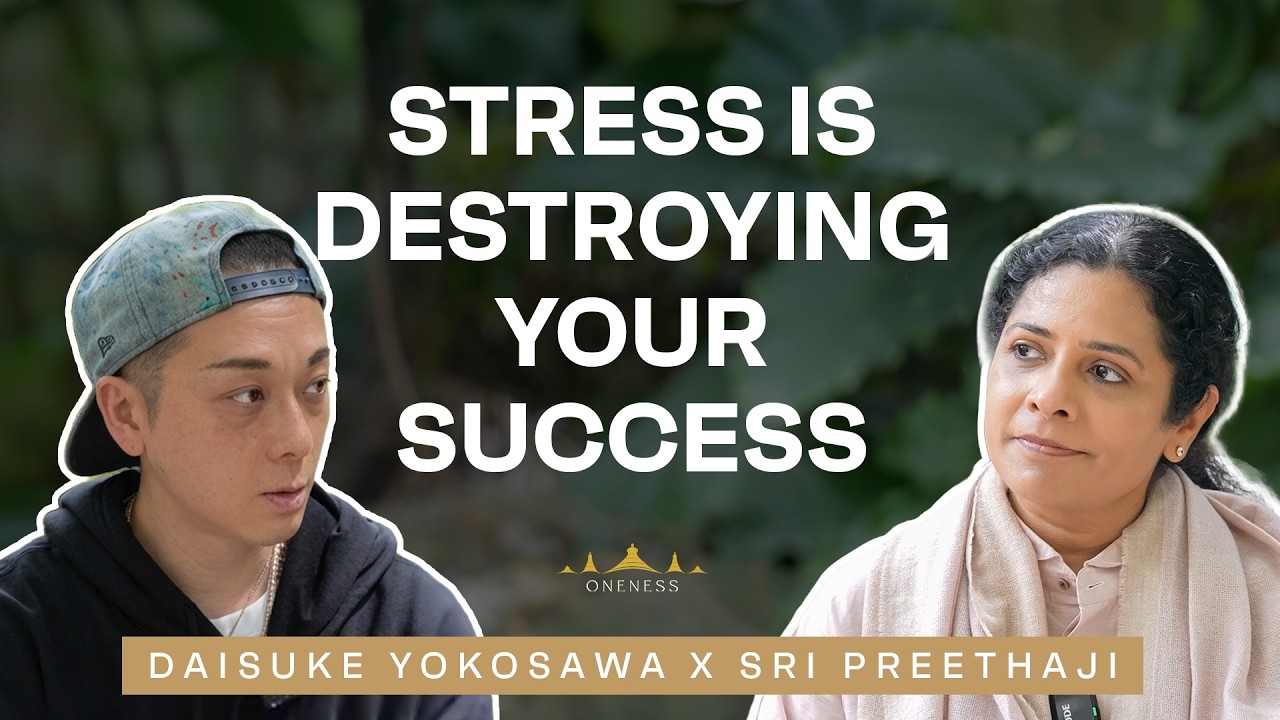
Many people assume enlightenment is something mystical, far removed from ordinary life—something achieved only after years of retreat or spiritual practice. Sri Preethaji reframes this entirely: enlightenment is fundamentally about the quality of your inner experience moment to moment. Most people go through life with a constant baseline of anxiety, stress, and inner discomfort, whether they are aware of it or not. This might show up as tension during work, conflict in relationships, or an inability to fully enjoy moments meant to be joyful. Enlightenment, in this framework, is simply the absence of this baseline disturbance—and the presence of calm, clarity, and a sense of togetherness or connection.
The key insight is that enlightenment is not about achieving something external or distant. It is about shifting your internal reference point—moving from a stressed, fragmented inner state to one that is naturally stable and clear. This is not mystical or supernatural; it is a neurological and psychological reality that becomes accessible once you understand what creates inner disturbance in the first place.
What Creates Inner Anxiety and Why Most People Live in It?
Sri Preethaji points out that most people carry a constant background noise of anxiety and fear throughout their day. This is not random or inevitable—it is created by specific patterns of thinking and relating to the world. When you are caught in reactive patterns, constantly judging situations as threatening or unfavorable, your nervous system remains in a state of low-grade alarm. You might be sitting in a comfortable chair, but your mind is elsewhere, anticipating problems, replaying conflicts, or worrying about outcomes you cannot control.
This inner disturbance has real consequences. It clouds your judgment, makes you reactive in relationships, depletes your energy, and prevents you from accessing the intelligence and creativity you naturally possess. When you are anxious, you cannot think clearly. When you are fearful, you make defensive choices. When you are stressed, your immune system weakens and your health declines. The enlightened view recognizes that none of this is necessary—that it is a learned pattern, not a fixed feature of consciousness.
How Does Enlightenment Change Functioning in Everyday Life?
One of the most practical aspects of Sri Preethaji's teaching is that enlightenment directly improves how you function. When your inner state shifts from anxiety to calm clarity, several things naturally happen:
- Mental clarity improves: You can see situations more objectively and respond rather than react. Problems that seemed insurmountable become solvable.
- Relationships deepen: When you are not caught in fear or defensiveness, you can genuinely connect with others. Presence replaces distraction.
- Work becomes more effective: A calm, clear mind solves problems faster. You can focus on what matters rather than being pulled by anxiety and ego.
- Health improves: A stable inner state reduces the chronic stress that undermines immune function and creates disease.
- Success and abundance flow more naturally: When you are not operating from fear, you make better decisions and attract better opportunities.
This is not about becoming passive or detached. It is about functioning from a stable, clear, resourceful inner state rather than from reactivity. A person operating from this inner stability is actually more capable, more creative, and more effective in the world.
What Are "Beautiful States" and How Do You Cultivate Them?
Sri Preethaji introduces the concept of "beautiful states"—specific experiences of consciousness that naturally arise when your mind settles and your inner system comes into balance. These might include peace, joy, a sense of belonging or togetherness, clarity, curiosity, or gratitude. These are not emotions you force or manufacture; they are natural byproducts of an uncluttered, stable inner state.
The teaching suggests that cultivating beautiful states is not about adding something new or becoming someone different. It is about removing what gets in the way—the anxiety, the reactivity, the constant inner commentary. As these patterns settle, the natural clarity and peace of consciousness emerge. This is why the approach emphasizes both understanding (what creates disturbance) and practice (what helps the mind and body settle into a more integrated state).
Practices mentioned include simple tools that help the nervous system regulate and the mind settle. These are not meant to be obscure or require exceptional discipline. They are accessible first steps that anyone can begin immediately to experience the shift from disturbance to calm.
Is Enlightenment About Transcending Daily Life or Living It More Fully?
A common misconception is that enlightenment means withdrawing from the world or becoming detached from ordinary concerns. Sri Preethaji's teaching suggests the opposite: enlightenment is about engaging with daily life—work, relationships, health, success—from a much clearer and more resourceful inner state. You are not escaping the world; you are learning to function in it from your actual capacity rather than from your fears and limitations.
This has immediate, practical implications. A person who is enlightened in this sense is more present at work, more connected in relationships, more creative in solving problems, and more capable of building genuine success and abundance. The shift is not about leaving life behind; it is about living it more fully and effectively.
What Are the First Steps Toward This Shift?
Sri Preethaji emphasizes that this is not an arduous journey reserved for monks or spiritual specialists. The first steps are simple and available to anyone willing to pay attention to their inner world. These might include:
- Awareness: Noticing the baseline of anxiety or discomfort you carry. Most people are unconscious of it because they are so accustomed to it. Simply recognizing it is the first shift.
- Understanding: Learning how your reactive patterns create and sustain inner disturbance. Understanding breaks the spell of automaticity.
- Simple practices: Engaging with techniques that help your nervous system settle and your mind come into focus. These might be breathing practices, meditation, body awareness, or presence exercises.
- Community and guidance: Having access to teachers and communities that model and support this shift. Your environment shapes your consciousness.
The teaching suggests that once you experience even a taste of what inner calm and clarity feel like, the motivation to move in that direction becomes self-evident. You do not have to take anyone's word for it; you can directly experience the difference between a distressed inner state and a clear one.
Where to Go From Here
If this framework resonates, the next steps might include exploring practices that help you settle your nervous system and access calmer, clearer states. Pay attention to the baseline quality of your inner world—not just your external circumstances, but what you actually feel moment to moment. Notice where anxiety lives in your body and mind. Experiment with simple practices that help you shift from reactivity to presence. Seek out teachers, communities, or guidance that can help you understand the patterns that create disturbance and how to move toward those beautiful states of peace, clarity, and connection. Enlightenment, in this understanding, is not something you achieve someday in the future—it is something you begin experiencing as soon as you shift your inner reference point. The question is not whether it is possible, but whether you are willing to pay attention to what is actually happening in your own consciousness and experiment with what creates genuine wellbeing.