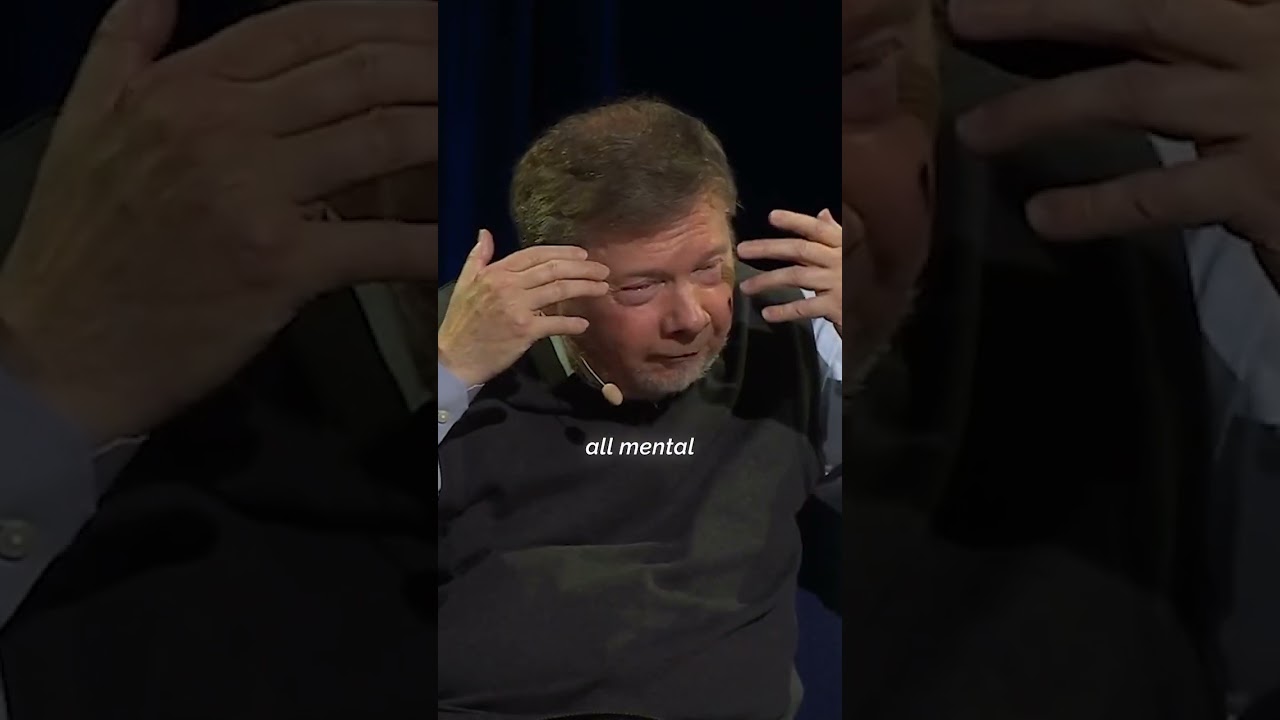
During a visit to a women's prison, Eckhart Tolle confronted a fundamental misunderstanding about spiritual awakening: that pleasant external conditions foster inner growth. He discovered instead that real transformation often emerges from difficulty, constraint, and suffering—precisely the conditions that strip away illusions and force genuine self-inquiry. This insight challenges the modern spiritual marketplace's emphasis on comfort-seeking and reveals why adverse circumstances can become unexpected gateways to authentic consciousness.
The Illusion That Comfort Creates Awakening
Many people approach spirituality as a means to improve their external circumstances—to reduce stress, enhance wellbeing, or achieve a more pleasant life. This is understandable; the promise of relief from suffering naturally appeals to anyone in pain. However, Tolle's prison visit illuminated a paradox: the very conditions most people seek to escape—limitation, confinement, suffering—can catalyze the deepest shifts in consciousness.
In comfortable environments, the ego has room to operate. When external conditions are pleasant, the mind can continue its habitual patterns of seeking, comparing, and identifying with form. There is no urgent pressure to question the nature of the self or to look beyond the surface of existence. The comfort itself becomes a kind of trap, a cocoon that insulates consciousness from the friction it needs to awaken.
Tolle recognized that many spiritual seekers operating from a position of relative ease may be cultivating a sophisticated illusion rather than genuine awakening. They may develop pleasant meditative states, feel moments of peace, or experience temporary transcendence—but without the fire of real difficulty, these experiences can remain ornamental rather than transformative.
Why Difficulty Becomes a Teacher
A prison is one of the most constraining environments possible. Freedom of movement is denied. Privacy is minimal. Autonomy is surrendered to institutional authority. The ego, which thrives on expansion and control, faces relentless pressure. In such an environment, many of the psychological mechanisms that usually shield consciousness from itself are stripped away.
When external circumstances cannot be changed or escaped, the mind turns inward by necessity. The usual strategies—distraction, acquisition, social status, physical mobility—become unavailable. This forced inward turn creates the conditions for authentic inquiry: "Who am I when all my distractions are gone? What remains when I cannot run from this moment?"
Difficulty, in other words, functions as a catalyst for disidentification from the mind and form. It interrupts the trance of ego-driven living. It forces a kind of nakedness where pretense becomes costly and the authentic self has a chance to emerge. This is not because suffering is good in itself, but because it creates the friction against which consciousness can know itself.
Real Growth Versus Spiritual Bypassing
Tolle's insight touches on what contemporary psychology calls "spiritual bypassing"—the use of spiritual practices or beliefs to avoid dealing with painful emotions or difficult realities. Someone in a pleasant circumstance might meditate regularly, attend retreats, study non-dual philosophy, and feel genuinely peaceful—all while remaining fundamentally identified with the separate self and its preferences.
In contrast, someone facing genuine difficulty has no luxury of such bypassing. The woman in prison cannot simply visualize her way out or reframe her situation as merely a play of consciousness if she is experiencing real loss, separation from children, or institutional trauma. The only authentic path is to meet the present moment as it actually is, which paradoxically is where genuine awakening becomes possible.
This does not mean suffering is necessary or that one should seek it out. Rather, it means that when difficulty does arise—and it does for everyone eventually—it offers an unparalleled opportunity. The spiritual path is not about creating perpetual comfort but about developing the capacity to be fully present and awake regardless of whether conditions are pleasant or difficult.
What Tolle Likely Observed
In visiting a women's prison, Tolle presumably encountered people whose circumstances had forced a kind of maturation. Many individuals in such environments have been through the breakdown of their previous identity structures. They cannot rely on external achievements, possessions, or social status. What remains is the person underneath—often calmer, more present, more aware of what actually matters, precisely because everything else has been taken away.
This does not romanticize incarceration or suggest that prison is a good thing. Rather, it acknowledges a pattern Tolle has long taught: consciousness uses difficulty as its primary teaching tool. The women Tolle encountered may have discovered, through the harshness of their circumstance, a presence and peace that many comfortable seekers pursue across years of practice.
Implications for Spiritual Practice
If real growth happens in difficulty, what does this mean for meditation, study, and deliberate spiritual practice? The answer is not to abandon these practices but to understand their proper role. Deliberate practice can strengthen attention, create space for insight, and build the capacity to remain present. But they are preparation for life, not a substitute for it.
The actual spiritual path is lived in the texture of daily existence—in how we respond when things don't go as planned, in our capacity to be present with difficulty, in our willingness to question our assumptions when reality challenges them. The prison visit becomes a teaching precisely because it shows consciousness at work in real conditions, not in the controlled environment of a meditation hall or retreat center.
This reframes the spiritual journey away from an achievement model (acquiring experiences, accumulating insights, progressing through stages) and toward a deepening capacity for presence itself. Pleasant or difficult, the awakening lies not in the condition but in the consciousness that meets it.
Where to go from here
Tolle's realization invites several practical inquiries. First, examine where you may be using spiritual practice as a form of avoidance—seeking peace as an escape from the present moment rather than as an arrival into it. Second, notice how difficulty in your own life, rather than something to transcend, might be an invitation to deeper presence and authenticity. Third, consider whether your spiritual understanding remains ornamental (pleasant states, interesting ideas) or has actually shifted how you meet challenge, loss, and the limits of your control. The women in that prison likely have less need for Tolle's teachings than many comfortable spiritual seekers—their circumstance has already taught them what his words point toward.