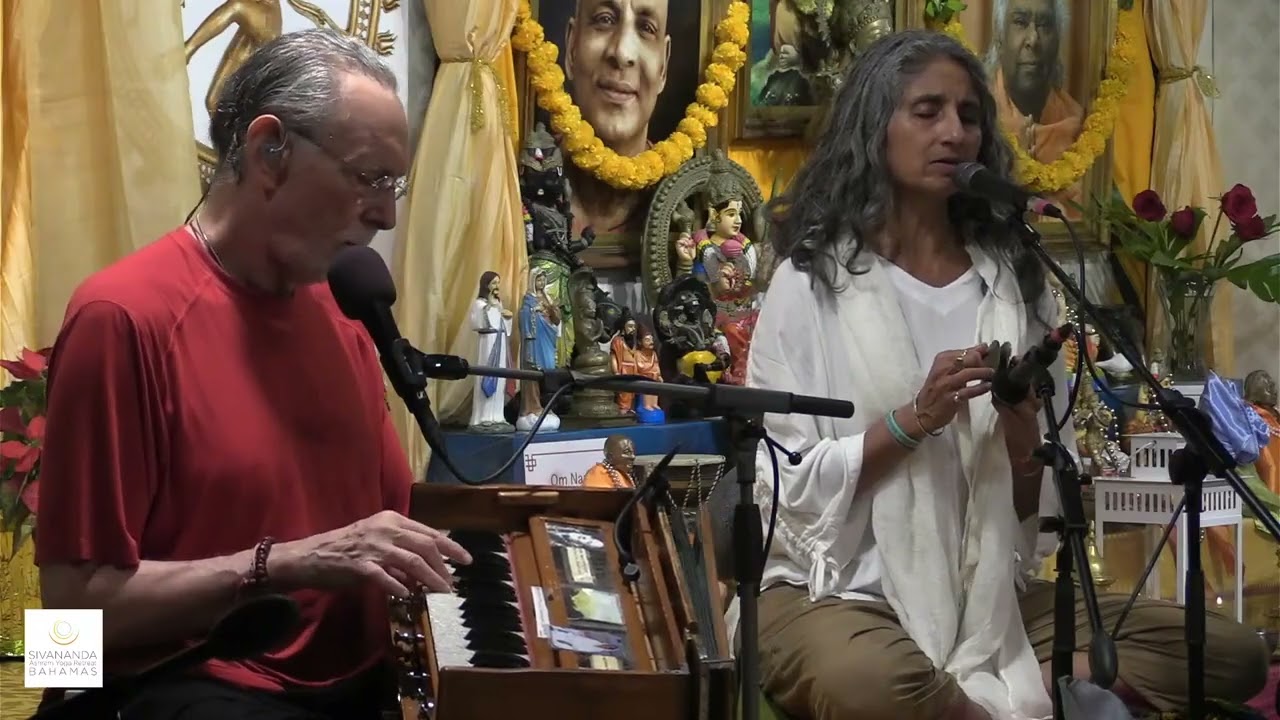
This kirtan session from Garrison Institute captures Krishna Das leading communal call-and-response chanting of Sanskrit names and mantras. Kirtan is a practice rooted in bhakti yoga traditions where the repetition of divine names, supported by rhythm and melody, serves as a direct pathway to the heart. The gathering illustrates how collective singing creates a field of devotion that transcends individual effort, dissolving the boundaries between musician and listener, and offering participants a direct experience of presence and unity.
What Is Kirtan and Why Does It Matter?
Kirtan is a form of devotional music practice that has existed for centuries in Hindu and Vedic traditions. Unlike a concert where musicians perform for an audience, kirtan is fundamentally participatory—a call-and-response form of chanting where a lead singer (kirtan wallah) sings a line or phrase, and participants repeat it back. The practice centers on the chanting of sacred names and mantras, typically Sanskrit phrases that invoke aspects of the divine or express devotion.
Krishna Das, one of the most prominent kirtan artists of our era, brings this ancient practice to Western audiences while remaining rooted in its traditional essence. His Thursday Night Satsang represents a contemporary expression of this centuries-old form—a gathering where the primary intention is not entertainment or performance, but rather the collective invocation of presence and the opening of the heart through repetition and rhythm.
How Does Repetition and Rhythm Create Spiritual Effect?
The mechanism of kirtan works through several layers simultaneously. At the most basic level, the human nervous system responds to rhythm and melody. Repetition—whether of a mantra, a name, or a musical phrase—has a settling effect on the mind. Rather than trying to force meditation or control the flow of thoughts, kirtan harnesses the brain's natural resonance with pattern and sound, allowing the mind to settle naturally.
But the practice goes deeper. In bhakti yoga traditions, the names of the divine (or aspects of divinity—Krishna, Rama, Durga, Kali) are understood not as mere labels but as portals or invitations. Each name carries a specific energy or quality. Rama, for instance, carries associations with dharma (right action), while Krishna represents divine play and love. By chanting these names repeatedly, practitioners attune themselves to these qualities, not through intellectual understanding but through vibrational resonance.
The communal aspect amplifies this effect. When many people sing together, creating a unified sonic field, something shifts. Individual ego and effort dissolve into the collective energy. This is what satsang—literally "sitting together in truth"—is designed to facilitate. The gathering becomes a container, and the chanting becomes a shared invocation rather than a solitary practice.
What Is the Role of the Kirtan Wallah?
The lead singer, or kirtan wallah (literally "one who does kirtan"), functions as both a musician and a guide. Unlike a preacher or teacher who conveys information through words, the kirtan wallah holds the space and directs the energy through music. They choose which mantras to sing, how to structure the call-and-response, when to build intensity, and when to allow silence. The musician's own state of presence becomes the template for the group.
Krishna Das, in his role as kirtan wallah, brings decades of practice and a profound connection to the traditions from which he learned. He studied under Neem Karoli Baba (Maharaj-ji), a beloved Indian saint, and his approach to kirtan reflects both deep respect for the tradition and an openness to its evolution in new contexts. His music carries both the weight of authentic transmission and the accessibility of contemporary musical arrangement.
What Happens in the Body During Kirtan?
Participating in kirtan is not a passive or abstract experience. The body is engaged throughout. Singing requires breath control and the activation of the vocal apparatus. Many kirtan sessions include gentle hand movements or swaying that further involve the body in the practice. For participants who remain silent and listen, the vibrations and rhythms still create a physical resonance.
Research in neuroscience has begun to validate what traditional practitioners have long known: chanting and group singing activate the parasympathetic nervous system—the part of the nervous system associated with rest, recovery, and relaxation. Heart rate variability improves. The release of endorphins and other neurochemicals associated with well-being increases. But these physiological benefits are not the goal; they are byproducts of a practice whose real intention is something subtler: the opening of the heart and the remembrance of our fundamental nature.
How Does Kirtan Relate to Other Spiritual Practices?
While kirtan stands alone as a complete practice, it also intersects with other approaches to awakening. In bhakti yoga, kirtan is one of the primary practices alongside meditation, self-inquiry, and devotional service. Some traditions use mantra as a standalone meditation practice done silently. Kirtan amplifies the mantra through the communal and musical dimension.
Unlike some meditation practices that emphasize the achievement of specific states or the suppression of thought, kirtan works with what is already present. You do not have to achieve any particular mental state to benefit from kirtan. If you are anxious, distracted, or restless, the chanting meets you there and gently redirects attention. If you are already in a peaceful state, kirtan can deepen it further.
What Makes Thursday Night Satsang a Meaningful Gathering?
Thursday Night Satsang, as represented in this recording from Garrison Institute, embodies the essential elements of traditional satsang: a specific time and place designated for spiritual practice, a gathering of people with a shared intention, and a kirtan wallah who holds the space. The setting—Garrison Institute, which has hosted contemplative practice and learning for decades—itself carries a certain quality, a history of sacred gathering.
The informality of "Thursday Night" is intentional. This is not a special event or a grand concert; it is a regular rhythm of practice, accessible to those who can show up. The 2023 recording captures what would have been a live gathering, and the video format makes it available to those who cannot attend in person—a recognition that the benefits of kirtan can extend beyond the immediate room through the transmission of recorded music and the intention behind it.
How Can Someone Begin a Kirtan Practice?
Kirtan requires no prior musical experience or spiritual background. Anyone can attend a session and participate simply by listening or, if moved, by joining in the singing. The melodies are typically simple and often repeat after one or two hearings. The Sanskrit pronunciation may feel unfamiliar at first, but many teachers, including Krishna Das, pronounce mantras carefully to help participants follow along.
For those drawn to deepen the practice, Krishna Das offers various resources: webinars, workshops, and retreats through the Heart Space Digital Library and the Kirtan Wallah Foundation. His website and social channels provide information about upcoming events where one can experience kirtan in community.
What Is the Intention Behind Sharing Kirtan Recordings?
By recording and sharing Thursday Night Satsang, Krishna Das extends an invitation. The video makes the practice accessible to those who cannot attend in person—whether due to geography, health, schedule, or circumstance. A recording preserves something of the energy and presence of a live gathering, though it does not replace the direct experience of singing with others in real time.
The act of making kirtan recordings and sharing them widely reflects a commitment to democratizing access to these practices, which were historically available only to those with the means and proximity to find teachers and communities. In this way, the ancient practice of kirtan continues to evolve and reach new practitioners across the globe.
Where to Go From Here
If you are interested in exploring kirtan further, start by listening to recordings like this Thursday Night Satsang. Allow the repetition and rhythm to work on you without expecting or demanding a particular experience. If you are drawn to practice in community, Krishna Das's website (krishnadas.com) lists upcoming events where you can experience kirtan live. The Heart Space Digital Library offers additional resources, webinars, and teachings. If you have no prior experience with Sanskrit or bhakti traditions, Krishna Das's broader body of teaching—available through his newsletter, social channels, and suggested reading list—provides context that can deepen your understanding of the practice and its roots.