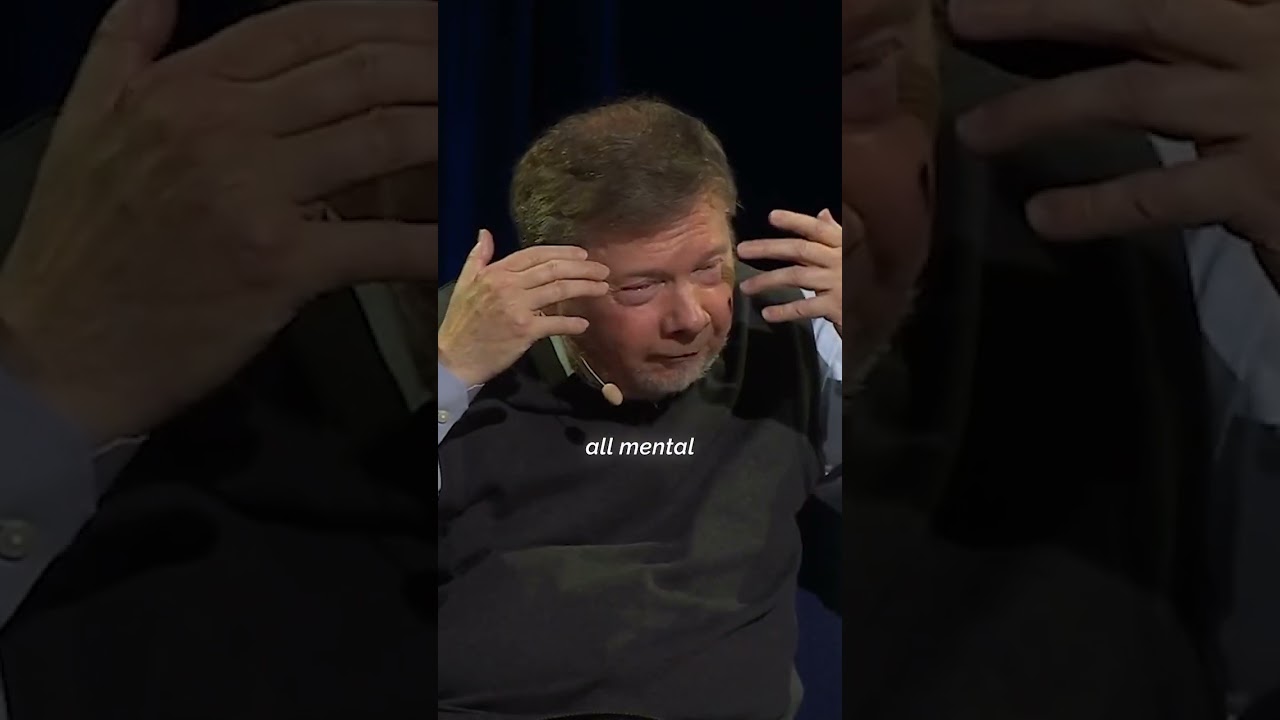
This teaching addresses one of the deepest spiritual inquiries: what remains of you when all memory, history, and anticipation of the future are removed? Eckhart Tolle guides seekers toward direct recognition of presence itself—the "I Am" consciousness that exists prior to and independent of the conditioned mind's accumulation of past and imagined future. Rather than offering philosophical abstraction, this inquiry points toward lived recognition of the essential aliveness that is aware of thought, emotion, and sensation, but is not reducible to any of these phenomena.
What Is the Core Identity Beneath Conditioning?
The teaching begins with a radical question: if you subtract everything the mind has recorded—every experience, every story, every learned belief—what remains? This is not a thought experiment designed to produce an intellectual answer, but an invitation to direct insight. Most people's sense of self is almost entirely constructed from memory and psychological narrative. The conditioned self is made of accumulated past, repeated patterns of thinking, and anticipation of future outcomes. We identify as the sum of what we've done, what we believe about ourselves, and what we fear or hope for tomorrow.
But underneath this psychological structure, something persists. Eckhart Tolle points to the fundamental aliveness of being itself—the awareness that is present right now, before thought. This is not another object you can possess or achieve; it is the very ground of consciousness experiencing your life. When you stop looking for the "you" that is defined by memory and past identity, what appears is the simple fact of presence, sometimes called the "I Am"—the immediate knowing that you are, independent of what you are or what you have done.
How Does Presence Differ From the Thinking Mind?
The conditioned mind operates primarily through time. It reconstructs the past, analyzes it, draws conclusions, and uses those conclusions to predict and control the future. This is the psychological self—continuous, narrative, and always evaluating. However, presence exists only in this moment. It has no memory, no future agenda, no self-image to defend. When you are fully present—truly attentive to what is—there is no "you" telling a story about what's happening; there is just the happening itself, known directly.
This distinction matters practically. The thinking mind generates most of suffering through resistance to what is, through regret about the past, and through anxiety about the future. But pure presence, by its nature, can only meet what is actually here. It has no resistance, no story of how things should be different. This does not mean becoming passive or unresponsive; it means responding from clarity rather than from conditioned reaction.
What Happens When You Remove the Past From Identity?
To engage this inquiry genuinely, Tolle invites practitioners to contemplate the dissolution of their accumulated history. Not to deny that experiences happened, but to release the identification with those experiences as constituting who you are. This is profoundly disorienting for the conditioned mind because the mind's entire sense of continuity—its sense of being a continuous self moving through time—depends on memory and narrative.
When identification with the past loosens, several things may be noticed. First, a sense of spaciousness or lightness often appears, as the weight of accumulated identity loosens. Second, there is often a sense of vulnerability or groundlessness—the ego loses its familiar anchor. But what is also discovered is that awareness continues. The present moment is still here. Sensation still arises. Thought still moves. But they are no longer claimed as "your" personal possessions or achievements or failures.
This shift is not escapism or denial. Rather, it is a profound shift in perspective from identifying as the content of experience to recognizing yourself as the space in which experience occurs. The past becomes available to you as memory when needed—you can recall how to drive, or the faces of loved ones—but it no longer defines your essential being.
Is There a Self That Exists Before Thought?
This teaching points toward a paradox that cannot be resolved conceptually: the I Am that you are is not a thing you can observe or describe, yet it is more immediate and intimate than anything else. It is not an object, so it cannot become an object of knowledge in the usual sense. Yet it is knowable through direct recognition, through a kind of resting as what you already are.
Most spiritual traditions call this presence, awareness, consciousness, or being. Eckhart Tolle uses the term "I Am"—not the thought "I am," but the simple, non-conceptual recognition that you exist, that something is aware. This is prior to and independent of all mental content. You can lose your memories (and people do, through injury or disease); you can lose your sense of future; you can lose your thoughts. But the awareness in which all of this appears—the felt sense of being—is never lost as long as you are alive.
How Can This Recognition Transform Daily Life?
For many who encounter this teaching, the practical consequence is a fundamental shift in what they take themselves to be. Instead of being a psychological self defined by history and future planning, there is a recognition of being a presence in the world, aware and alive. This has immediate implications. Anxiety, which depends on projecting into an imagined future, loses its hold. Regret, which depends on dwelling in an edited past, loses its grip. There is still practical thinking and planning, but it arises and passes without the heavy identification and emotional charge.
Relationships transform because you are no longer defending a fixed psychological identity; you are more available to the other person as they actually are. Work becomes more effective because attention is present rather than divided between the task and worry about outcomes. Even difficult emotions—pain, grief, anger—are met more directly when they are not filtered through layers of psychological story.
What About Thought and the Thinking Mind?
It is important to clarify that recognizing presence does not mean eliminating thought or the thinking mind. Thought is a tool, a valuable function that arose through human evolution and continues to serve necessary purposes. The problem arises not from thinking itself, but from identification with thought—the assumption that you are the voice in your head, that your value depends on your thinking, that your past and future selves defined in thought are the reality of who you are.
When there is no identification with thinking, thought functions more cleanly and appropriately. When you need to solve a problem, thinking engages. When you need to create, thinking participates. But thought is no longer running your life, dictating your mood, or constituting your identity. There is a space, a witnessing awareness, that is prior to thought and into which thought arises. You are that awareness; you are not the thought.
Why Does This Teaching Matter Now?
In contemporary culture, the psychological self—defined by narrative, social media presentation, and accumulated achievements or failures—has become increasingly elaborate and demanding. Most people are trapped in identification with their thinking mind, their story, their role, their status. This creates perpetual stress and a sense of being separate and incomplete. The question "Who are you without your past?" cuts through all of this and points directly to something more fundamental and real.
This is not a teaching intended to produce a particular belief or ideology. Rather, it is an invitation to direct investigation. You can take the past away in your mind right now, in this moment. Remove your biography. Let go of the narrative about who you are and what you've done. What remains aware of this question? That which remains is what Tolle points toward. It is not something new to attain; it is something that has always been here, obscured by identification with the mind's productions.
Where to Go From Here
This inquiry deepens through repeated, patient attention. It is not a concept to understand but a recognition to embody. Begin by practicing the removal of psychological past in small ways. In a moment of quiet, let go of the story of who you are and notice what persists. What remains when you are simply present, without editing or analyzing? This can be practiced while sitting, while walking, while listening to another person. Over time, the difference between your essential presence and your psychological self becomes clearer and more obvious. The peace, clarity, and freedom that arise from living increasingly from this presence rather than from conditioned identification are not attained goals but the natural result of recognizing what you actually are. The teaching invites you not to become someone new, but to see more clearly who you have always been.