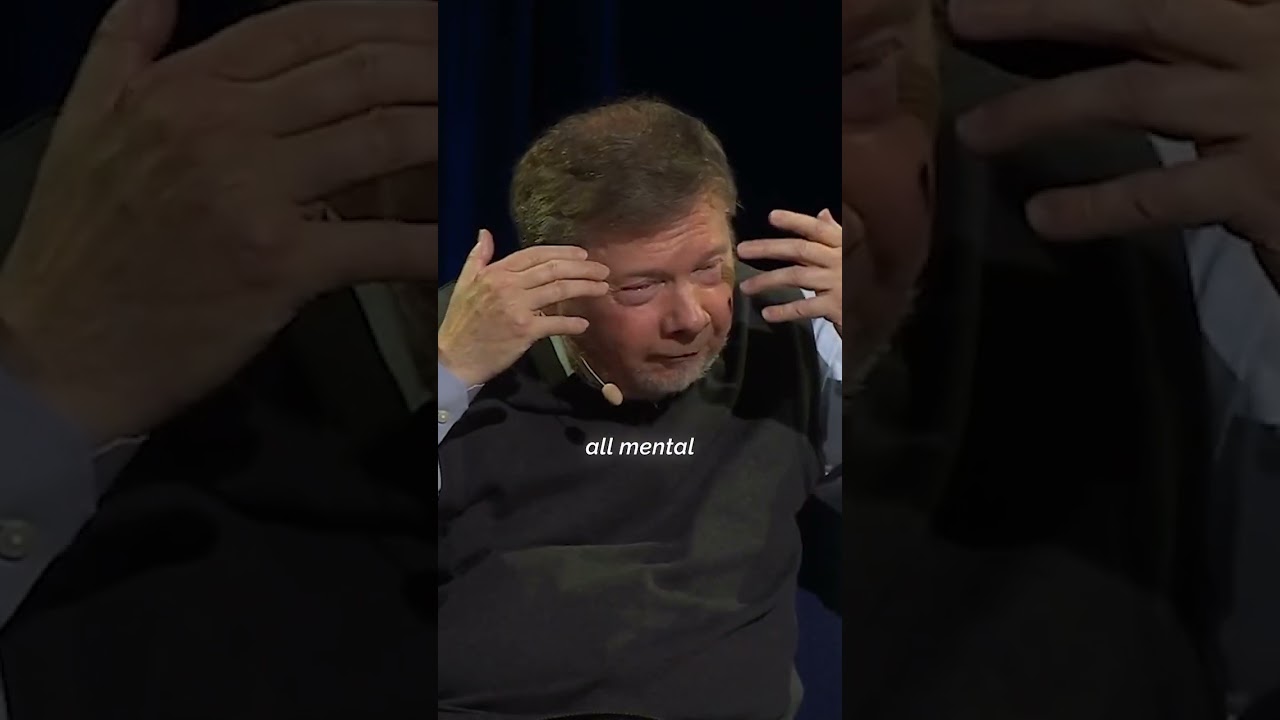
Eckhart Tolle presents the thesis that humanity faces a critical juncture where, for the first time in history, a large-scale awakening of consciousness is genuinely possible. He argues that while not everyone will participate in this awakening, a sufficient critical mass of people becoming conscious could alter the trajectory of human civilization and transform our collective future.
What does it mean that humanity is at a critical turning point?
Tolle frames the present moment as unprecedented in human history. For most of our existence, awakening to higher consciousness has been an individual pursuit—rare individuals attaining enlightenment or spiritual realization while the majority remained asleep to deeper dimensions of reality. The critical turning point Tolle identifies is the emergence of conditions where this is no longer true. Technology, global interconnection, and the maturation of human understanding have created a situation in which mass awakening is not merely possible but increasingly probable.
This turning point is not inevitable, but it represents a genuine fork in the road. Humanity now has the capacity to evolve collectively in consciousness—a capacity that did not exist in earlier eras. The structures, information, and tools that make this possible are now present on the planet.
Why is large-scale awakening possible now?
Throughout history, individuals have awakened—Buddha, Christ, mystics across traditions. But these awakenings remained isolated events, experienced by exceptional individuals. The masses continued operating from the conditioned, habitual patterns of the unconscious mind. What has changed in our current era is the accessibility and scale of spiritual knowledge, coupled with the urgency of global challenges that demand a higher level of consciousness to solve.
The information age has made ancient wisdom traditions available to billions. Meditation practices once hidden in monasteries are now taught in schools and corporations. Psychological and neuroscientific research validates what contemplatives have long known about human potential. Simultaneously, ecological crises, nuclear weapons, artificial intelligence, and social fragmentation have created problems that cannot be solved at the level of consciousness that created them. This convergence—unprecedented access to wisdom combined with existential necessity—creates fertile ground for collective awakening.
Additionally, human nervous systems have evolved to the point where they can support sustained higher consciousness. The brain plasticity research of recent decades shows that consciousness itself is not fixed but trainable. Meditation and contemplative practice physically rewire neural pathways. This means awakening is not a rare genetic accident but an accessible capacity that can be cultivated systematically.
Who must awaken for this shift to occur?
Tolle emphasizes that not everyone needs to awaken. This is a crucial distinction—it is not about universal conversion or everyone adopting a single ideology. Rather, he suggests that a critical mass or tipping point exists: enough people must shift consciousness for the collective momentum to change. This echoes ideas from systems theory and complexity science, where minority populations can disproportionately influence system-wide behavior once they reach a threshold.
This means the work of awakening is not about forcing change on those unwilling or incapable of it, but about creating a sufficient coherence of conscious individuals whose presence and actions begin to reshape the field. A relatively small percentage of humanity, operating from clarity, presence, and alignment with deeper intelligence, can catalyze shifts in the larger system.
How does awakening change the course of humanity?
When consciousness awakens, behavior shifts. An awakened person no longer operates purely from ego—the conditioned self that acts from fear, separation, and unconscious reaction. Instead, actions arise from presence, intuition, and alignment with something larger than individual desires. Scaled across millions of people, this produces measurable effects: different choices in governance, economics, relationships, technology use, and environmental stewardship.
Tolle's implicit argument is that many of humanity's most intractable problems—war, inequality, ecological destruction, mental illness—are symptoms of collective unconsciousness. They are produced by billions of people operating from habitual patterns, fear, and disconnection from their deeper nature. An awakened collective would not create these problems in the first place because the consciousness that generates them would have shifted.
This is not utopian thinking but a logical consequence: if consciousness determines action, and consciousness changes, then action changes. The course of history is written by human choices, and human choices flow from human consciousness.
What is the role of individual practice in collective transformation?
Tolle's teaching suggests that individual awakening and collective transformation are not separate endeavors but intimately connected. Each person who genuinely awakens—who moves from ego-driven reactivity to conscious presence—contributes to the energetic and informational field of humanity. This is sometimes called the morphic field, the noosphere, or collective consciousness. Individual awakening is not selfish withdrawal but a direct contribution to the possibility of collective shift.
This places responsibility on each person: the work of presence, meditation, and self-inquiry is not just personal therapy but a contribution to human evolution. At the same time, it releases the burden of needing to convert or save everyone. The focus becomes: What is my part? How do I cultivate and embody the consciousness that I wish to see reflected in the world?
What happens if the critical mass is not reached?
Tolle does not explicitly predict catastrophe, but the urgency of his language suggests stakes. If awakening does not occur at scale, humanity will likely continue on trajectories of unconscious behavior—creating suffering, depleting resources, and potentially triggering self-destructive systemic collapse. This is already visible: climate systems destabilizing, nuclear tensions, psychological epidemics of anxiety and depression. These are the consequences of operating from a consciousness that does not recognize interconnection or long-term consequence.
The critical turning point implies genuine uncertainty. The outcome is not predetermined. The future depends on whether enough people choose, consciously or intuitively, to awaken and align their lives with deeper truth.
Where to go from here
If you resonate with Tolle's framing, the immediate question becomes practical: How do I participate in this possibility? This is not about ideology or belief but about direct practice. Begin a meditation practice, even 10 minutes daily. Cultivate presence in ordinary moments—truly listening to another person, feeling sensation in your body, noticing thoughts without being controlled by them. Explore how many of your habitual reactions stem from fear or separation, and ask what might be possible if you responded from presence instead.
Secondly, notice the ripple effects of your consciousness. When you are present and calm, how do others around you respond? When you act from clarity rather than reactivity, what becomes possible in relationships, work, and community? Tolle's teaching suggests this is not marginal—it is how collective consciousness actually shifts. One person at a time, choosing presence over automaticity, until a critical mass tips the balance and the entire system reorganizes.
Finally, stay informed about both the genuine crises facing humanity and the genuine capacities for transformation that are now available. The turning point is real not because it is certain but because it is genuinely undecided. Your participation—through your own awakening and the choices it enables—is one of the factors that will determine which direction the scales tip.